---
title: "Kupat Tahu Magelang: A Thoughtful Street-Food Guide"
description: "Learn how to order Kupat Tahu Magelang thoughtfully, from ingredient questions to lower-waste takeaway."
date: 2026-07-25
lastReviewed: 2026-07-25
category: culinary
image: "/images/kupat-tahu.webp"
pinterestImage: "/images/pin-kupat-tahu-magelang.webp"
imageAlt: "Kupat Tahu Magelang street food with peanut sauce"
location: "Magelang City and surrounding food streets"
tripStage: food-stop
related:
- collection: culinary
slug: getuk-magelang
- collection: guides
slug: sustainable-travel
ecoTip: "For takeaway, ask whether your own clean container can be used. If not, decline unnecessary cutlery and carry packaging until you find a proper bin."
familyTip: "Ask about chilli, peanut, soy, and other ingredients before ordering for children or anyone with food allergies."
localSecret: "Choose a stall based on visible hygiene, food temperature, turnover, and clear communication rather than queues alone."
sources:
- label: "Indonesia's official tourism portal"
url: "https://www.indonesia.travel/"
- label: "Magelang City Government"
url: "https://magelangkota.go.id/"
---
Kupat tahu is a popular Javanese street-food dish built around rice cake (kupat), tofu, bean sprouts, and sauce. It is widely associated with Magelang, but recipes, spice levels, portion sizes, and vendors change over time. This page focuses on ordering safely and respectfully instead of repeating unverified origin stories or fixed prices.
The dish is commonly treated as a breakfast or light meal, and it pairs naturally with a warm soup such as [Sop Senerek](/culinary/sop-senerek-magelang/) for a fuller start to the day.
A single basin often feeds many customers, and the same sauce and toppings are ladled from it all morning.
## What Makes It Special
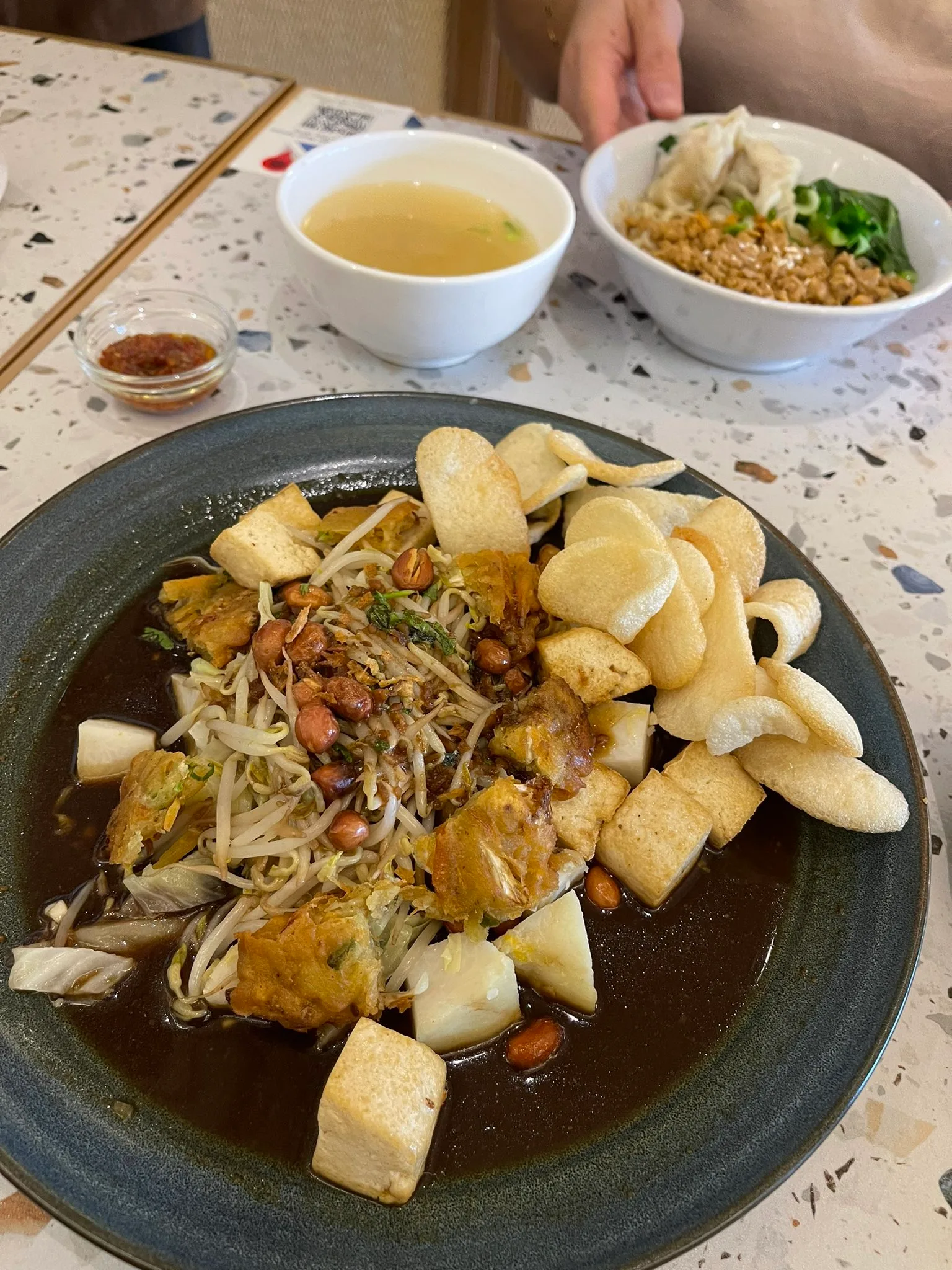
Many versions combine a sweet-savoury sauce with kecap manis and fried shallots. Some contain peanuts, soy, chilli, or ingredients prepared nearby. Tell the seller about allergies before the meal is assembled; “tidak pedas” means not spicy, while “sedikit pedas” requests a little spice.
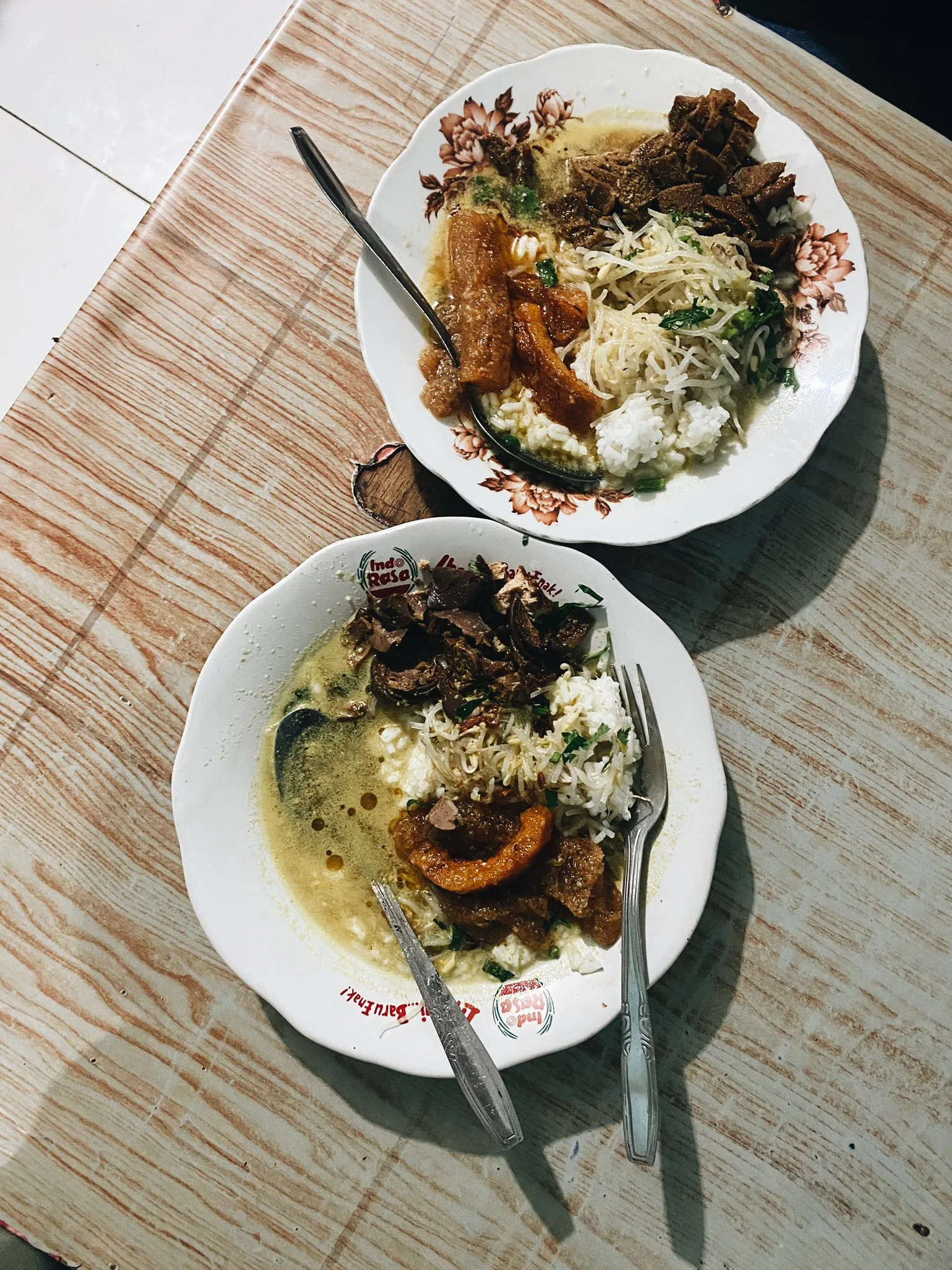
Kupat tahu is often ordered in pairs, with extra sauce or fried shallots added to taste.A street-food table in Magelang; the exact plates and toppings vary by stall.
## Choose a Stall Thoughtfully
Street food can be a good part of a trip when you use basic food-safety judgement. Choose a stall where hot food is cooked or kept hot, fresh ingredients are covered, serving surfaces look clean, and the vendor can answer a simple question about spice or ingredients. If you are unsure, choose a cooked dish rather than raw additions.
The clip below shows a busy morning service; watch how quickly the same bowl is assembled to get a feel for how a stall works before you order.
A short look at Kupat Tahu being assembled at a Magelang stall.
## Where to Find It
Markets, local food streets, and neighbourhood warungs are better explored with up-to-date recommendations from your accommodation host or a local tourism office. Opening times and exact stalls are variable, so confirm on the day instead of travelling for a list published months earlier.
## Order With Less Waste
Eat in when possible, or ask about using your own clean container for takeaway. Start with a modest portion if you are unfamiliar with the sauce or heat level. Do not publish or rely on a fixed price: costs change by vendor, ingredients, and location.
## Useful Words to Know
Simple Indonesian can make ordering clearer. “Tidak pedas” means not spicy, “sedikit pedas” means a little spicy, and “bungkus” asks for takeaway. Speak slowly, point only when necessary, and confirm the order before it is prepared if an allergy or dietary requirement matters.
If a seller cannot confidently answer an allergy question, choose a simpler cooked dish rather than taking a risk. This is not a judgement on the stall; street food preparation often uses shared tools and sauces.
For a more complete local-food itinerary, compare this dish with [Getuk Magelang](/culinary/getuk-magelang/), [Soto Magelang and Nasi Lesah](/culinary/soto-magelang-nasi-lesah/), [Sop Senerek](/culinary/sop-senerek-magelang/), and [Mangut Beong](/culinary/mangut-beong-magelang/). If you are pairing breakfast with a warm bowl, the [Sop Senerek guide](/culinary/sop-senerek-magelang/) is a good next read. Practical choices around waste and etiquette appear in our [sustainable travel guide](/guides/sustainable-travel/).