 Save
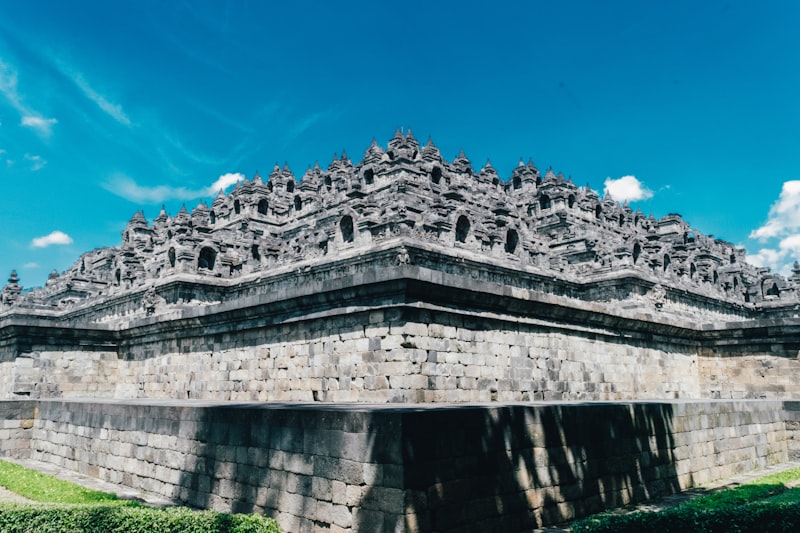
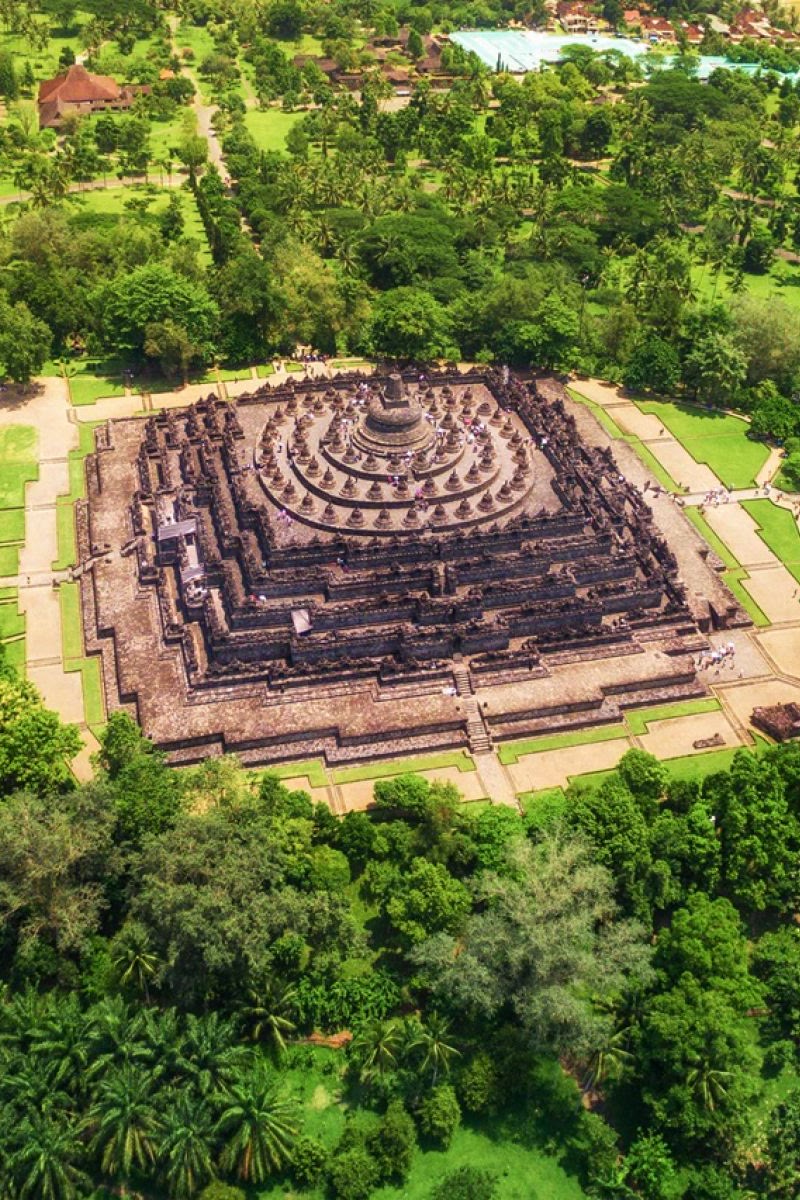
Save Borobudur is the world’s largest Buddhist temple and one of the most significant monuments of the ancient world. The 9th-century Sailendra dynasty built it on the Kedu Plain in Magelang Regency, Central Java, and UNESCO listed it as a World Heritage Site in 1991. This guide explains the history, architecture, and symbolism of the monument, and how to visit it with respect.
The temple does not sit in Yogyakarta. It lies about 40 kilometres northwest of the city, and the one-hour drive from Yogyakarta leads many visitors to assume the opposite. Administratively, Borobudur belongs to Borobudur village in Magelang Regency, Central Java province.
Where Borobudur Sits
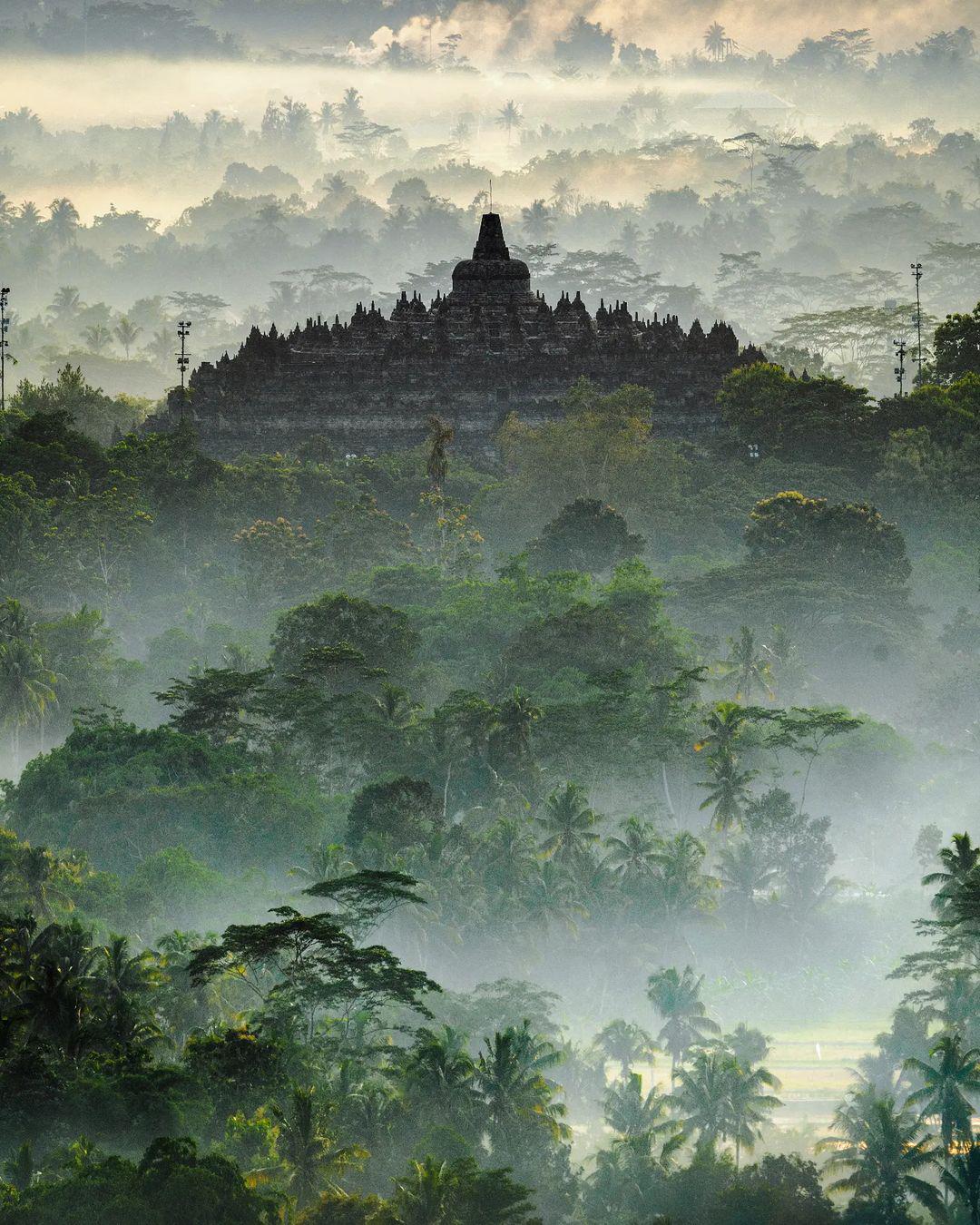
Borobudur stands at about 265 metres above sea level on the fertile Kedu Plain. Four volcanoes frame the horizon around it: Mount Merapi, Mount Merbabu, Mount Sundoro, and Mount Sumbing. The Progo and Elo rivers drain the same plain, and the region is often called the Garden of Java because of its rich volcanic soil.
The setting matters to the design. Builders placed the temple on a low hill within this ring of volcanoes, and the surrounding landscape reads as part of the monument’s sacred meaning. The volcano-ringed plain is not decoration; it is the natural stage that the architecture completes.
A Timeline of Construction, Loss, and Rediscovery
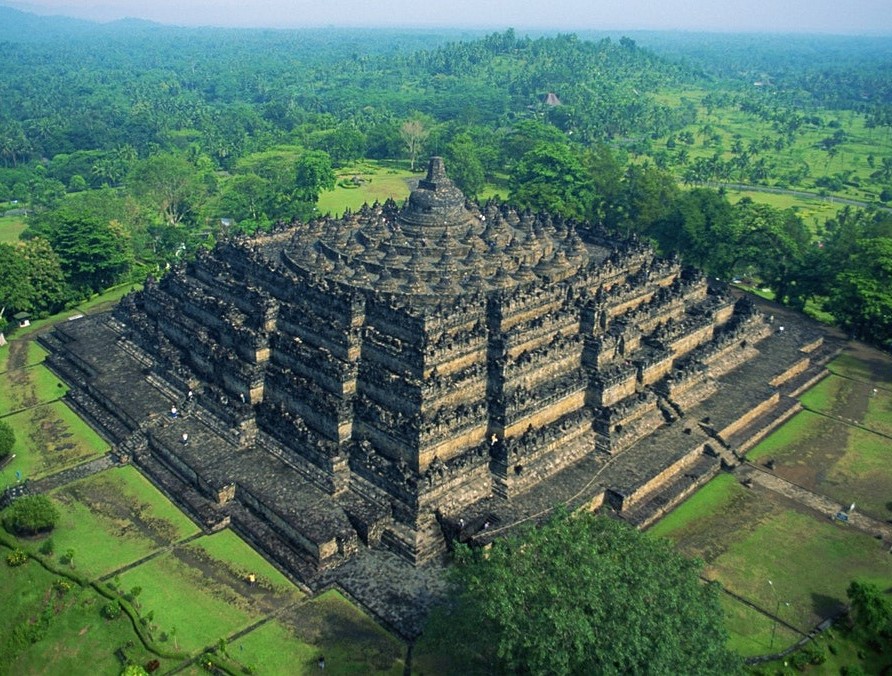
Borobudur was built between roughly 780 and 850 CE during the peak of the Sailendra dynasty. The work took about 75 years, and the traditional account credits King Samaratungga with the final completion. Builders used about 55,000 cubic metres of andesite stone, cut and fitted without any cement, and locked the blocks together with precise interlocking joints.
The temple was built as a Mahayana Buddhist sanctuary. Pilgrims entered from the east and walked clockwise, a practice called pradakshina, moving from the outer world toward the summit. This walking path is the key to reading the whole monument.
Between the 10th and 15th centuries, the temple was abandoned. The spread of Islam and the eastward shift of Java’s political centres left Borobudur to the forest, and volcanic ash slowly buried the lower levels. Locals later treated the hidden monument as an unlucky place, which is one reason it survived so undisturbed.
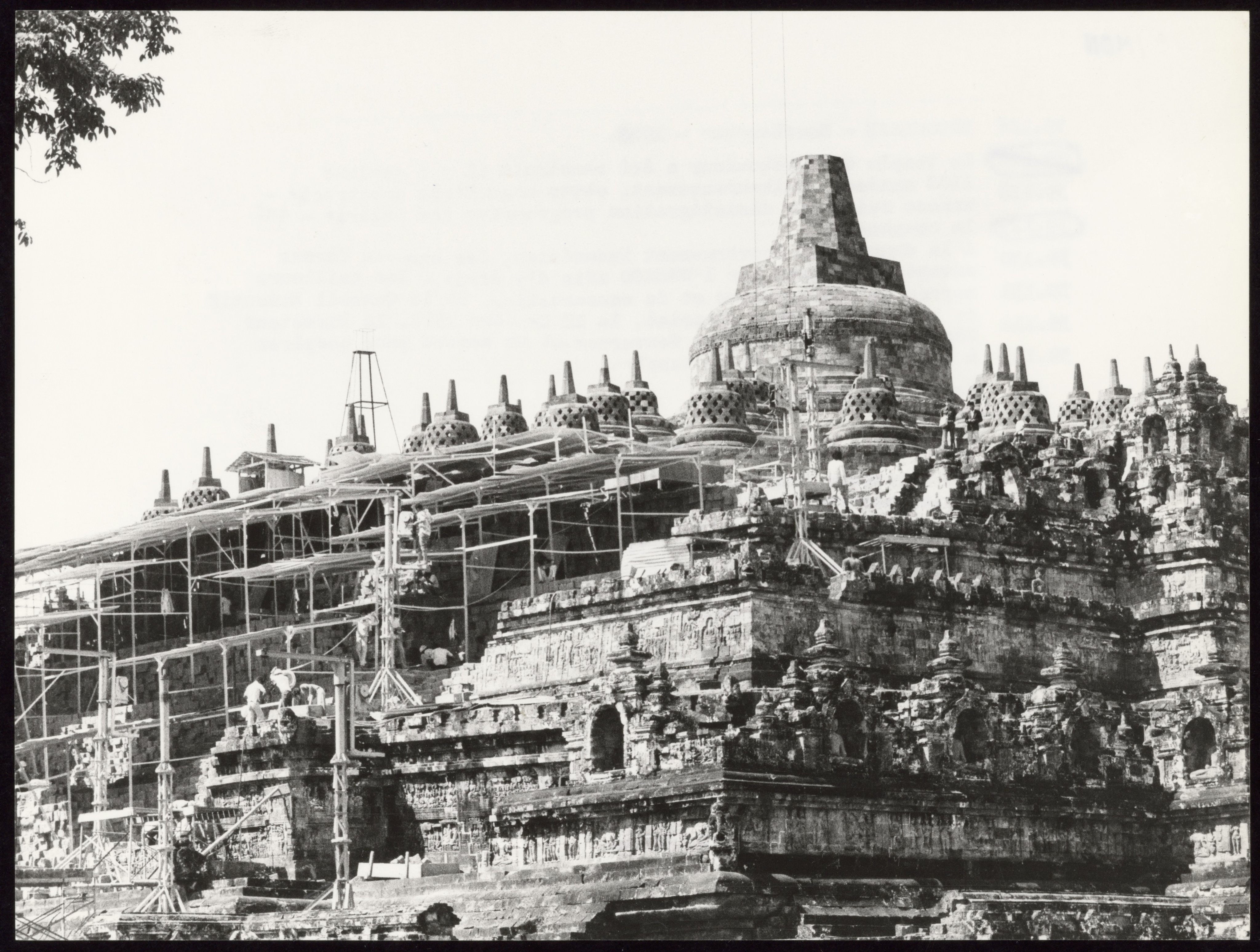
Thomas Stamford Raffles, the British governor of Java, recorded the hidden temple in 1814 after local people told him about it. The Dutch archaeologist Theodoor van Erp carried out the first systematic restoration between 1907 and 1911. Between 1973 and 1983, the Indonesian government and UNESCO ran the largest project yet: workers dismantled, cleaned, and rebuilt almost the entire structure. The archives of that restoration are themselves listed in the UNESCO Memory of the World register.
| Period | What happened |
|---|---|
| c. 780-850 CE | Built by the Sailendra dynasty over about 75 years |
| 10th-15th century | Abandoned; buried by volcanic ash and forest |
| 1814 | Recorded by Stamford Raffles |
| 1907-1911 | First systematic restoration by Theodoor van Erp |
| 1973-1983 | Large-scale UNESCO-Indonesian government restoration |
| 1991 | Listed as part of the Borobudur Temple Compounds World Heritage Site |
The Temple as a Map of the Buddhist Cosmos
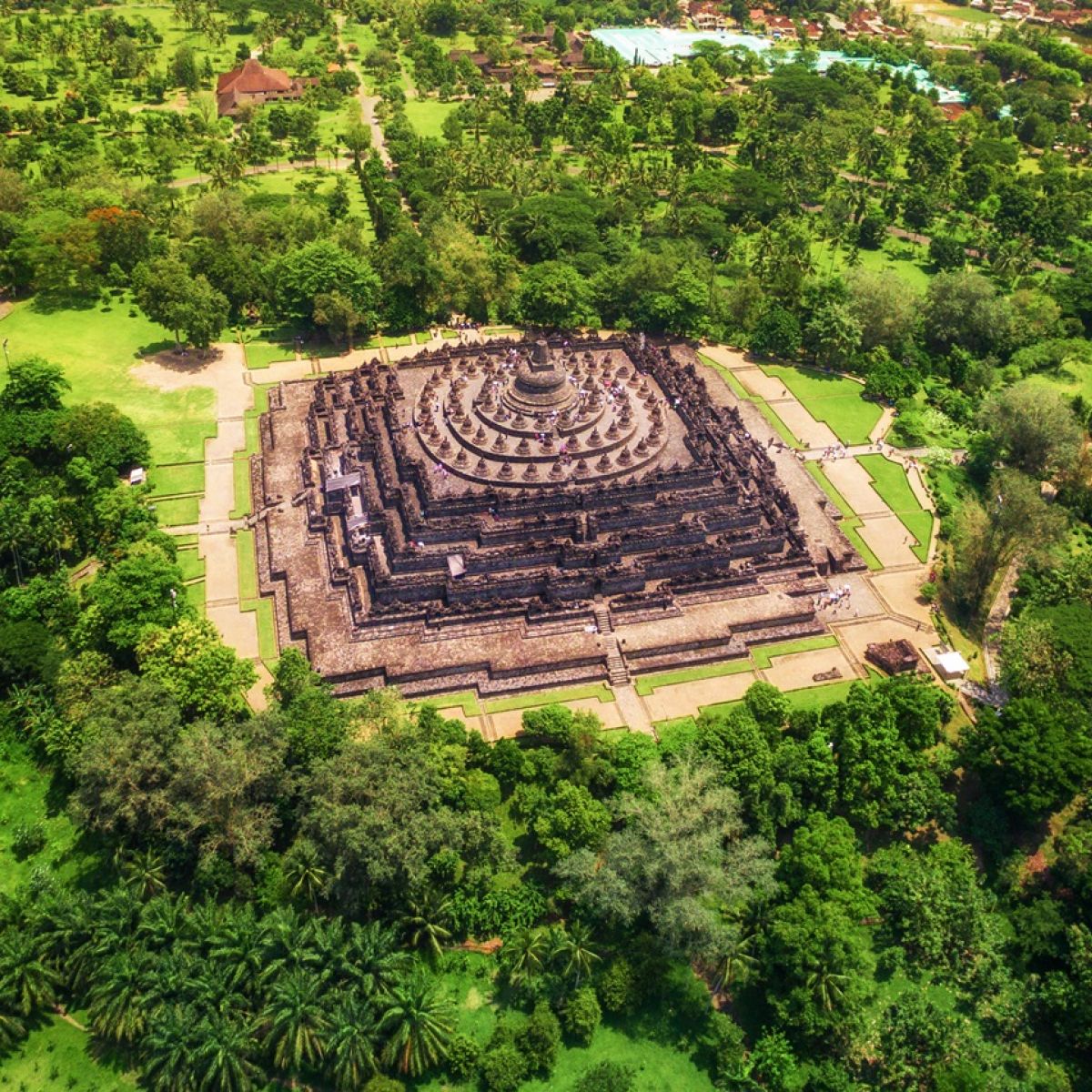
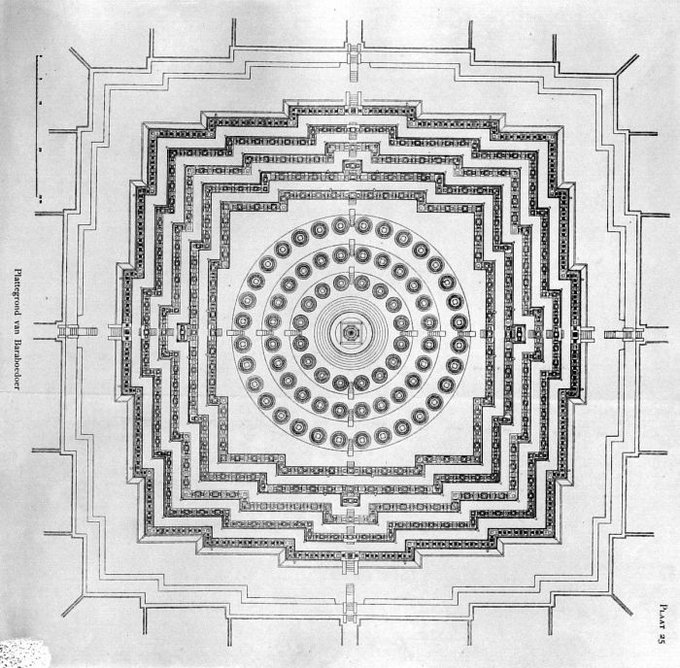
Borobudur’s deepest meaning is not in its size but in its layout. The whole monument is a three-dimensional mandala, a model of the Buddhist universe that a pilgrim climbs with their body. Seen from above, it is a perfect mandala: six square terraces below and three circular terraces above.
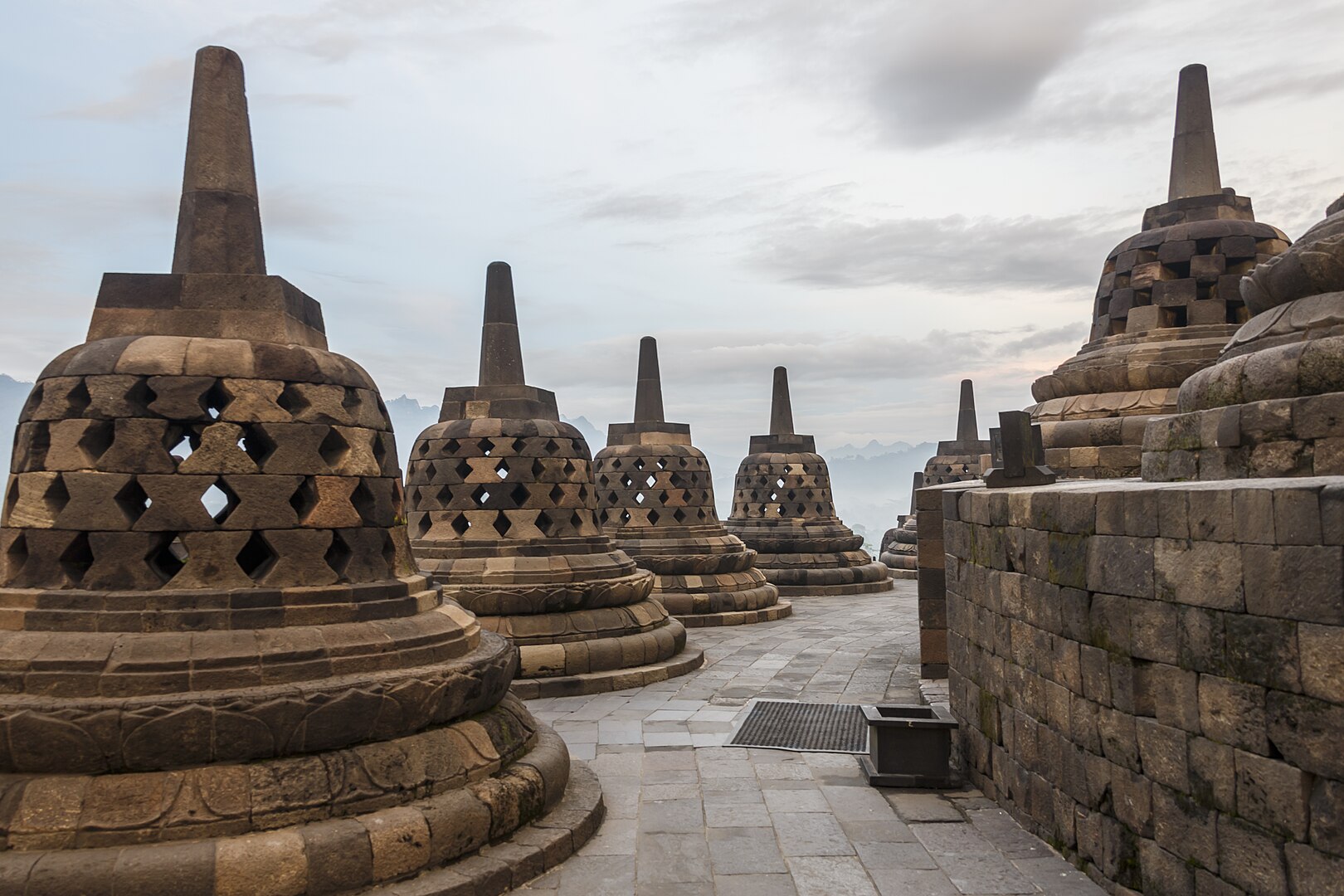
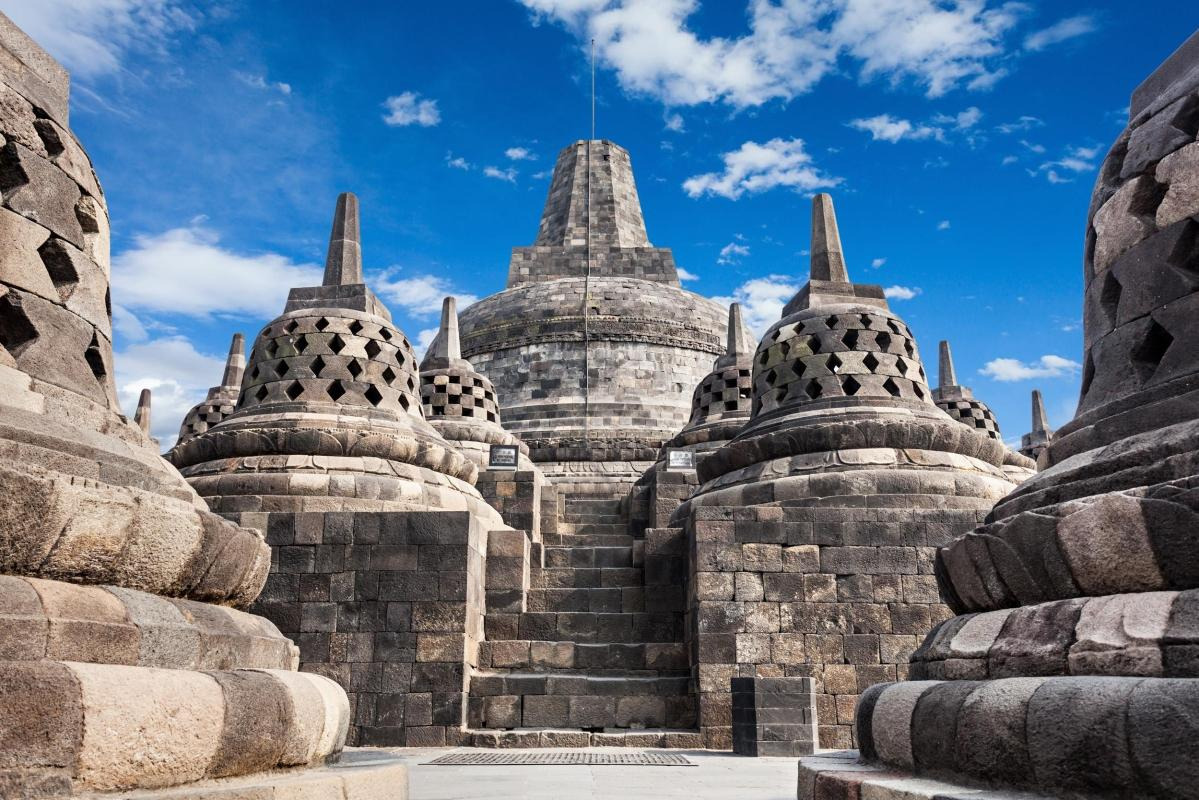
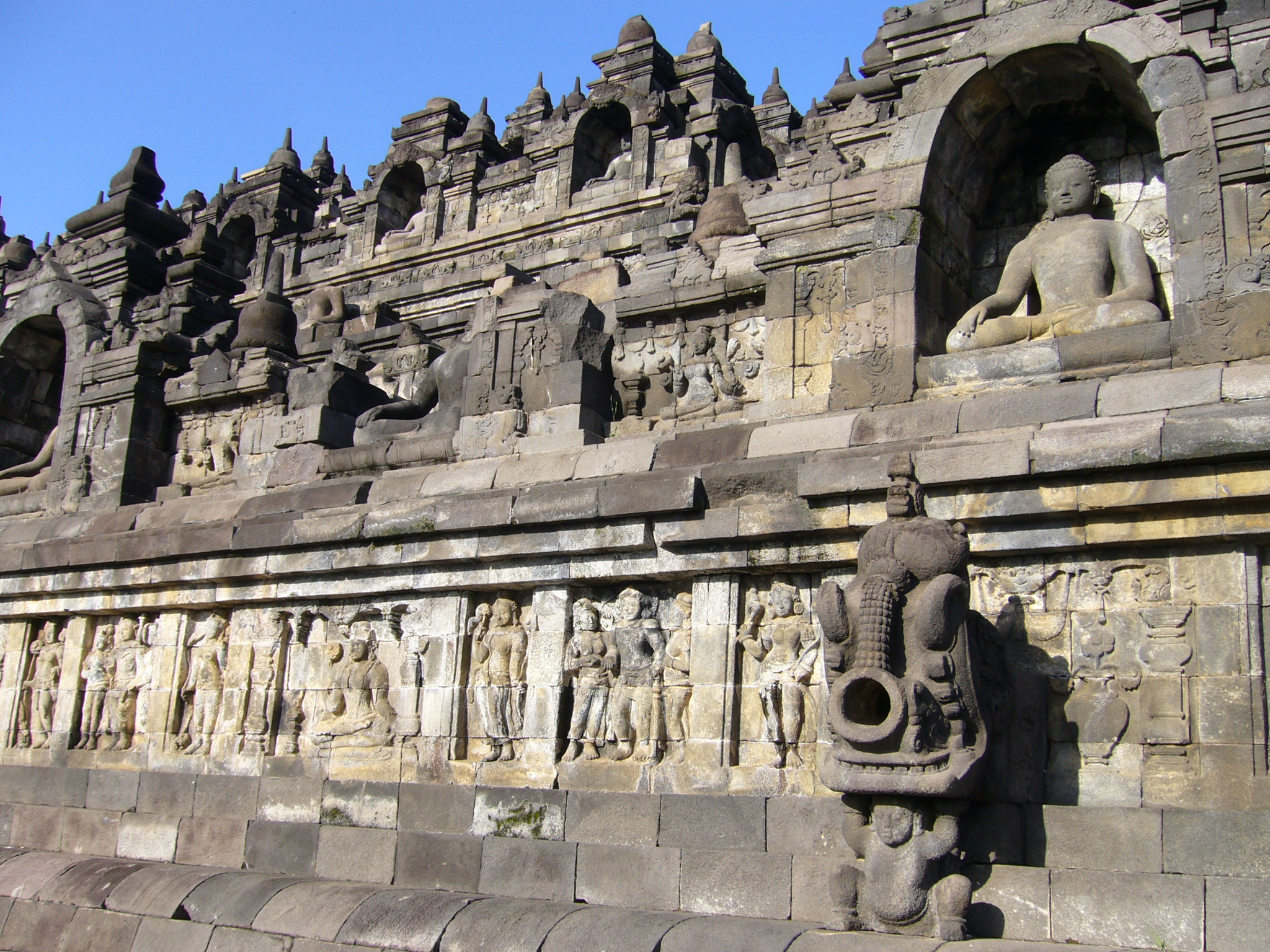
The design follows Buddhist cosmology through three realms. Kamadhatu, the lowest level and the realm of desire, is partly hidden by the stone casing that was added later. Rupadhatu, the middle five square terraces, is the realm of form, covered in narrative reliefs and Buddha niches. Arupadhatu, the upper three circular terraces, is the realm of formlessness, where 72 perforated stupas each shelter a seated Buddha.
| Realm | Level | Meaning |
|---|---|---|
| Kamadhatu | Lowest, partly hidden | Realm of desire and karma |
| Rupadhatu | Middle five square terraces | Realm of form; reliefs and Buddha niches |
| Arupadhatu | Upper three circular terraces | Realm of formlessness; 72 perforated stupas |
The temple is about 35 metres tall and roughly 123 metres square at the base. A large central stupa crowns the top, and the walk from the east entrance to the summit runs about five kilometres. Every terrace removes something: desire first, then attachment to form, until only emptiness remains at the top. The numbers are not decorative. The 2,672 relief panels and 504 Buddha statues carry the same teaching in stone.
Reliefs That Tell Stories
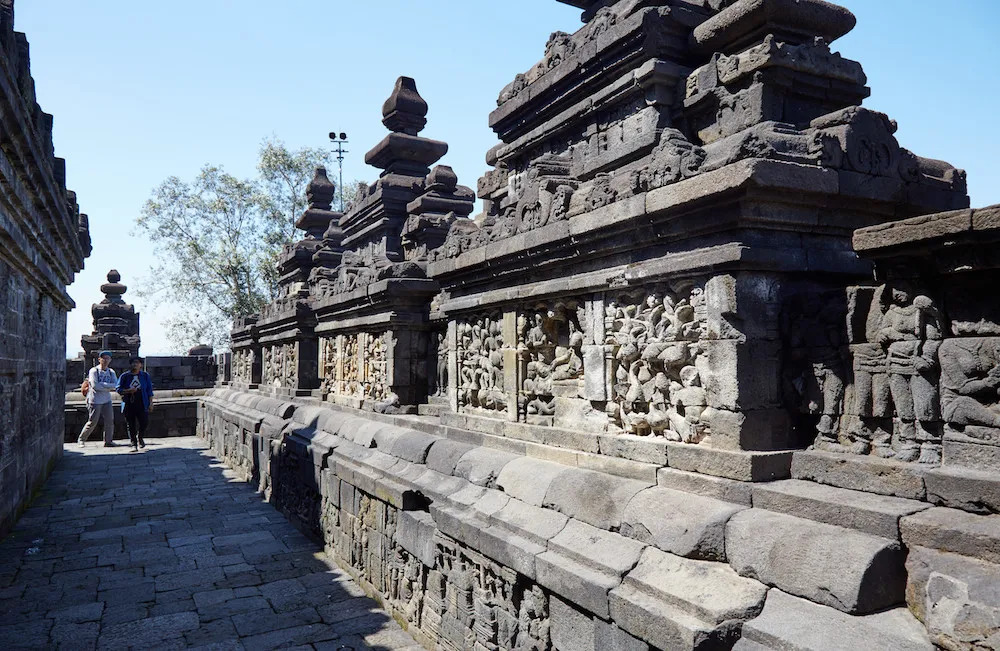
Borobudur holds the largest collection of Buddhist narrative reliefs in the world. About 1,460 of the 2,672 panels tell stories, and the reliefs cover more than 2,500 square metres. The first gallery shows the Lalitavistara, the life story of the Buddha from his descent to his first sermon at Deer Park. The Jataka panels show the Buddha’s past lives through tales of generosity, patience, and sacrifice.
The higher galleries switch to the Gandavyuha, the story of the young pilgrim Sudhana who visits 53 teachers in search of awakening. Carvers shaped every detail with care: faces, folds of cloth, ships, musical instruments, animals, and houses. The panels are not only scripture; they are also a record of 9th-century Javanese life, which makes them invaluable to historians as well as pilgrims.
Three Temples on One Axis
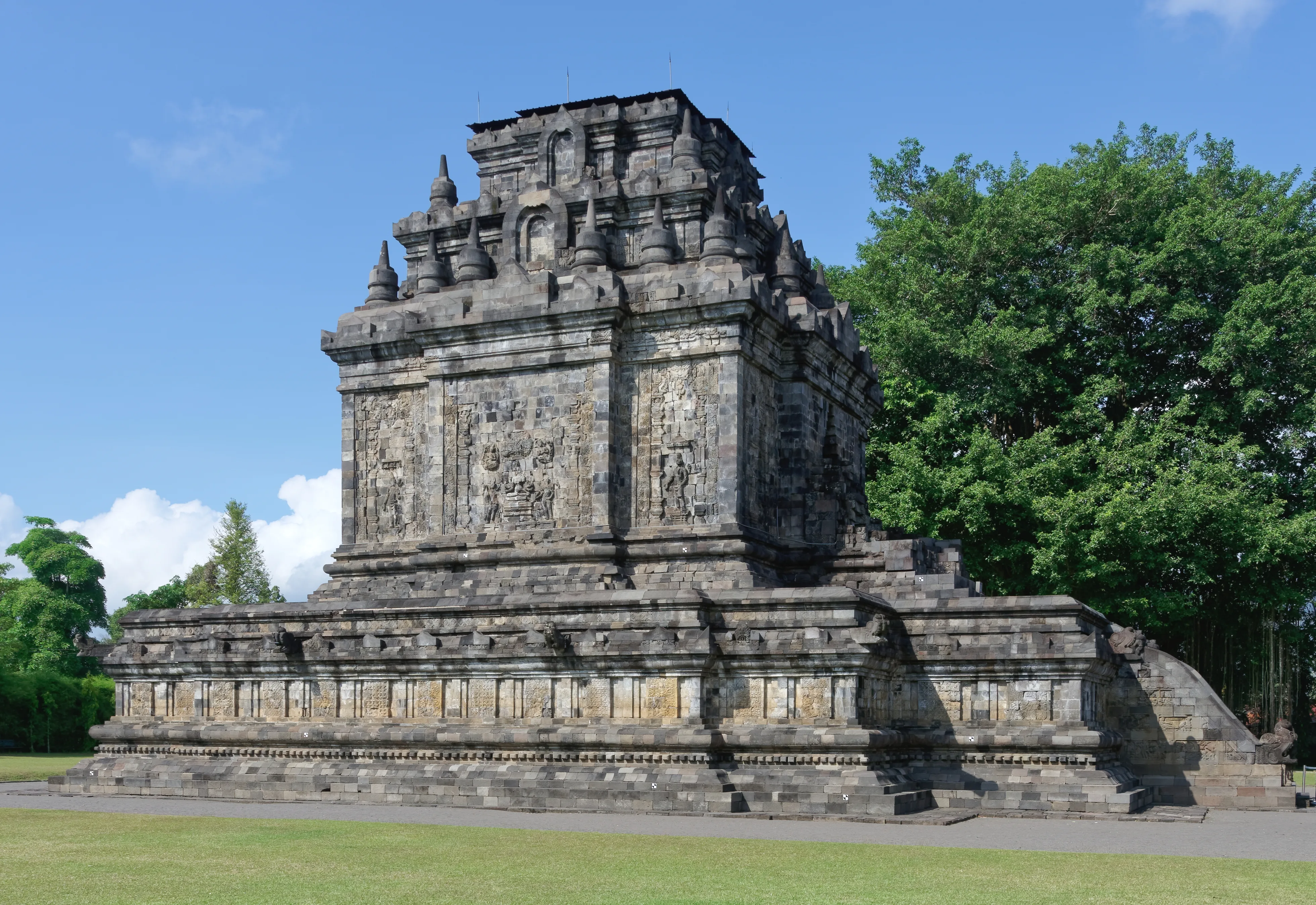
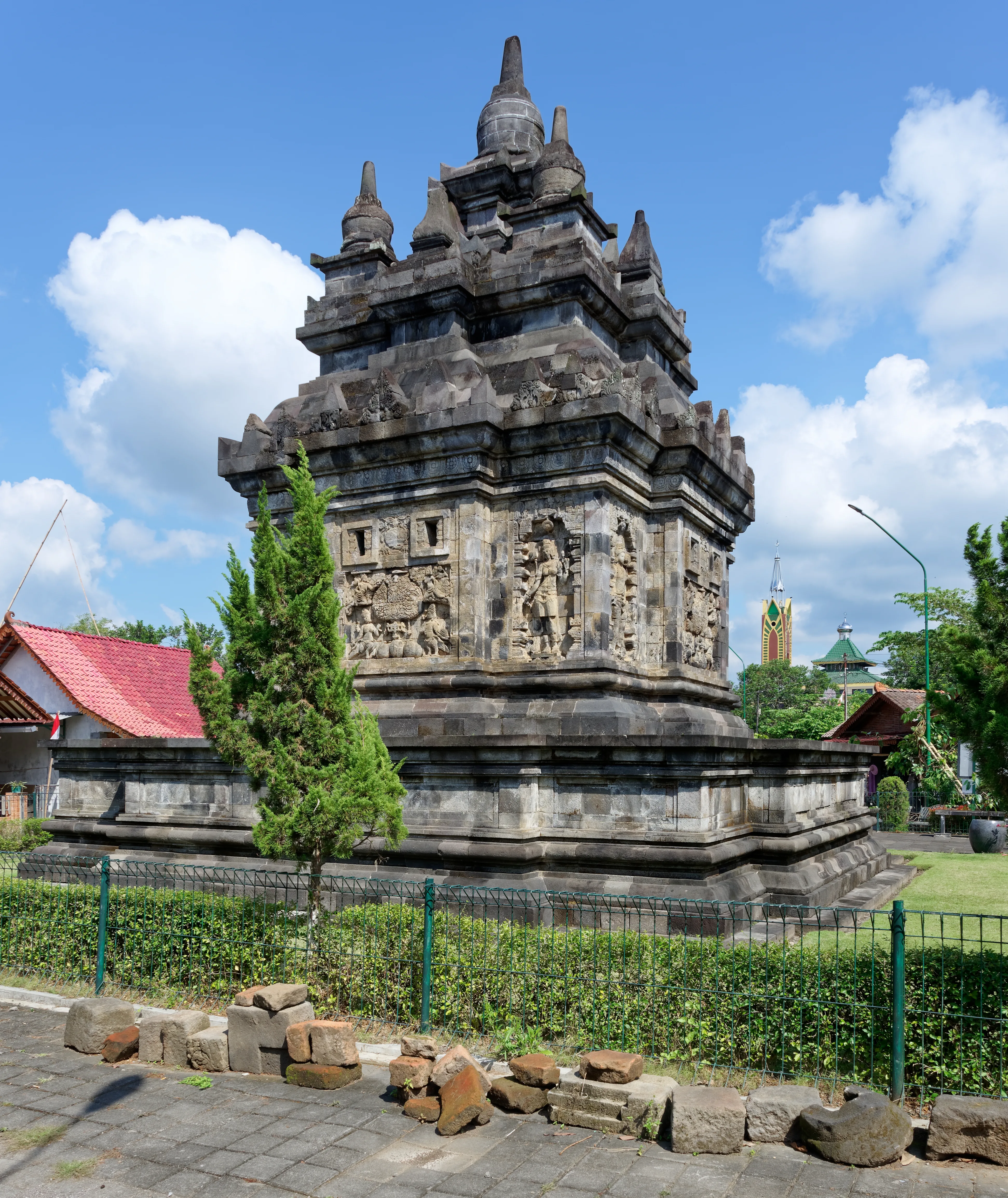
Borobudur does not stand alone. About three kilometres to the east, Mendut and Pawon lie in a nearly straight line with Borobudur, and together they form the Borobudur Temple Compounds. UNESCO lists all three as one World Heritage Site, and the layout is a complete ritual system rather than three separate buildings.
Mendut, the easternmost, holds a large Buddha with two Bodhisattvas and serves as the point of preparation and purification. Pawon, in the middle, works as a transition and meditation point. Borobudur, the goal, stands for final awakening. Every Waisak festival, pilgrims still walk the ancient route from Mendut through Pawon to Borobudur, carrying lanterns on the full-moon night.
See the Mendut Temple guide and the Pawon Temple guide for practical notes on the two smaller temples.
Engineering Without a Single Bolt
The structure relies on precise stonework rather than modern materials. Builders used no cement or metal bindings; the andesite blocks lock together through their own weight and carefully cut joints. The temple has survived earthquakes, centuries of neglect, and volcanic eruptions on this reasoning.
Water is the constant enemy of a stone monument, and the builders answered it with a drainage system of carved makara spouts. The gargoyles channel rainwater away from the core, protecting the interior from the erosion that would otherwise destroy it. This engineering is why so much of the detail survives after more than a thousand years.
A Living Heritage Under Pressure
Borobudur is not a frozen ruin; it is a working sanctuary and one of Indonesia’s busiest heritage sites. To protect the stone, access to the temple structure is limited to about 1,200 visitors a day, sold in timed slots. Visitors wear a special woven footwear cover called upanat, and a guide accompanies each group.
The pressures are real. Volcanic ash from Mount Merapi, including the major 2010 eruption, must be cleared from the site. Acid rain, climate change, and the sheer weight of tourism all wear at the stone. A debate ran through 2026 about whether to reinstall a chattra, an ornamental umbrella, on top of the central stupa. Supporters argue it restores the original form; critics warn it could change the monument’s authenticity and structural safety. UNESCO and ICOMOS have both followed the discussion closely.
How to Walk Borobudur
The best time to visit is the dry season from May to September, with May, June, and September usually the clearest months. Morning and sunrise hours give the softest light and the coolest walking. Book your timed entry online through the official operator before you travel, and confirm the current rules rather than relying on older posts.
For a lower-waste day, read the sustainable travel guide before you go. If you want the full experience, combine Borobudur with the sunrise viewpoint at Punthuk Setumbu and with the practical details in the Borobudur sunrise guide.
Walk the route the way pilgrims do: enter from the east and move clockwise, level by level, from the realm of desire toward the formless summit. Standing on the circular terraces with the 72 stupas around the central tower, you are standing where the builders meant you to arrive. The monument says in stone what a journey of seven centuries set out to prove: that the path itself is the point, and that the true arrival is the act of letting go.
Sustainable Tip
Stay on the marked route and keep off the carved stonework. Carry water in a reusable bottle, take packaging away with you, and book your timed entry through the official operator so visitor numbers stay controlled.
Family Tip
The nine levels mean long climbs on steep stone steps. Plan a shorter visit for young children, bring water and shade, and leave the top terraces as the reward rather than the main goal.
Food Note
Local stories say the architect Gunadharma walked into the Menoreh hills after the temple was finished and became the mountain range, so that he could guard his work forever. It is a legend, not recorded history, but it explains how deeply the community claims the monument.
Tourism information — including opening hours, entrance fees, and transport routes — may change. Please verify with official local sources before planning your visit.
Sources and further checks
Use these primary or specialist sources to confirm current access rules, safety notices, and travel arrangements.

About the Author
Larasati Wulandari
Independent travel writer · Central Java, Indonesia
Larasati Wulandari is an independent travel writer who has lived in Central Java for eight years. She writes first-hand, practical guides to Magelang's temples, viewpoints, and local food, and reviews them regularly as conditions change.