 Save
Key facts at a glance
- Date
- Early 9th century — the oldest temple in the compounds
- Named in an inscription
- Karangtengah inscription, dated 824 AD, records Venuvana
- Position
- About 3 km east of Borobudur, on the same straight axis as Pawon
- Sanctum
- Three seated Buddhas, each carved from a single block
- Footprint
- Square base about 13.7 m per side
- Height
- About 26.4 m; faces northwest
- Key difference from Borobudur
- Mendut is an enterable shrine; Borobudur's stupa can only be circled
- Restoration
- 1897 to 1925, attributed to Theodoor van Erp
Figures change without notice — treat this as a planning summary and confirm against the sources listed below.
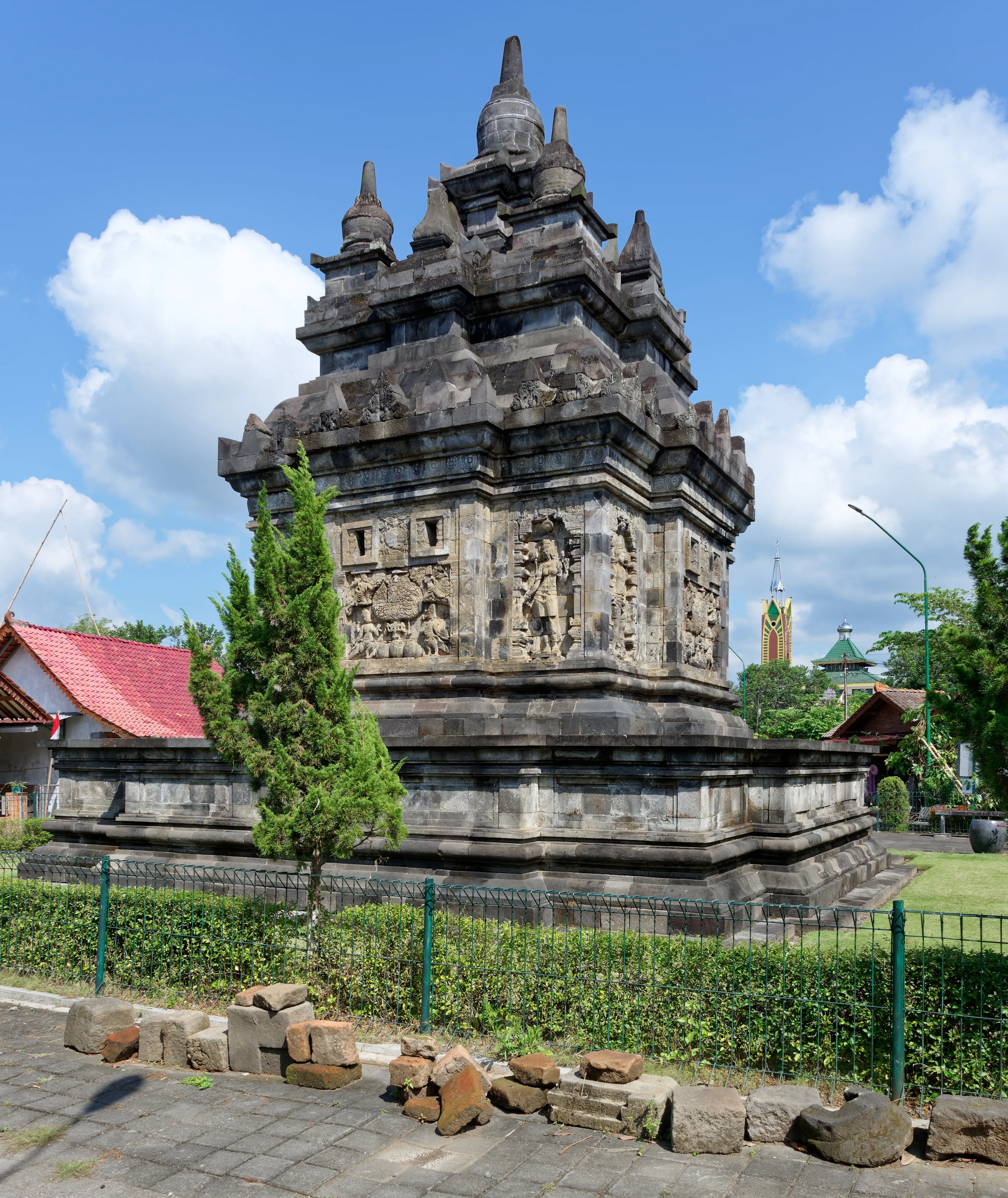
Mendut is the quiet one. Almost every visitor to the Borobudur area spends hours at the main monument and drives straight past Mendut, which is a mistake — because Mendut is the oldest of the three temples, it is the only one you can enter, and it is where the Buddhist practice in this landscape is oldest and still alive.
If you have one hour in the Borobudur area, Mendut is arguably a better use of it than Borobudur itself.
Why visit Mendut at all
Three reasons, in order of how much they matter.
It is the oldest temple here. Mendut dates from the early 9th century and predates Borobudur. On the straight east-west axis of Mendut, Pawon, and Borobudur, Mendut is at one end — the upstream, earlier end. Understanding that reverses the usual assumption that Borobudur is the centre of everything.
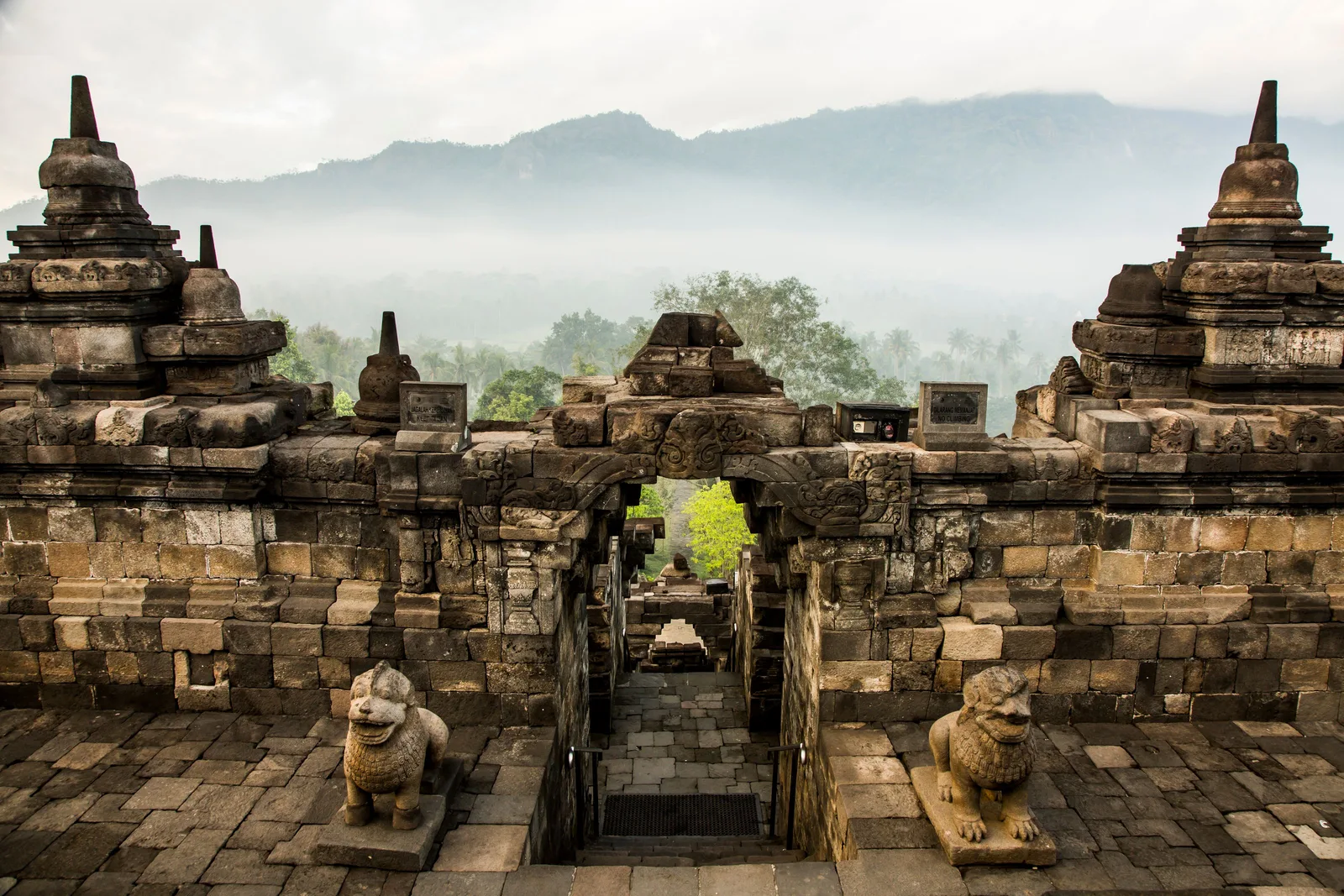
It is enterable. This is the practical reason. Borobudur’s central stupa is solid and can only be circumambulated. Mendut is a working shrine with a vestibule and a sanctum, and you can stand inside it. For most visitors this is the single most memorable thing they see in the whole area, and it takes twenty minutes.
It is still in use. A working Buddhist monastery stands beside the temple. This is not a preserved ruin being interpreted for visitors; it is a living religious site with a congregation.
UNESCO groups Mendut, Pawon, and Borobudur together as the Borobudur Temple Compounds, listing them under criteria i, ii, and vi. That shared status is a reason to visit them as a route rather than as three unrelated stops.
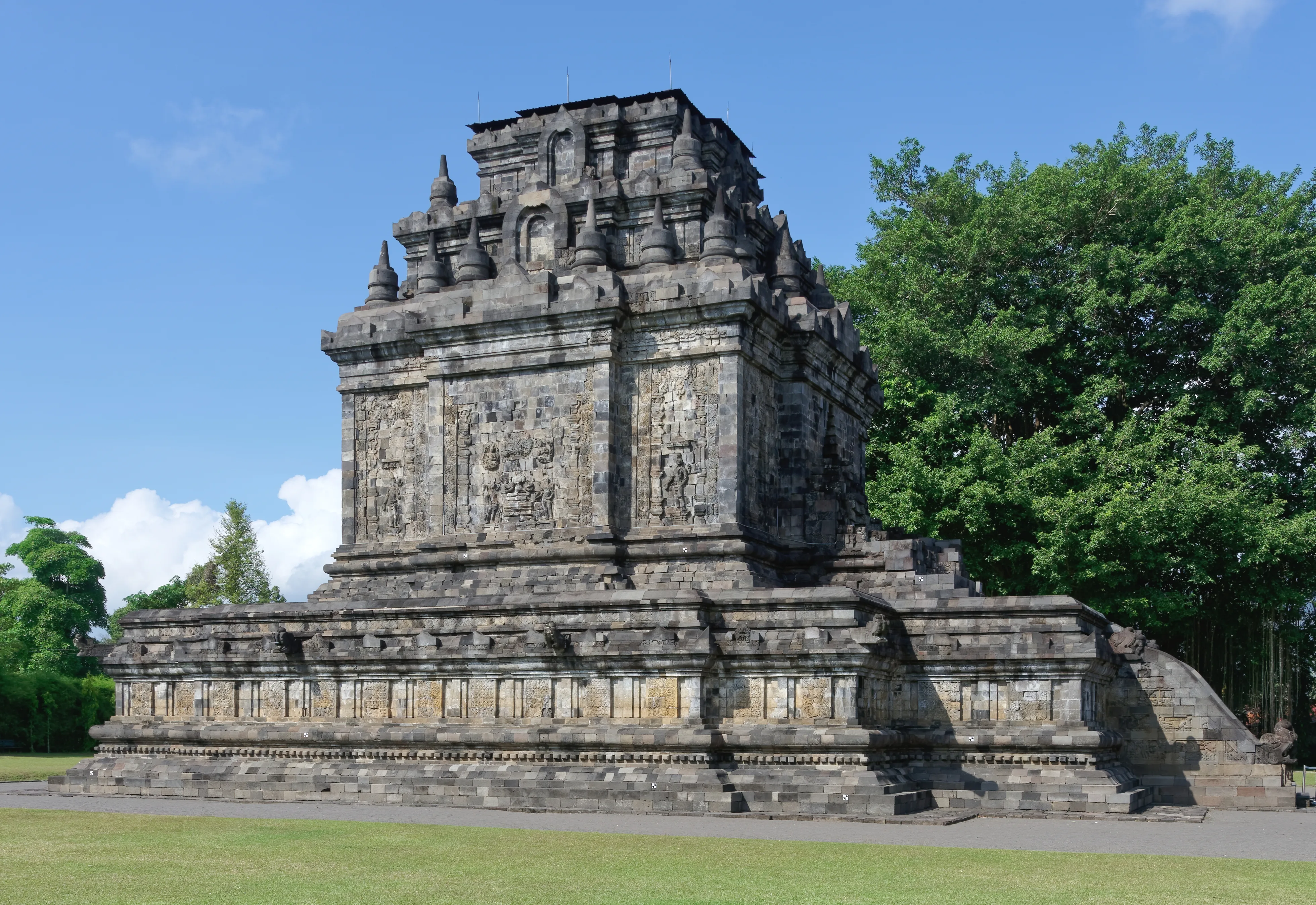
The inscription that names it
The most satisfying thing about Mendut is that it is named in a written record from its own period.
The Karangtengah inscription, dated 824 AD, records that King Indra of the Shailendra dynasty completed a sacred building called Venuvana — literally “bamboo forest”. The Dutch archaeologist J. G. de Casparis connected that name to Mendut, and the identification is generally accepted. Mendut is not an anonymous ruin that someone guessed at; it is a building with a name in a dated inscription.
The Shailendra are the same dynasty traditionally credited with Borobudur. Reading the two temples as one body of work, built across the same decades by the same patronage, changes how the heritage axis feels when you walk it.
A note on what Mendut is not. Mendut is Buddhist, and it is not Candi Jiwa at Batujaya, not Candi Gebang in Yogyakarta, and not any of the similarly named Hindu temples elsewhere in Java. Several search results conflate these. Mendut is the one in Magelang Regency on the Borobudur axis, and it is the one this guide describes.
The three Buddhas in the sanctum
The reason to go inside.
The Smithsonian’s catalogue of sacred sites in Southeast Asia describes Mendut’s interior in detail, and it is worth reading before you go so you know what you are looking at.
The sanctum holds three massive seated Buddhas, and each is carved from a single block of stone. That is the remarkable part. Not assembled, not built up in pieces — each figure was cut from one mass.
The central figure is Vairocana, seated in dharmachakra mudra — the “wheel of the law” gesture — on a double-lotus pedestal. Flanking it are Avalokiteshvara (also known as Padmapani) on one side and Vajrapani on the other.
The walls of the interior carry niches, which would have held smaller Buddha images or lamps. The vestibule relief shows Buddhist deities approaching the shrine bearing offerings described as “fit for gods and kings”, and the reliefs generally suggest a royal connection — consistent with the inscription recording a king’s completion of the building.
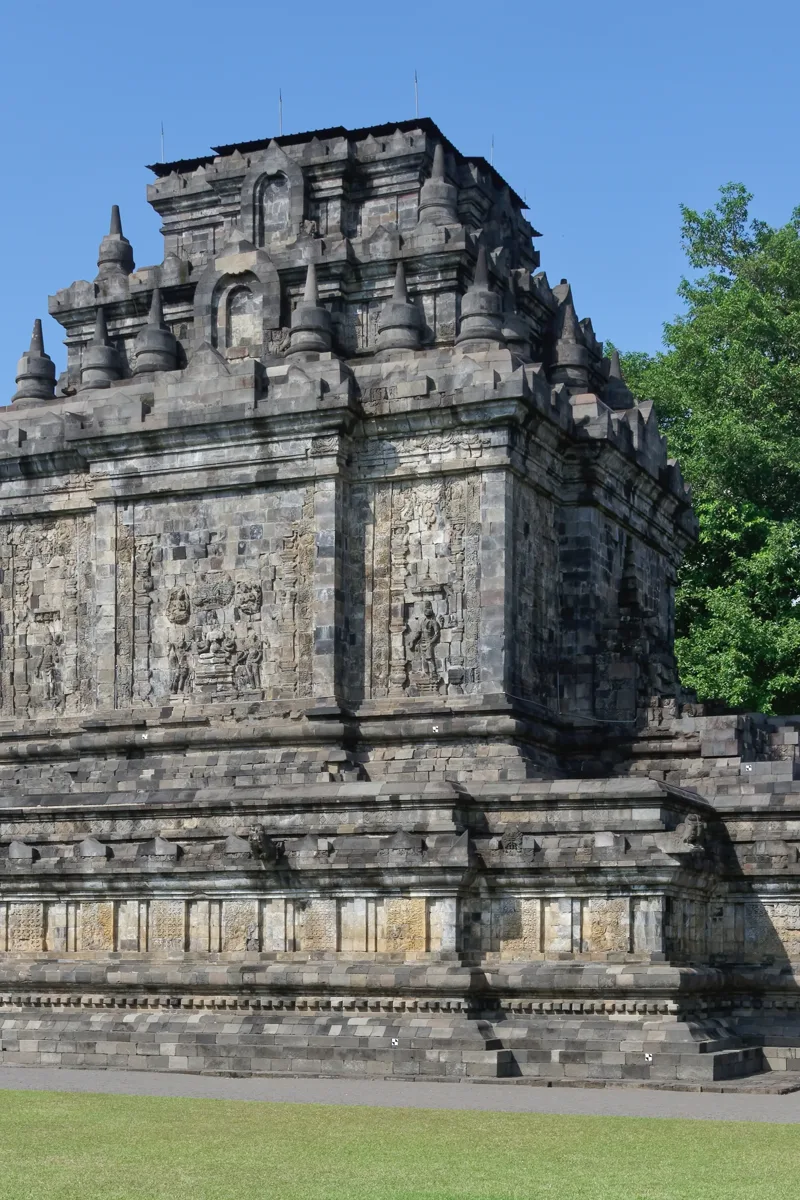
The scale and orientation: a square base about 13.7 metres per side, the base platform 3.7 metres above ground, and the temple 26.4 metres tall, facing northwest. The terrace around it was designed for pradakshina — clockwise circumambulation, the standard devotional circuit. You can walk it.
Restitution, and what to make of it
Mendut was discovered in 1836 as a ruin overgrown with bushes. That is worth sitting with: this was a standing, significant, inscribed building, and it had been lost under vegetation for a long time.
Restoration ran from 1897 to 1925, attributed to Theodoor van Erp — the same restorer credited with Borobudur’s anastylosis. The reconstruction is recorded as the work of an architect named Gunadharma.
This is one of the best cases in the region for thinking about what restoration means. Anastylosis reassembles a building from its own fallen stones; it is an act of conservation, not reconstruction, but it is still a modern intervention on an ancient object. Knowing that Mendut’s clean lines are the result of a twentieth-century process, rather than an untouched survival, is part of an honest visit.
The monastery next door
Beside the temple stands the Mendut Buddhist Monastery, a functioning religious community. Within it is Candi Sangharaja, built to mark the 100th birthday of the Thai patriarch Vajirananavarorasa.
This changes how you should behave here. Mendut is not only a monument. If a ceremony or prayer is happening, give it space and change your plan if asked — do not photograph people or religious activity without permission, and do not treat the monastery’s spaces as part of the visitor route.
It is also the clearest signal of what makes Mendut different from Borobudur. Borobudur is enormous and, for practical purposes, monumental. Mendut is modest and current.
Vesak: when Mendut becomes the destination
Once a year, during the Vesak or Waisak full-moon observance, thousands of monks and pilgrims process from Mendut to Borobudur.
This is not a reconstruction or a staged show — it is a living ritual, and it is one of the genuine reasons the Mendut-to-Borobudur axis is laid out the way it is. If your visit coincides with Vesak, you are seeing the axis being used for its original purpose.
It is also a bad time to plan a quiet visit. Entry arrangements change substantially around the festival period, and crowds are extreme. If Vesak matters to you, plan for it deliberately; if it does not, avoid it.
How to plan the stop
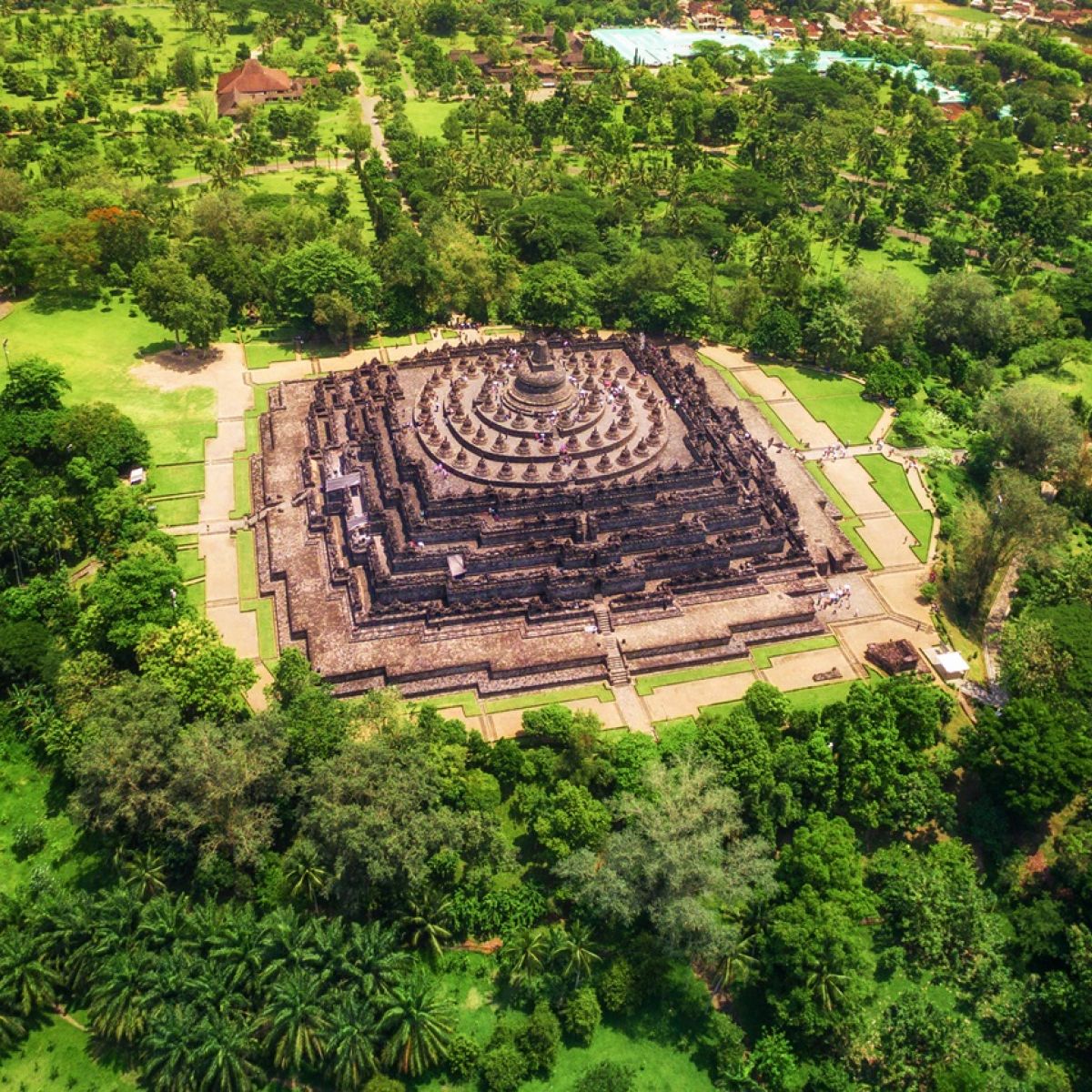
Mendut sits about 3 km east of Borobudur, on the same straight line as Pawon. That makes it straightforward to combine with the rest of the axis rather than treat as a separate excursion.
Do not assume your Borobudur ticket covers Mendut. All three temples share one UNESCO listing, but heritage designation and ticketing are unrelated things. Confirm admission arrangements with the operator before you travel.
Allow 30 to 60 minutes. The visit is short. Its value is not distance covered.
Go early or late if you want quiet. Midday crowds and heat make an interior visit unpleasant.
If you have time, keep going. Mendut, Pawon, and Borobudur together are a walkable half-day. See the Pawon temple guide for the middle point on the axis, and Candi Ngawen for a smaller, quieter temple about 6 km further east.
Visiting respectfully
Keep voices low, wear clothing suited to an active sacred place, and follow instructions from staff or worshippers. Do not climb on stonework, cross barriers, or assume every area is available for photography. If a ceremony is taking place, give it space.
The same approach applies at Borobudur and Pawon. For practical and planning questions about the main monument, the Borobudur sunrise guide is the better companion.
What to bring
- Water, sun protection, and a light rain layer.
- Modest, breathable clothing and footwear for walking.
- Cash, as smaller sites are more likely to be cash-only than the main monument.
- A charged phone with transport details saved offline.
- A small bag for your own waste.
For a lower-impact heritage day, the sustainable travel guide covers waste, photography, local spending, and weather adaptation. For timing the whole area, the best time to visit Magelang guide and the two-day itinerary both help.
Sustainable Tip
Mendut, Pawon, and Borobudur sit on one straight line. Walking or cycling between them in a single loop is less wasteful than running three separate car trips across the same area.
Family Tip
Mendut is a good family stop precisely because it is small and enterable — children can stand inside and see the three Buddhas rather than only looking at an exterior. Keep voices low, since the working monastery next door is a live religious site.
Food Note
Mendut is the only temple in the compounds you can walk inside. Most visitors spend hours at Borobudur and skip the one place where you actually get to be in the room with the statues.
Frequently asked questions
How old is Mendut Temple?
It dates from the early 9th century and is the oldest of the three main temples in the Borobudur Temple Compounds, slightly predating Borobudur itself. It was found overgrown in 1836 and restored between 1897 and 1925.
Why is Mendut important for Buddhists?
The Karangtengah inscription, dated 824 AD, records that King Indra of the Shailendra dynasty completed a sacred building called Venuvana, meaning bamboo forest. Dutch archaeologist J. G. de Casparis connected that name to Mendut. Mendut remains an active Buddhist site today, with a working monastery beside it.
Can you go inside Mendut Temple?
Yes, and this is what distinguishes it from Borobudur. Mendut is an enterable shrine with a vestibule and a sanctum holding three large seated Buddhas. Borobudur's central stupa can only be circumambulated from outside, not entered.
Who are the three statues in the Mendut sanctum?
The central figure is Vairocana, seated in dharmachakra mudra on a double-lotus pedestal, flanked by Avalokiteshvara (also known as Padmapani) and Vajrapani. Each of the three is carved from a single massive block of stone.
How long does a visit to Mendut take?
Allow 30 to 60 minutes. It is a small temple with an enterable interior, so the visit is less about distance and more about standing quietly in a small stone room with three large statues in it.
Is Mendut included in the Borobudur ticket?
Do not assume it is. All three temples form one UNESCO listing, but UNESCO heritage status and ticket arrangements are separate things. Confirm current admission and whether a Borobudur ticket covers Mendut with the operator before you travel.
Why do pilgrims walk from Mendut to Borobudur?
It is part of the annual Vesak or Waisak full-moon observance, when monks and pilgrims process from Mendut to Borobudur. It is a living ritual rather than a reconstruction, and visitor arrangements change substantially around that period.
Is there a monastery at Mendut?
Yes. A working Mendut Buddhist Monastery stands beside the temple and includes Candi Sangharaja, which was built to mark the 100th birthday of the Thai patriarch Vajirananavarorasa. Approach quietly, as it is a functioning religious site rather than only a monument.
Tourism information — including opening hours, entrance fees, and transport routes — may change. Please verify with official local sources before planning your visit.
Sources and further checks
Use these primary or specialist sources to confirm current access rules, safety notices, and travel arrangements.

About the Author
Larasati Wulandari
Independent travel writer · Central Java, Indonesia
Larasati Wulandari is an independent travel writer who has lived in Central Java for eight years. She writes first-hand, practical guides to Magelang's temples, viewpoints, and local food, and reviews them regularly as conditions change.