Key facts at a glance
- Nasi langi cooking method
- Rice steamed wrapped in banana leaf with coconut milk
- Nasi langi flavour
- Fragrant and savoury, with the banana leaf adding aroma
- Nasi langi accompaniments
- Sambal, fried chicken, salted egg, or serundeng
- Ongol-ongol base
- Tapioca starch, often with coconut milk
- Ongol-ongol texture
- Firm and bouncy, similar to a mochi or tapioca pudding
- Typical price
- A few thousand rupiah per portion; confirm locally
- Storage
- Both keep reasonably well; reheat gently rather than microwaving hard
- Commonly sold at
- Warungs and market stalls, especially in Magelang city
Figures change without notice — treat this as a planning summary and confirm against the sources listed below.
Two dishes that fill a Magelang plate without appearing on most visitor lists. Neither is a monument attraction. Both are everyday food that the region actually eats, which is precisely why they are worth knowing.
Nasi langi is a rice dish. Ongol-ongol is a small chewy sweet made from starch. They share almost nothing except that they are both easy to find, both cheap, and both much better when you know how to order them.
Nasi langi: rice steamed in its own perfume
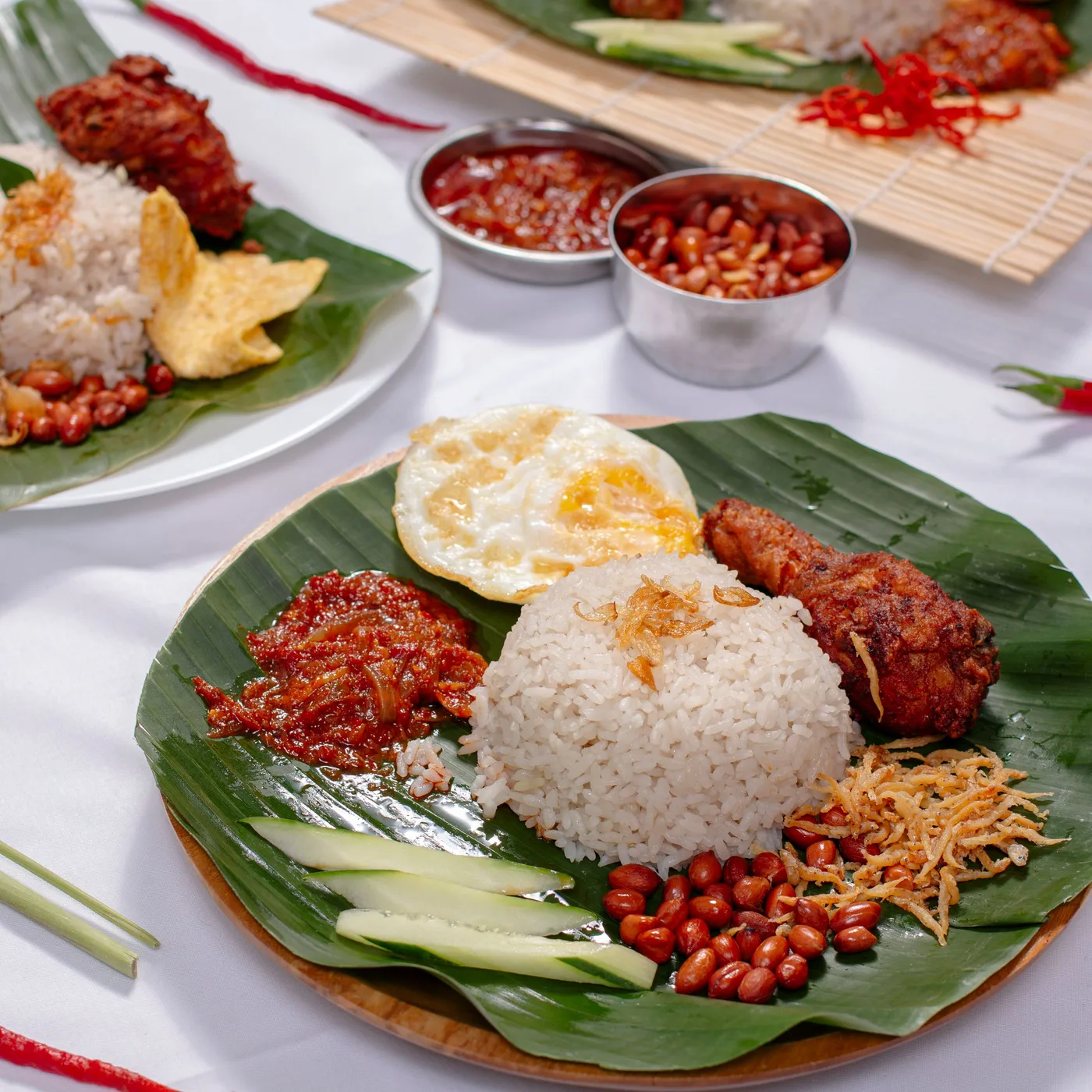
Nasi langi is built on a single idea. Rice is steamed while tightly wrapped in a banana leaf, together with coconut milk and aromatics, so the leaf steams and perfumes the rice from the inside rather than the rice being flavoured only at the surface.
The result is a distinctive, slightly sweet and very fragrant rice. It is not plain rice, and it is not coconut rice in the sense of being visibly milky. The aroma is the point.
It is served as a main course, alongside the usual Indonesian accompaniments:
Sambal, which is the heat element, and which is served on the side more often than not.
Fried chicken, often marinated in a sweet soy and spice mix before frying, which pairs with the rich coconut scent.
Salted egg, which adds a savoury, almost oceanic counterweight to the sweetness.
Serundeng, toasted coconut with spices, which brings a dry crunch against the soft rice.
Ask how the rice was prepared when you order. Some vendors steam it in coconut milk, some with stock or with a spice paste, and the difference is real. This is not a dish you can reliably order blind from an English menu.
Ongol-ongol: firm, chewy, and green
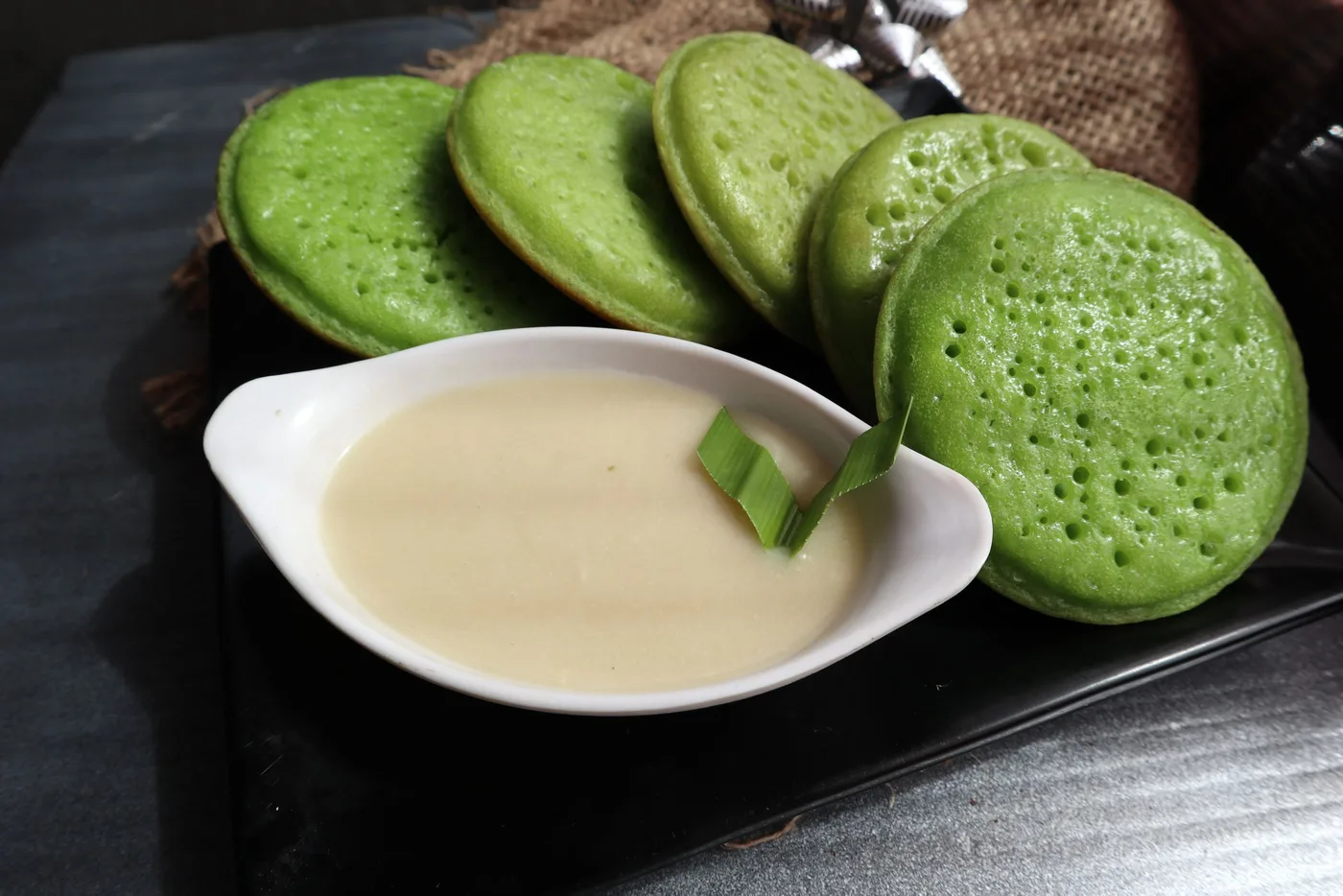
Ongol-ongol is a small dumpling or pudding made primarily from tapioca starch, usually with coconut milk and palm sugar, and often coloured and flavoured with pandan.
The texture is the distinguishing feature. It is firm, springy, and bouncy — closer to a mochi or a tapioca pudding than to anything custardy. It holds its shape when you pick it up. This puts it in a different texture family from lumpur, which is soft and spoonable, even though both are coconut-milk starch foods.
Pandan-tinged ongol-ongol is the version you will see most. It is green and strongly aromatic. Plain white versions exist and are milder, so if pandan is not to your taste, ask. Sugar levels also vary quite a bit between vendors, so it is reasonable to ask about sweetness if that matters to you.
It is a snack or a dessert rather than a main course. It appears alongside other snack foods in markets and at small stalls, and it is usually available in the morning when it is fresher.
How to order them
Both are simple foods, and the ordering rules are mostly about when and how fresh.
Go earlier for ongol-ongol. It is typically made the same day and does not keep overnight, so late-afternoon availability is less reliable. Morning is safer.
Nasi langi is available all day as an everyday main course. It is one of the easier things to add to a meal at any hour.
Ask about the banana leaf. Some vendors wrap for takeaway and some plate it. Wrapped nasi langi holds its fragrance better; unwrapped is easier to eat with rice and sides. Either is fine, but the question is worth asking.
Mind the spice. Nasi langi itself is mild and not spicy; the heat is entirely in the sambal. Ask for it separately if a child or a spice-sensitive guest is eating.
Cash. Small stalls and market vendors are usually cash-only. This applies across the region.
Where these fit in a day
These two dishes work best as additions to a broader food day rather than as standalone destinations. The soto Magelang and nasi lesah guide is the right starting point for the savoury end of the region’s food, and it explains the difference between the region’s rice dishes better than anything else here.
A sensible order of attack:
Breakfast in Magelang city — soto Magelang, which is the region’s signature morning food, then ongol-ongol if a stall is open.
Lunch — nasi langi as a main course with sambal, fried chicken, and serundeng.
Afternoon — one of the sweet items from the serabi and lumpur guide, which is about textures and cooking methods rather than about a single dish.
Any time — getuk, which is the region’s most famous sweet and the one most easily bought as a packaged takeaway. See the getuk guide.
Spread across a day like that, you cover the savoury breakfast, the rice staple, and two distinctly different sweets, without any of it overlapping.
Practical notes and honest limits
Prices for both dishes run from a few thousand rupiah per portion upward, varying by vendor and by portion size. We have not found any central body that fixes a price for nasi langi or ongol-ongol in Magelang, so treat any figure as a range and confirm at the stall.
Both are commonly sold at warungs and market stalls, and in Magelang city you will have far more choice than in the immediate temple area. If you want these specifically, plan to eat them in the city rather than hoping to find them at the temple.
For a savoury dish with a very different flavour profile — fish in a spicy, thick sauce — see the mangut beong guide.
Sources and further checks
Local prices and stall availability change. Confirm at the point of purchase, and treat figures here as ranges rather than quotes.
Sustainable Tip
Banana leaf and pandan are both biodegradable, but they are only compostable if they have not been fried. Ask whether your leaf wrapper can be returned for composting or reuse rather than going straight to landfill.
Family Tip
Nasi langi is a soft, mild, non-spicy rice dish that most children eat happily. Ask for the sambal on the side so a child can leave it, and ongol-ongol is a natural sweet finish to the meal.
Food Note
Ongol-ongol sells best in the morning because it is usually made fresh that day and does not keep overnight. Ask when it was cooked, and if it was this morning, you are getting the good version.
Frequently asked questions
What is nasi langi?
Nasi langi is a rice dish in which rice is steamed while wrapped in banana leaf together with coconut milk and aromatics, which gives it a distinctly fragrant, slightly savoury character. It is commonly served with sambal, fried chicken, salted egg, or serundeng as a full meal.
Is nasi langi the same as nasi lemak?
They are related but not the same. Both pair rice with coconut milk and banana leaf, but nasi lemak is a Malay dish usually flavoured with pandan and often accompanied by fried chicken, peanuts, cucumber, egg, and sambal, while nasi langi is Javanese and leans on the fragrance of the leaf and coconut milk as the main event.
What is ongol-ongol?
Ongol-ongol is a small chewy dumpling or pudding made primarily from tapioca starch, often with coconut milk, sugar, and sometimes pandan for colour. The texture is firm and bouncy rather than soft, closer to mochi than to a custard.
Is ongol-ongol sweet or savoury?
Usually sweet, using coconut milk and palm sugar. Pandan is often added for both its colour and its aroma. Some vendors serve a savoury or plain variant, but the sweet form is the one you will find most often.
Why is ongol-ongol often coloured green?
Pandan leaf is used to colour the dough a distinctive green and to add fragrance. Plain white ongol-ongol also exists and has a milder flavour. If pandan is not to your taste, ask for the plain version.
Is ongol-ongol gluten-free?
The base is tapioca starch and coconut milk, so it is naturally gluten-free. It is usually cooked and sold without wheat, though it is worth confirming at the stall if gluten avoidance is strict for you.
Are these dishes available every day?
Nasi langi is an everyday food and is generally available daily. Ongol-ongol is more commonly a market or home-style item and is easier to find in the morning, so going earlier in the day improves your chances.
Can I order these as part of a larger meal?
Yes. Nasi langi is typically ordered as a main course with sides. Ongol-ongol is a snack or dessert, so it is usually added to a meal rather than served as the main course.
Tourism information — including opening hours, entrance fees, and transport routes — may change. Please verify with official local sources before planning your visit.
Sources and further checks
Use these primary or specialist sources to confirm current access rules, safety notices, and travel arrangements.

About the Author
Larasati Wulandari
Independent travel writer · Central Java, Indonesia
Larasati Wulandari is an independent travel writer who has lived in Central Java for eight years. She writes first-hand, practical guides to Magelang's temples, viewpoints, and local food, and reviews them regularly as conditions change.