 Save
Key facts at a glance
- Nasi Lesah's defining feature
- Coconut-milk (santan) broth, served with rice
- Ordinary soto's usual broth
- A clearer, lighter stock-based broth
- Naming in Magelang
- Vendors use both names loosely, so ask what is in the bowl
- Typical serving times
- Soto for breakfast; nasi lesah from afternoon into the evening
- Payment
- Assume cash only at the long-running stalls
- Soto's national status
- Recognised in 2018 as one of Indonesia's five national dishes
Figures change without notice — treat this as a planning summary and confirm against the sources listed below.
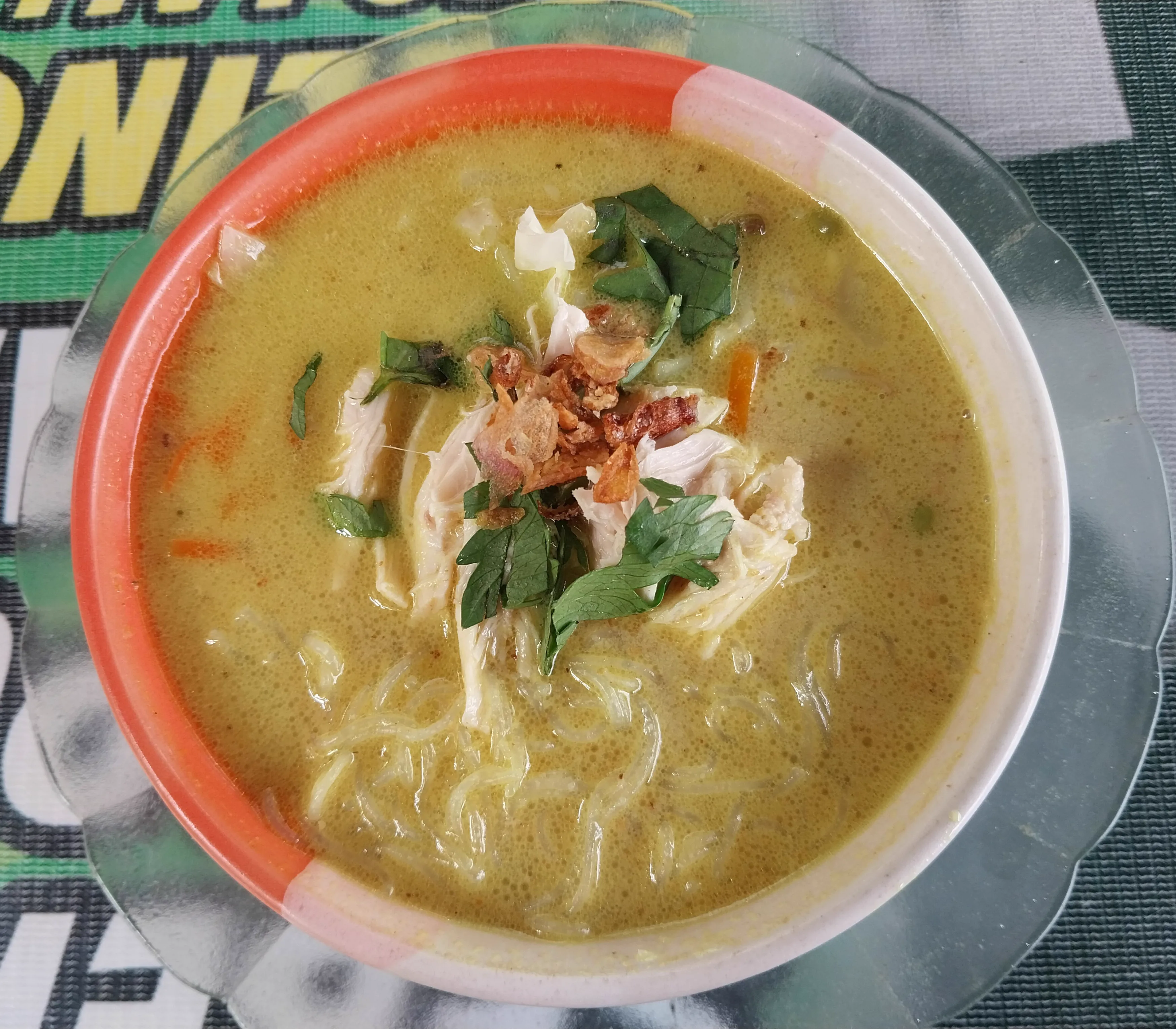
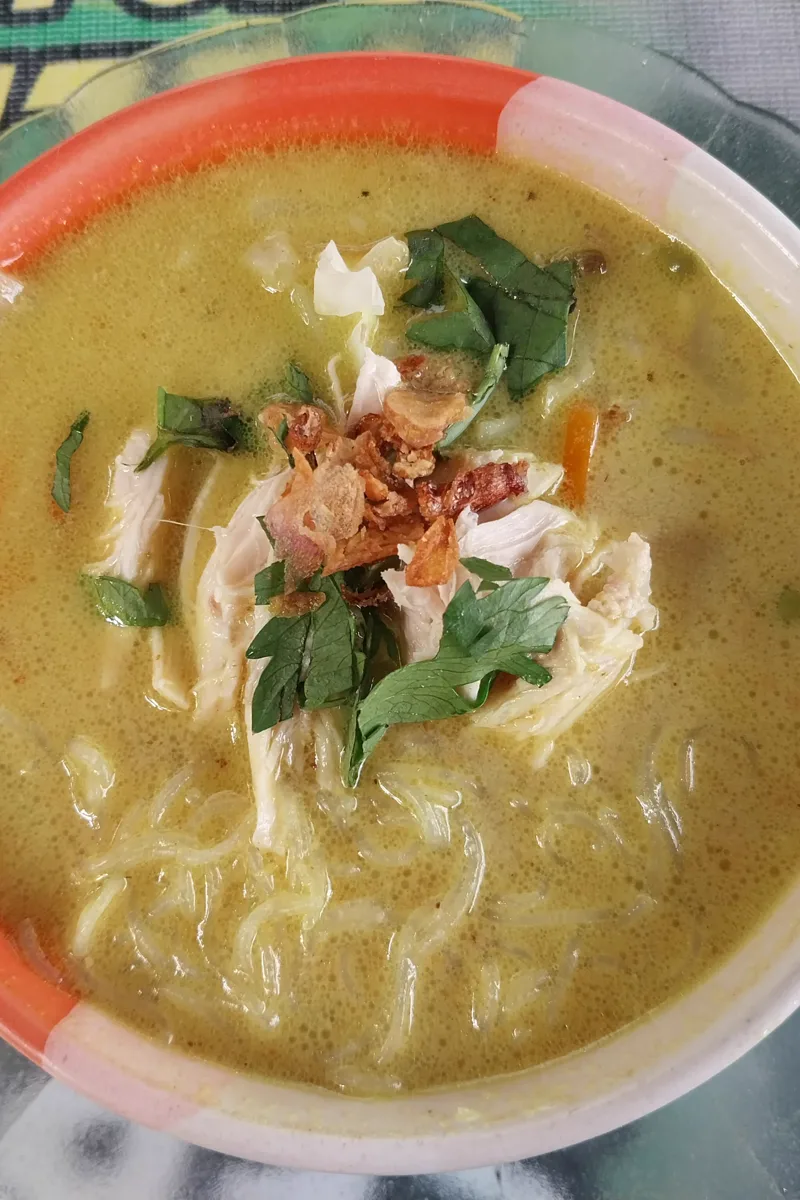
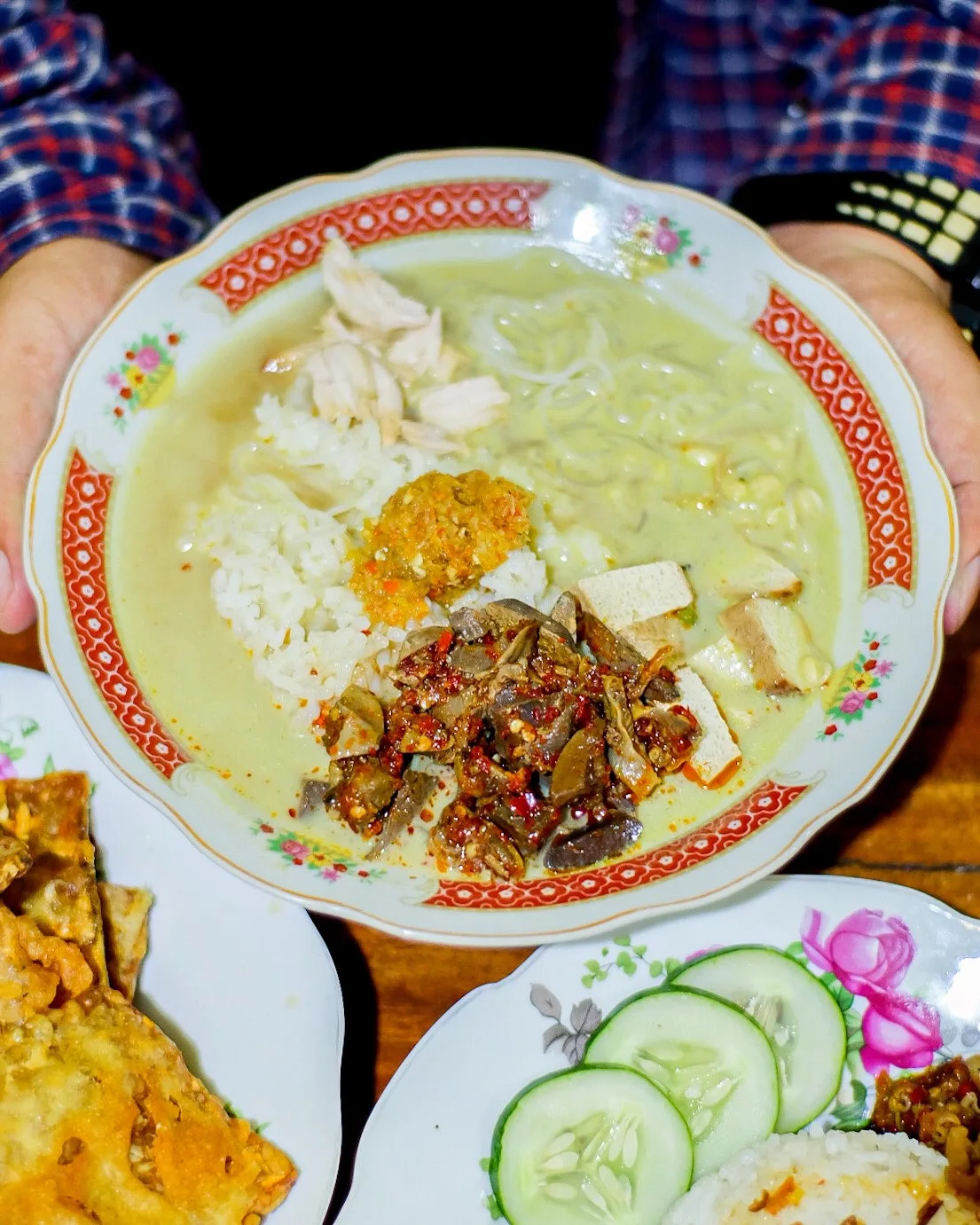
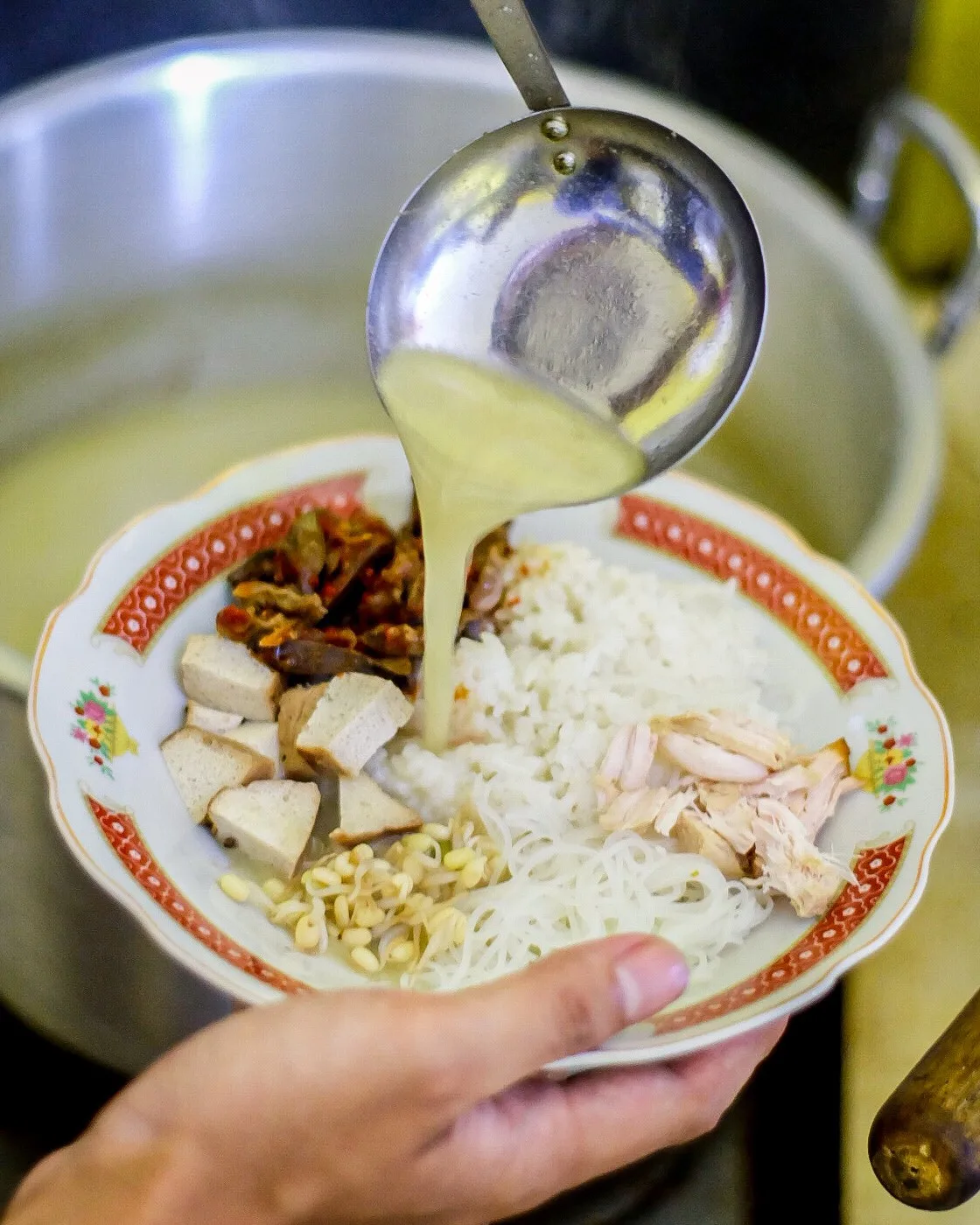
Nasi Lesah is Magelang’s answer to soto, and the difference is not subtle once you know what to look for: the broth is made with coconut milk, which turns it thicker, richer and distinctly yellow, and it arrives with a plate of rice rather than as a soup on its own. An ordinary soto from the same street usually means a clearer, lighter stock-based broth. Ordering the right one matters, because vendors use the names loosely and “soto” in Magelang does not guarantee a thin broth.
This page is about telling the two apart at the counter and asking better questions. It is not a ranking, and it deliberately avoids fixed prices.
The One Question That Settles It
Ask “kuahnya santan atau bening?” — is the broth coconut milk, or clear? It is a small question, it is completely normal to ask, and it identifies the dish immediately. If the answer is santan, you are looking at nasi lesah. If it is bening, you are looking at conventional soto.
Two more useful questions while you are there:
- **“Pedas boleh.Level, not spicy / a little spicy — tidak pedas / sedikit pedas. Chilli in Javanese cooking is often served beside the bowl rather than mixed through it, so you can add it yourself.
- “Isi apa saja?” — what is all in it. A short answer names the protein and the vegetables, and it is how you spot offal, which is a normal and inexpensive part of soto in Java.
Why Nasi Lesah Tastes the Way It Does
Coconut milk changes the dish more than any topping does. It adds fat, body and a sweetness that softens the heat, which is why nasi lesah feels richer even when it is milder than the soto next to it. It is also why it arrives with rice: the broth is closer to a sauce than to a stock, and rice is what makes it a complete meal rather than a starter.
The Indonesian-language reference description is short and accurate — lesah is a food similar to soto but with coconut-milk broth, characteristic of Magelang, in Central Java, and it is normally served with rice. Comparison with soto Betawi is common, though Betawi versions tend to be spicier and heavier on the sweet soy.
Soto Is Not One Dish
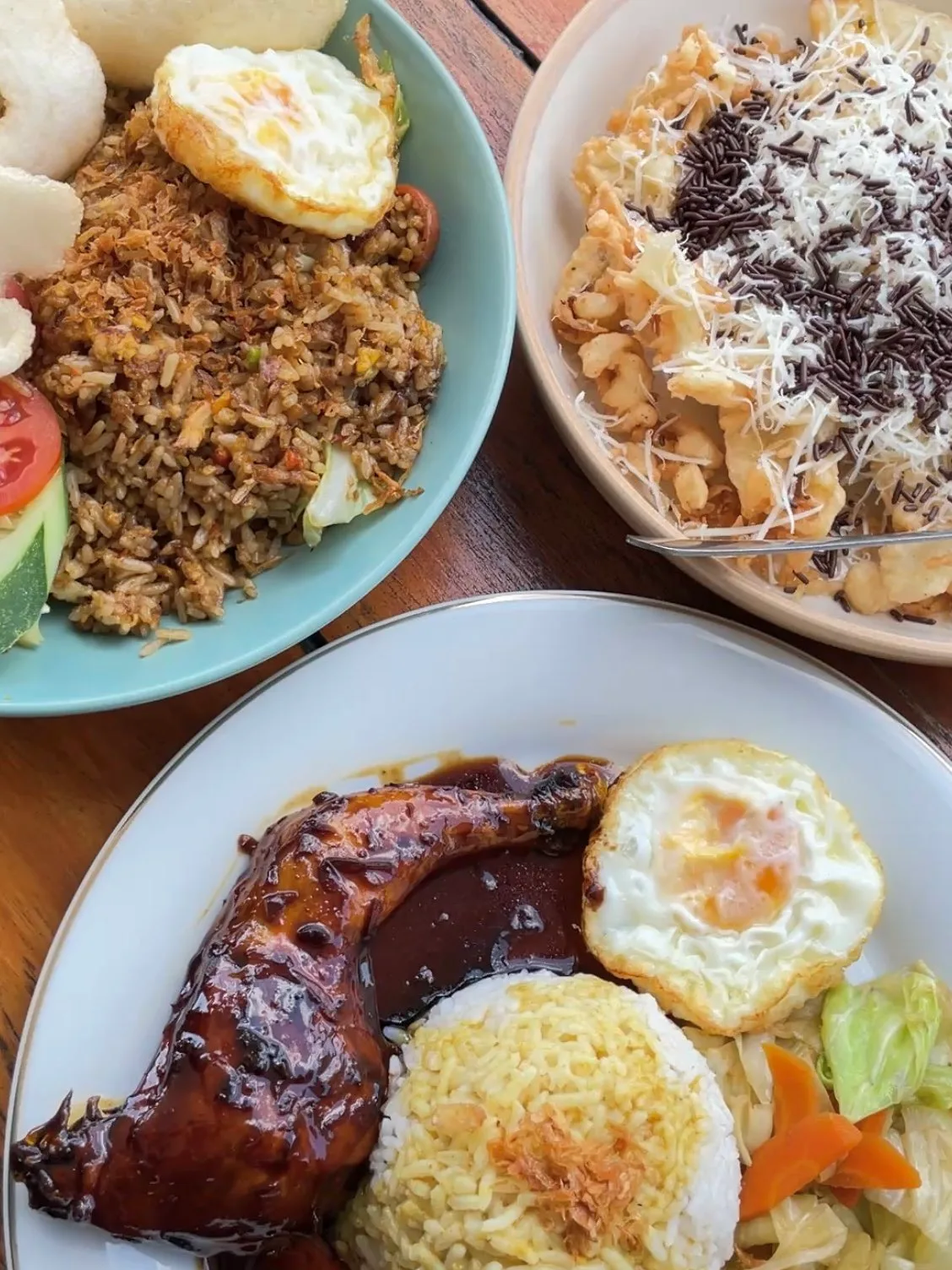
Soto is a category, not a recipe. Indonesian cooks name most versions after their town or their main protein, so a soto in Magelang may be sharing a counter with versions that are entirely different bowls. In 2018 the Indonesian government formally recognised soto as one of the country’s five national dishes, alongside nasi goreng, sate, rendang and gado-gado — a good illustration of how ordinary it has become while staying genuinely regional underneath.
The word itself is older than the dish as most people eat it. Denys Lombard, in Le Carrefour Javanais, traced soto to a Hokkien Chinese soup whose name refers to beef tripe, popular in Semarang among Chinese immigrants during the Dutch VOC period in the seventeenth century. Academic work on soto diversity points the same way: the base arrived through contact, and the character of each regional soto came from local cooks adapting it to what was available. Peer-reviewed coverage of that research is open access, which is a useful place to check the claim rather than repeat it.
The practical upshot for a visitor is simple: the word on the sign is not a recipe. Ask what is in the bowl in front of you.
Time of Day Is a Clue
If you are trying to plan a day around food rather than temples, the two dishes land at different hours. Indonesia’s official tourism portal notes that soto is typically eaten for breakfast, while nasi lesah is typically sold from afternoon into the night. That maps neatly onto a sightseeing day: soup before you walk, nasi lesah after you have finished.
That same portal lists long-running, well-known counters in the city, including a sop senerek specialist on Jalan Jenderal Sudirman, Magersari, open roughly 06:00–16:00, and a nasi lesah specialist on Jalan Jenderal Ahmad Yani in Magelang Tengah, open roughly Monday to Saturday 08:30–16:00. Treat all of these as starting points to confirm, not as a definitive list. Stock runs out, hours shift, and stalls close for religious holidays.
It also carries the single most practically useful warning for anyone planning a food-focused day: many legendary stalls and street vendors accept cash only.
Dietary and Allergy Checks
Do not assume a soup is vegetarian, halal, dairy-free, gluten-free, mild, or safe for a particular allergy. Broth, seasoning, fried toppings, sambal, and preparation surfaces can all matter. In Javanese practice a common added sweetener is sweet soy sauce (kecap manis), which contains both soy and wheat — relevant if either is a problem for you.
For children or a lighter meal, ask for chilli separately and confirm the portion size. Let hot food cool before serving it to a child, especially at a busy street-food stop. A clearer soto is usually the gentler choice; nasi lesah is noticeably richer because of the coconut milk.
If the answer to an allergy question is uncertain, move on. That is a reasonable judgement about shared tools and sauces, not a comment on the cook.
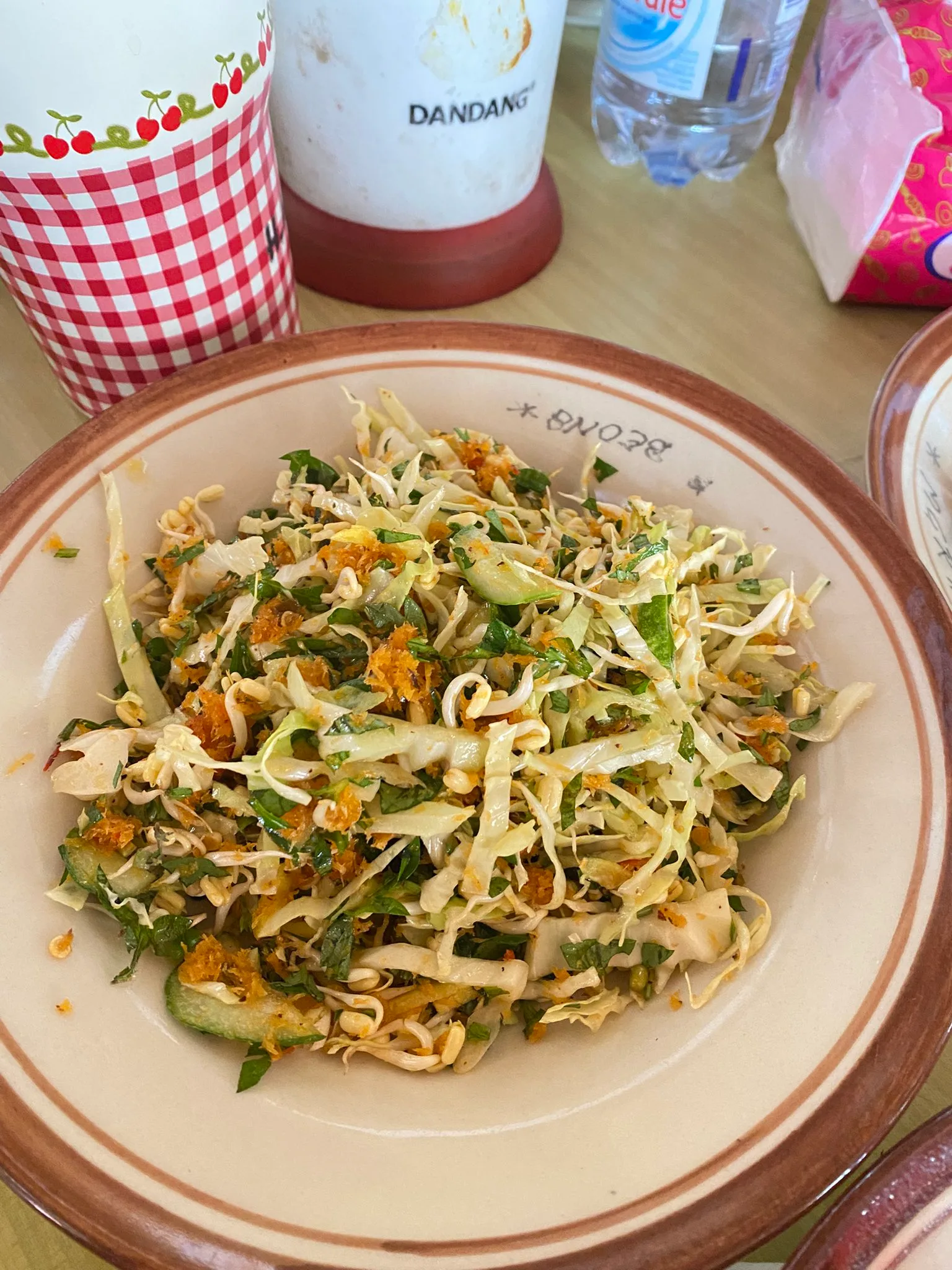
What Else Magelang Serves With Rice
Two neighbours are worth knowing by name, because both are built around the same logic as nasi lesah:
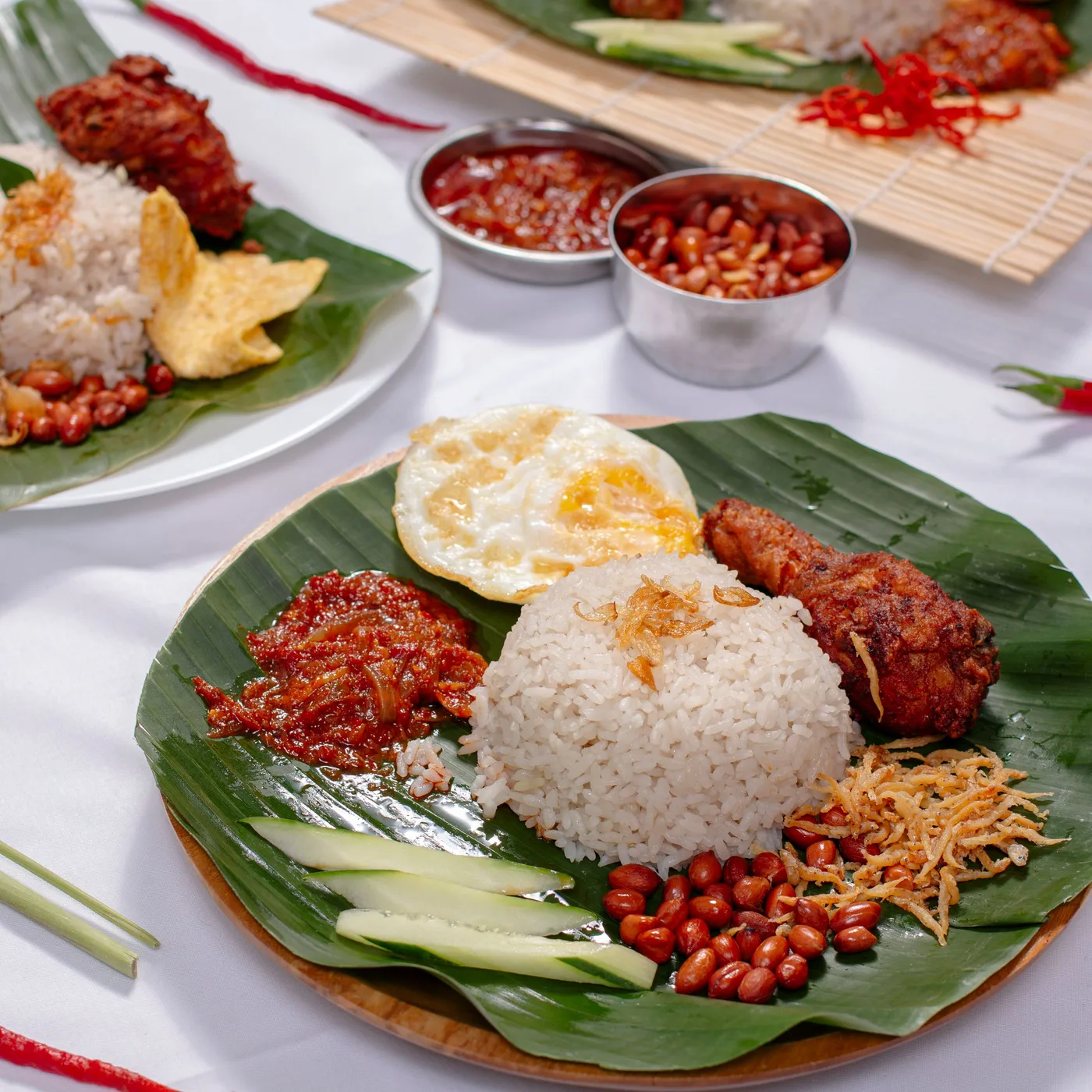
- Nasi langi — rice cooked in coconut milk with aromatic spices, traditionally wrapped in a banana leaf. Closer to a dish than to a broth, and it travels better than a soup.
- Sego godog — literally boiled rice. Rice and noodles with vegetables, sliced chicken and egg, drowned in a brownish spiced broth with soy sauce, often with offal satay alongside.
Both are covered in our Nasi Langi and Ongol-Ongol guide alongside the starch-based sweets. If you would rather avoid soup entirely for a meal, Nasi Langi is the safer order. For a clear red-bean broth instead, Sop Senerek makes a good second option.
Eat With Less Waste
Eat in when practical, carry a reusable bag for any takeaway, and order only what your group can finish. A bowl here is usually generous, and nasi lesah in particular is heavy — ordering a smaller bowl and a vegetable side is usually more satisfying than a large bowl you abandon.
If a vendor uses disposable packaging, put it in the right bin or carry it until you find one. Do not leave food waste at temple grounds, viewpoints, or trailheads — see our sustainable travel guide for how the rest of the day can match this.
Continue your Magelang food exploration with Getuk Magelang, Kupat Tahu Magelang, Serabi and Lumpur, or Sop Senerek. For a spicier coconut-milk fish dish near Borobudur, see Mangut Beong. Before you go, the one-day itinerary and budget guide both put food costs in context.
Sustainable Tip
Eat in when practical, order a portion you can finish, and decline disposable cutlery or bags you do not need.
Family Tip
Ask about spice, broth, toppings, and serving temperature before ordering for children or anyone with dietary needs.
Food Note
Nasi lesah is usually an afternoon-to-evening dish while soto is a breakfast dish. Ask your host which one is worth waking up for.
Frequently asked questions
What is the difference between soto and nasi lesah?
Nasi lesah is a Magelang soto whose broth is made with coconut milk, which makes it thicker, richer and yellowish, and it is normally served with a plate of rice rather than eaten as soup. An ordinary soto uses a clearer stock-based broth and is usually served with rice, noodles, or other starch.
Is soto Magelang a different dish from soto elsewhere?
Not fundamentally. Soto is a nationwide category with many regional versions named after their town or their main protein, and in Magelang a vendor may use the generic name for a bowl whose broth follows local preference. Ask what is actually in the bowl rather than assuming the place name changes the recipe.
Where does the word soto come from?
Denys Lombard, in Le Carrefour Javanais, traced soto to a Hokkien Chinese soup whose name means roughly beef tripe, popular in Semarang among Chinese immigrants during the Dutch VOC period in the seventeenth century. Indonesian and regional cooks adopted and adapted it into local versions.
Is nasi lesah spicy?
It can be, but heat is usually adjustable. Chilli is frequently served alongside rather than stirred in, so ask for it separately if you want to control the level. Say tidak pedas for none and sedikit pedas for a little.
Is soto or nasi lesah a better choice for children?
Both are served hot and broth-based, so let the bowl cool before a younger child tries it. A clearer soto is usually the milder option; nasi lesah is noticeably richer because of the coconut milk. Confirm the portion size and ask for chilli on the side.
Can I have nasi lesah without rice?
Some stalls will serve the broth alone, but rice is the point of the name and of the dish as eaten locally. If you are limiting carbohydrates, ask first, and consider ordering a smaller bowl with a vegetable side instead.
Can vegetarians eat it?
Do not assume. The broth is usually built on meat stock, and sambal, fried toppings and cooking surfaces can all rule out a strict vegetarian or vegan order. Ask clearly, and choose something simpler such as nasi goreng if the answer is uncertain.
How much does a bowl cost?
Prices change and published figures go out of date, so treat any number as a historical reference only. Indonesia's official tourism portal has quoted historic ranges such as IDR 25,000-45,000 for a soto breakfast and IDR 10,000-12,000 for nasi lesah, but confirm on the day and carry cash.
Tourism information — including opening hours, entrance fees, and transport routes — may change. Please verify with official local sources before planning your visit.
Sources and further checks
Use these primary or specialist sources to confirm current access rules, safety notices, and travel arrangements.

About the Author
Larasati Wulandari
Independent travel writer · Central Java, Indonesia
Larasati Wulandari is an independent travel writer who has lived in Central Java for eight years. She writes first-hand, practical guides to Magelang's temples, viewpoints, and local food, and reviews them regularly as conditions change.