Key facts at a glance
- Footwear on the structure
- Upanat sandals only, issued at the base
- Bag limit
- roughly 3 litres — lockers at the base
- Drinking
- not allowed on the structure
- Shade on the monument
- none at all
- Tripods and selfie sticks
- prohibited on the structure
- Dress expectation
- shoulders and knees covered
- Drones
- prior permit; banned over the structure
- Exit walk
- about 1 km through the stall maze
Figures change without notice — treat this as a planning summary and confirm against the sources listed below.
Borobudur has an unusually high ratio of firm rules to visitors who know about them. Almost every “we didn’t know” story from this site comes down to the same handful of items: the sandals, the bag size, the lack of water, and the exit walk. This page is the short, practical version — read it the morning of your visit, not the night before.
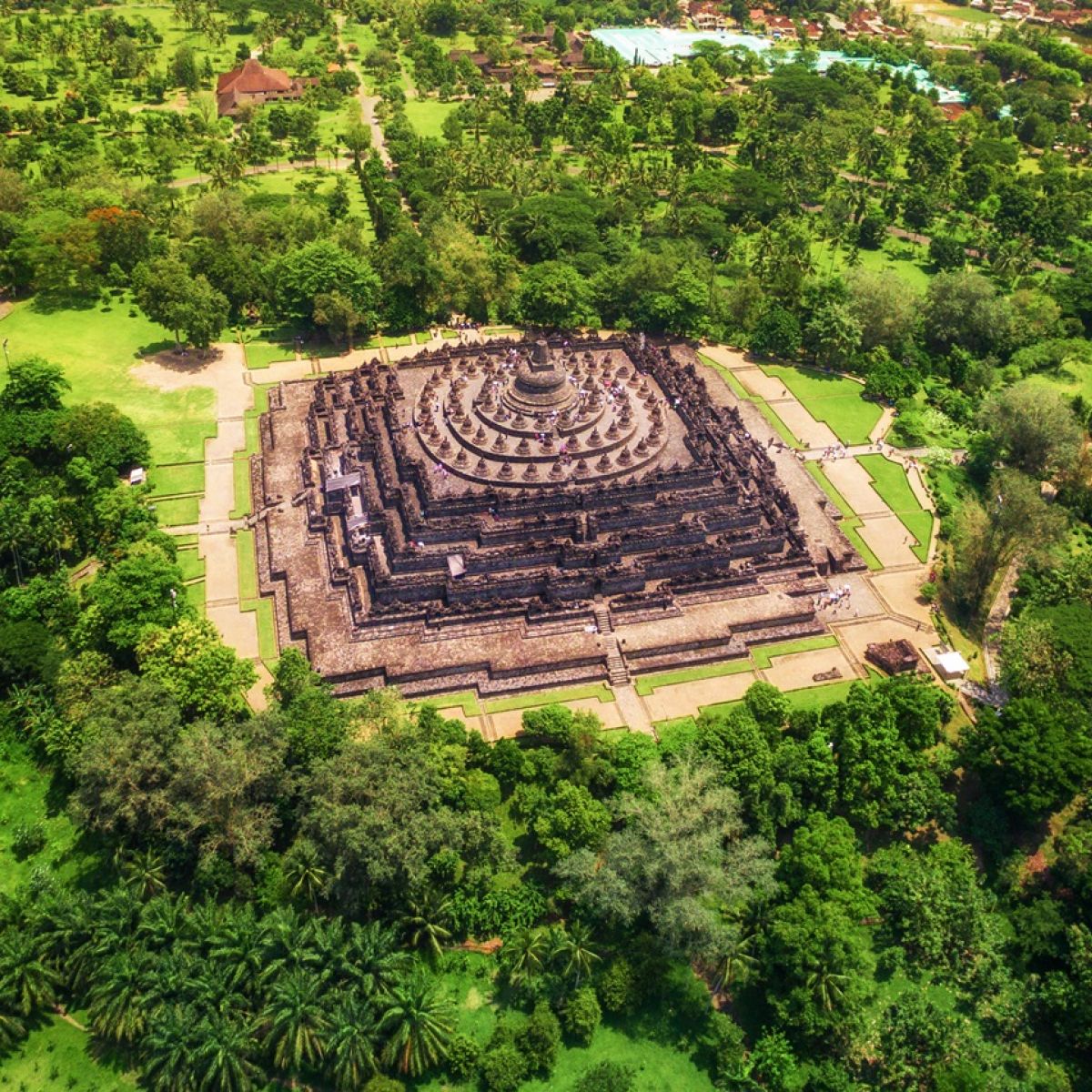
One thing worth saying up front, because it shapes everything else. Borobudur is roughly 1,200 years old, built from about two million blocks of volcanic stone, and UNESCO-listed as one of the Borobudur Temple Compounds. It is a functioning sacred site, not a ruin you are allowed to climb like a rock. The rules exist to protect it. Almost none of them are arbitrary.
The one rule that catches everyone: the sandals
You will not climb Borobudur in your own shoes.
Since 2022, visitors on the structure wear Upanat, woven pandanus sandals issued free at a counter in your size. The reason is straightforward conservation: trainers and hard soles grip the ancient volcanic-stone stairs and grind them down, and the stair treads are already worn and partly reconstructed. Spreading the load across woven sandals does less damage than a concentrated heel strike.
Here is how it actually works in practice:
- You arrive at the Manohara Borobudur Cultural Center in your own shoes.
- You walk toward the temple base. This part you do in your own footwear.
- At the base you swap into the issued Upanat and leave your shoes somewhere — a bag, a locker.
- You climb in the Upanat.
- At the exit you swap back into your own shoes.
The Upanat are yours to keep. Treat them as a souvenir rather than as disposable, and expect a small sizing queue at busy hours.
Bring a small bag. This is the single most useful thing in this whole guide. People arriving with a 25-litre daypack end up trying to balance a bag, a water bottle, a layer, a hat, and a pair of trainers at a concrete counter. Larger bags — over roughly 3 litres — must be left at the base in free but genuinely small lockers, so anything valuable should stay on your person.
What is prohibited, without exception
These are the items that get refused at the gate or removed on the structure:
- Tripods and selfie sticks on the structure. Circulation is narrow and the gallery passages are tight; a stick is an accident risk and a tripod blocks everyone.
- Food and drink other than water, anywhere inside the inner compound.
- Drinking on the structure. Note that water is allowed but drinking is not. This is not a contradiction — you carry water, you do not consume it up there. Fill your bottle at the stations near the entrance first.
- Touching the reliefs or the Buddha statues.
- Sitting on, leaning on, or climbing over stupas, balustrades, or railings.
- Graffiti, and any marking of the stone at all.
- Smoking.
- Weapons.
- Loud music or anything that disturbs other visitors or prayer.
- High heels, for the same stair-protection reason as the sandals.
- Strollers on the structure.
- Drones. Flying over the temple structure is prohibited outright; non-commercial filming and drone use require a prior permit through the Ministry of Culture, with published fees scaling by category. Do not assume a tourist permit covers the monument itself.
Ordinary photography with a camera or phone is welcome. If you are filming for commercial or broadcast purposes, that is a permit matter and needs sorting before you arrive.
Dress: expectation rather than published code
There is no formally published general dress code for Borobudur, so you will not find a rule sheet telling you otherwise. The working expectation is simply shoulders and knees covered.
What that means practically: if you arrive in a singlet and shorts, staff will hand you a free batik sarong at the gate. That is not a punishment, it is a courtesy — but being handed a sarong at the entrance in front of other visitors is an unpleasant way to find out about an expectation, so cover up before you arrive.
Light or white clothing is culturally preferred, and it has a real practical benefit on an unshaded stone monument: it reflects rather than absorbs. But this is preference, not requirement. Nobody will turn you away for wearing dark clothing.
For most people the Upanat rule is the only firm dress-related rule at the site. The rest is etiquette, and etiquette is easy to honour.
Heat, sun, and the absence of shade
This is where a lot of visitors are caught out, and it is a safety issue rather than a rule.
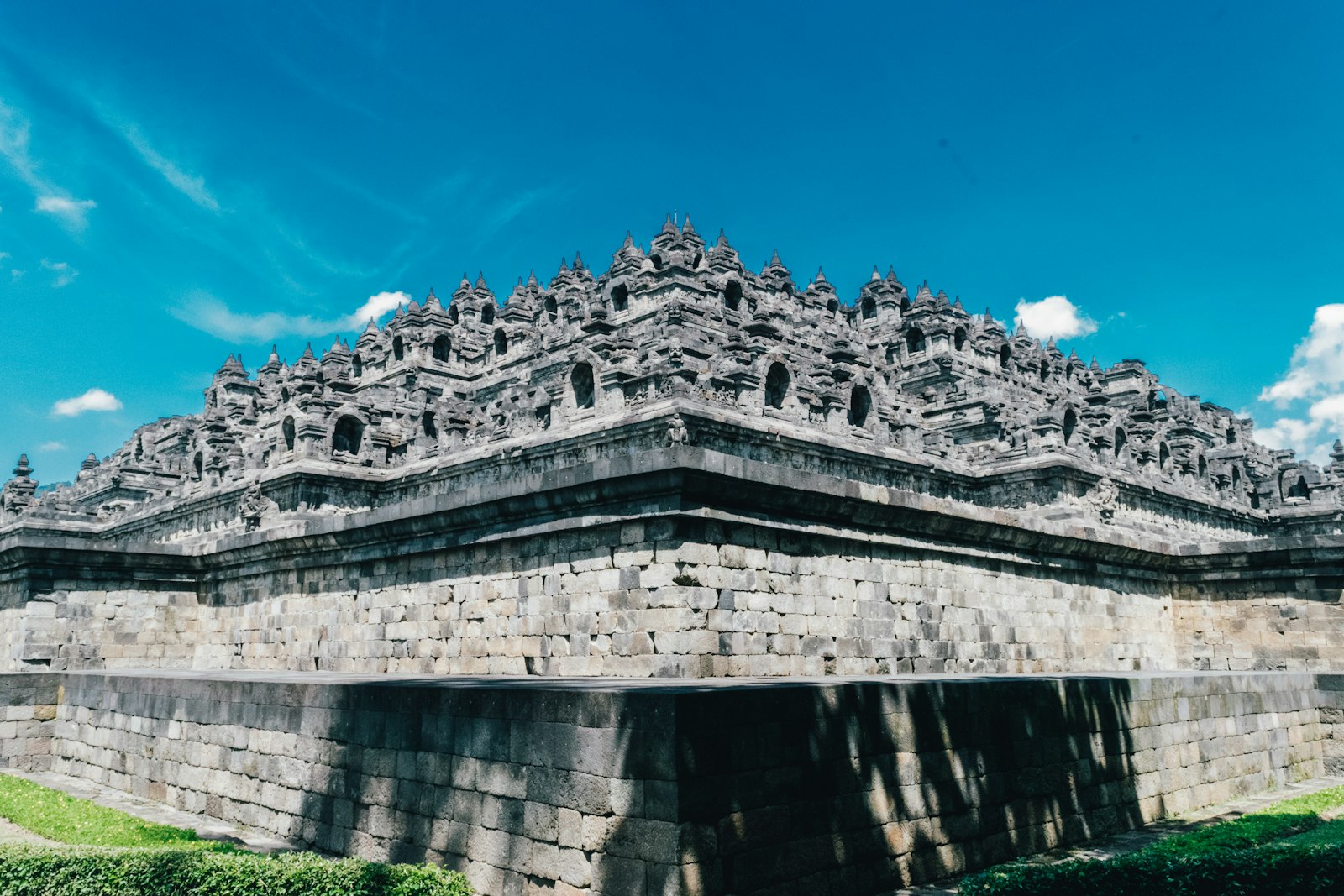
Borobudur’s structure stands about 35 metres high with no shade anywhere on it. Not partial cover, not a roofed gallery — none. The volcanic stone also stores and radiates heat, so the upper terraces are worse than the temperature reading suggests.
Practical consequences:
- Heat exhaustion is common by 11:00. Many people who feel fine at the entrance are in trouble on the upper circular terrace.
- Take an early session. A 09:00 slot is a materially different experience from a mid-afternoon one. This is the strongest argument for booking ahead.
- Carry more water than you think you need, in a refillable container, filled before you go up.
- Wear a hat and light long sleeves. Light clothing is preferred here for a reason.
- Slow down on the stairs. The stone is polished by age and by feet. Take them at a pace you can hold for an hour.
If anyone in your group is heat-sensitive, elderly, or has heart or balance conditions, the grounds-only ticket is a completely legitimate choice and you lose far less than you think. The relief galleries around the base are the most extraordinary part of the monument anyway.
Getting in, and getting out
Entry. Borobudur is partially accessible. There is a step-free side entrance to the right of the main ticket office steps — it is not well signposted, so ask staff. Strollers and wheelchairs are fine on the grounds. Mobility scooters and wheelchairs are not rented on site, so if you need one, arrange it through your accommodation in advance.
Exit. This catches people more often than entry does. Leaving the structure leads into a compulsory walk of roughly one kilometre through a dense maze of souvenir stalls, and it is genuinely hard to navigate. Budget ten to fifteen minutes and some patience.
If mobility is an issue, or you are with a tired child, ask staff at the exit about a shortcut route or a buggy exit. An electric buggy in the lower park is commonly quoted at around IDR 20,000. Ask rather than assume — the option is not well advertised.
Behaviour beyond the written rules
The genuinely important customs are not on any list:
- Move in the direction of flow and follow your guide. Guided sessions are structured; going against the flow creates a jam on a staircase that has no room for one.
- Give space to prayer and processional activity. Borobudur is an active sacred site. Monks, worshippers, and during Vesak thousands of pilgrims use the complex. Photography of worshippers without asking is rude, and stepping around a prayer space at speed is worse.
- Do not climb out of the monument through any opening other than the designed route. Stone edges and balustrades are not adventure features.
- Keep your voice down inside the galleries. They are stone boxes; sound carries strangely and the space is meant to feel contemplative.
- Do not lean on balustrades for photos. Weight on a thousand-year-old parapet is a real conservation problem, and your guide will notice.
A short morning-of checklist
The night before, or at the entrance:
- Small bag, with only essentials inside it.
- Refillable water bottle, filled at the entrance stations.
- Hat, light long sleeves, and comfortable clothing you can walk a kilometre in.
- Shoulders and knees covered.
- No tripod, no selfie stick in your bag.
- Phone and camera charged, and no expectation of drinking anything until you are back down.
- Booking confirmation and passport ready.
- Plan for the exit walk: agree a meeting point outside the stall maze rather than trying to find each other inside it.
The what to wear and pack for Borobudur guide is built around this checklist — in particular the bag limit, the sandals, and the absence of shade, which is the item that actually ends most visits early.
Where this fits in a wider trip
Rules and logistics are easier to absorb when the rest of the plan is settled. The Borobudur tickets and Structure Climb guide covers what your ticket includes and how to book; the Borobudur temple guide explains what you are looking at once you are up there; and the where to stay near Borobudur guide solves the practical problem of being in the right place at 08:00.
If the weather is the concern rather than the rules, read the Magelang rainy season guide — heavy rain does not close the site, it just frequently ends the climb early, which changes what you should book. For the wider question of how a visit like this sits inside a lower-impact trip, the sustainable travel guide covers visitor pressure on the monument and the behaviour that reduces it.
Gear this page assumes you already have
If you have not assembled this yet, the specs matter more than the brand. Follow a link for an example, or compare the category.
Footwear
-
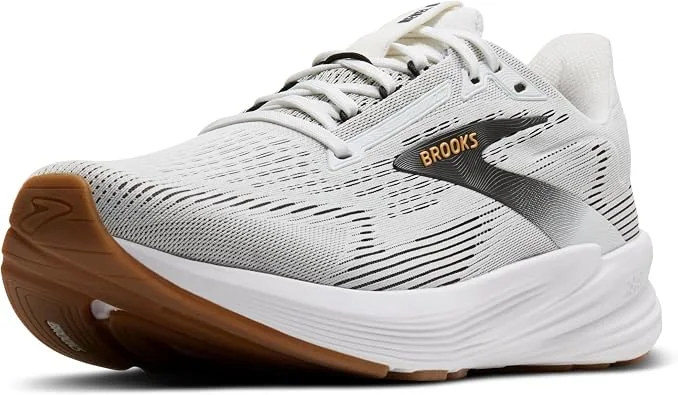
Cushioned walking shoe with a defined rubber outsole
For temple floors, polished stone and the long souvenir-stall walk out of Borobudur.
What to check
- A rubber outsole with a defined tread pattern, not a smooth foam sole, because smooth soles become slick on wet stone
- A firm heel counter that holds the foot, since the Borobudur stairs are steep and uneven
- Cushioning good enough for a full day without being so soft that you feel every step on stone
The single biggest footwear risk in Magelang is polished temple stone after rain. In this weather a smooth-soled sneaker is worse than a sandal, not better.
Clothing
-
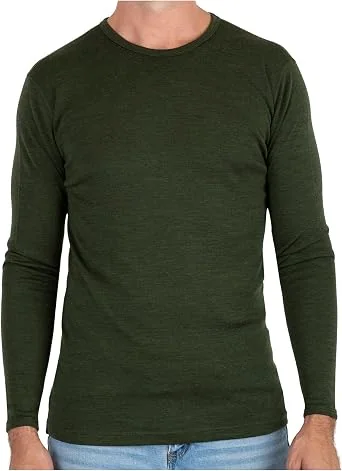
100% merino wool midweight long sleeve base layer
The layer that makes a 1am start and a 6am summit tolerable.
What to check
- 100% merino wool, not a cotton blend, because cotton stays wet
- Midweight rather than heavyweight, so it is not too hot in the tropical morning
- A fine micron count, because a coarse wool against damp skin is misery
Merino is the reason a long walk at a 1,700m summit is possible at dawn. Synthetic layers dry faster; merino does not smell after a long day.
Bags
-
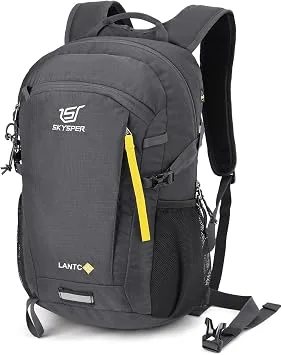
20L hiking daypack with padded strap and side bottle pocket
Carries the small bag you swap into shoes for, without becoming the bag you have to leave at the temple gate.
What to check
- 20L or under, because anything larger gets left in a locker
- A padded, breathable shoulder strap, not a webbing strap
- An external pocket that holds a 1L bottle upright
- A flat top that will sit on a wet stone step
The 3-litre bag limit at the Borobudur base is the single most common packing mistake. This size clears it without feeling bare-handed.
Health
-

Picaridin insect repellent spray
The option to carry when you would rather not use DEET on skin every morning.
What to check
- Picaridin rather than DEET, which is a genuinely different active ingredient rather than a weaker version of the same one
- A water-resistant formula that does not wash off as quickly in humidity
- A size that fits in a hand-luggage liquids allowance if you are flying
Worth carrying as a backup rather than a replacement, because effectiveness against different biting insects varies and nobody tests that on themselves in advance.
Hydration
-
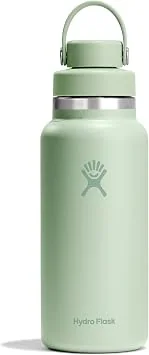
1L insulated stainless steel bottle, wide mouth
For the Borobudur climb, where you cannot drink once you are on the structure.
What to check
- A 1L capacity, which still leaves room for a bag in the same pocket
- Double-wall vacuum insulation, because uninsulated water in Central Java is unpleasant within an hour
- A wide mouth, so it can actually be cleaned rather than merely rinsed
- A narrow drinking spout, so it does not slop down a shirt while you are climbing stairs
Drinking is not permitted while on the Borobudur structure. You fill up at the entrance water stations and carry the bottle the entire way up and down.
Links open Amazon. We are not the seller and we do not handle the order. A purchase changes nothing about what this site recommends. How this works.
Frequently asked questions
Why do I have to wear the woven sandals?
The Upanat sandals exist to protect the stairs, not to make a point about footwear. Ordinary shoes grip and grind the ancient volcanic stone; the woven sandals spread the load instead. The rule has been in force since 2022 and applies to everyone on the structure, so bring a small bag for your own shoes rather than trying to argue your way past the counter.
Can I drink water while I am on the monument?
No. Drinking is not permitted once you are on the structure. Fill a refillable bottle at the water stations near the entrance before you begin your guided session, because there is no cover and no chance to top up while you are up there.
Is there a dress code at Borobudur?
No formal general dress code is published, but covering shoulders and knees is the clear expectation and the enforcement that matters is practical: free batik sarongs are handed out at the gate to anyone not covered, which is an awkward way to discover the rule. Light or white clothing is culturally preferred but not required.
Can I bring my tripod or selfie stick?
Neither is permitted on the structure. Tripods block circulation and selfie sticks are an accident risk in narrow gallery passages. Cameras and phones are fine for ordinary photography; if you need professional or commercial footage there is a separate permit process through the Ministry of Culture, and drone flight over the structure is prohibited outright.
Can I use a stroller at Borobudur?
Strollers are welcome on the grounds and in the lower park, and strictly prohibited on the structure. There is no lift and no alternative route up. If you are with a small child, plan on one adult climbing while another stays below with them, rather than carrying a child up the narrow stone stairs.
What can I not touch?
The reliefs and the Buddha statues. Do not lean on, sit on, or climb over stupas, railings, or balustrades. These are conserved surfaces, they are already fragile, and touching them is treated as damage rather than as curiosity.
Why does it take so long to get out?
The exit route runs about a kilometre through a dense maze of souvenir stalls and is hard to leave. That is a commercial arrangement, not a monument feature. If you have mobility limits or are with someone tired, ask staff early about a shortcut or the buggy exit — an electric buggy in the lower park is commonly quoted at around IDR 20,000.
Can I get out of the sun anywhere on the monument?
No. The structure is about 35 metres high with no shade anywhere on it, and the stone amplifies heat. A late-morning or afternoon session can be genuinely dangerous, which is one reason to take an early slot and to treat the climb as optional if your group is heat-sensitive.
Tourism information — including opening hours, entrance fees, and transport routes — may change. Please verify with official local sources before planning your visit.
Sources and further checks
Use these primary or specialist sources to confirm current access rules, safety notices, and travel arrangements.

About the Author
Larasati Wulandari
Independent travel writer · Central Java, Indonesia
Larasati Wulandari is an independent travel writer who has lived in Central Java for eight years. She writes first-hand, practical guides to Magelang's temples, viewpoints, and local food, and reviews them regularly as conditions change.