Key facts at a glance
- Wettest months
- roughly November to March
- Peak intensity
- December to February
- Borobudur status
- stays open; climbs often cut short
- Best Borobudur strategy
- first slot of the day
- Viewpoints
- fog makes visibility a lottery
- Waterfall trails
- slick, higher landslide risk
- Official forecast
- BMKG
- Volcano advisories
- BMKG and MAGMA
Figures change without notice — treat this as a planning summary and confirm against the sources listed below.
Magelang’s wettest period runs roughly November through March, peaking between December and February. Rain in Central Java is usually intermittent rather than continuous, which means the practical problem is rarely “the trip is ruined”. It is that plans built around views and single outdoor moments are unreliable, and a schedule with no slack turns one wet morning into a wasted day.
This guide is about managing that. It assumes you are travelling in the wet months and want to still get a good trip, not to be talked out of them.
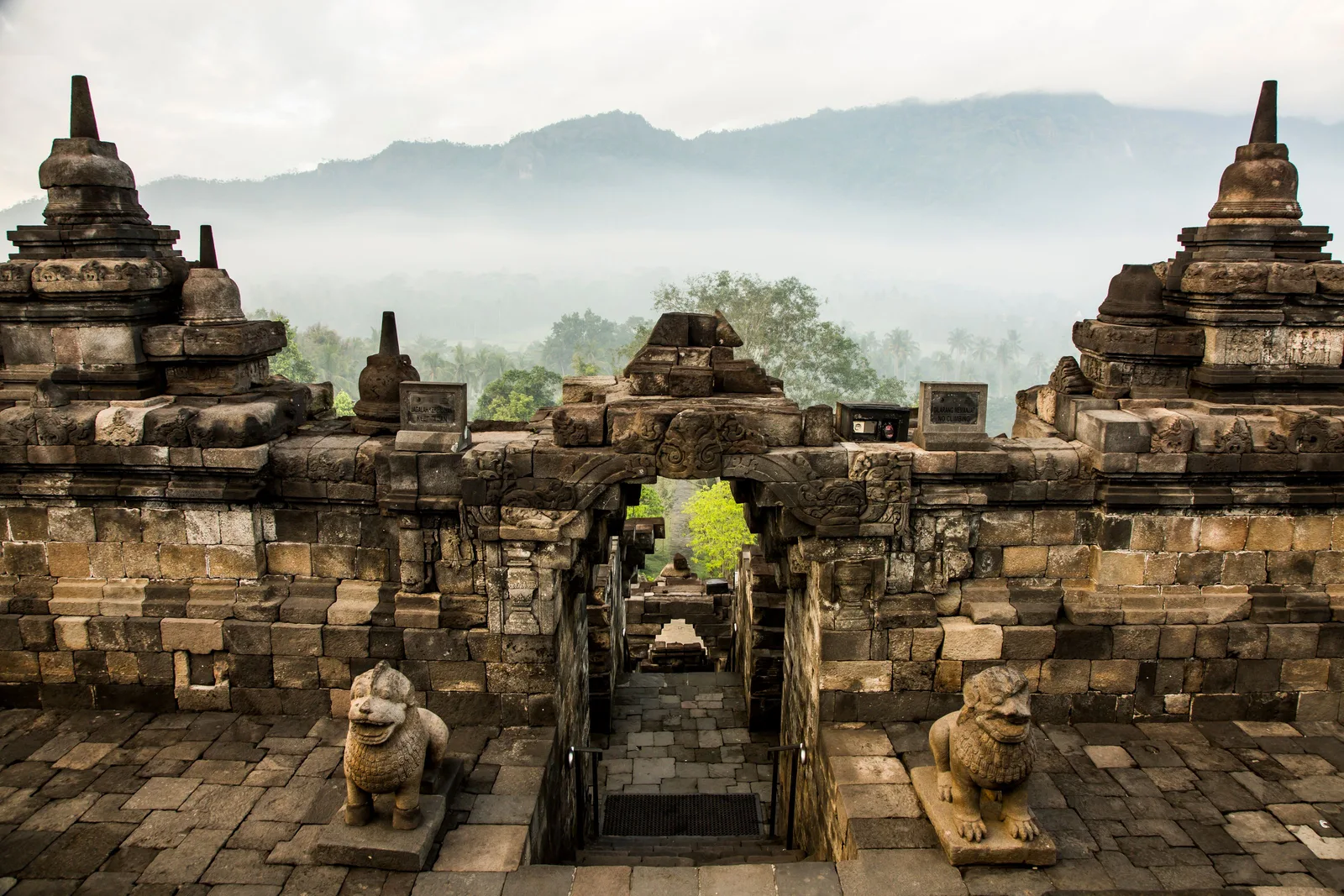
The single most important thing to understand: the heritage sites barely care about the weather, and the landscape sites care enormously. Borobudur, Mendut, Pawon, and Candi Ngawen are solid stone monuments. Fog, rain, and cloud sit around them without affecting access. A viewpoint is a different proposition entirely — the thing you came for is the view, and the view is what disappears. So the fix is to shift your planning weight from viewpoints to monuments.
What rain actually does at Borobudur
The site stays open. Admission is unaffected, and there is no wet-weather closure.
What changes is the climb, and this is where wet months need real thought. The Structure Climb takes place on unshaded volcanic stone with no cover anywhere, and the stone stairs are worn smooth by centuries of feet. Rain during your session means:
- Being asked to come down early, sometimes well before your 90 minutes are up.
- Genuinely slippery stairs, which is a fall risk rather than a comfort issue.
- No ability to drink water, because drinking is not permitted on the structure.
Rain does not cancel the ticket, but it does routinely end the experience early. If the forecast is poor during your intended slot, ask at booking whether the climb currently runs and what the arrangement is if it is stopped partway. Get the answer before you pay, not while you are standing in the rain.
The consequence for planning is that the first slot of the day is dramatically better in the wet season than the afternoon. Rain in Central Java most often builds through the afternoon. A 09:00 climb gives you the best odds of a full session and the coolest temperatures on a monument that has no shade.
If a climb gets cut short and you want to make something of the day, grounds-only access to the relief galleries around the base is genuinely rewarding in any weather — and it is the longest continuous narrative relief band in Java.
The viewpoints: manage expectations honestly
This is the part that disappoints people, and the disappointment is avoidable with the right framing.
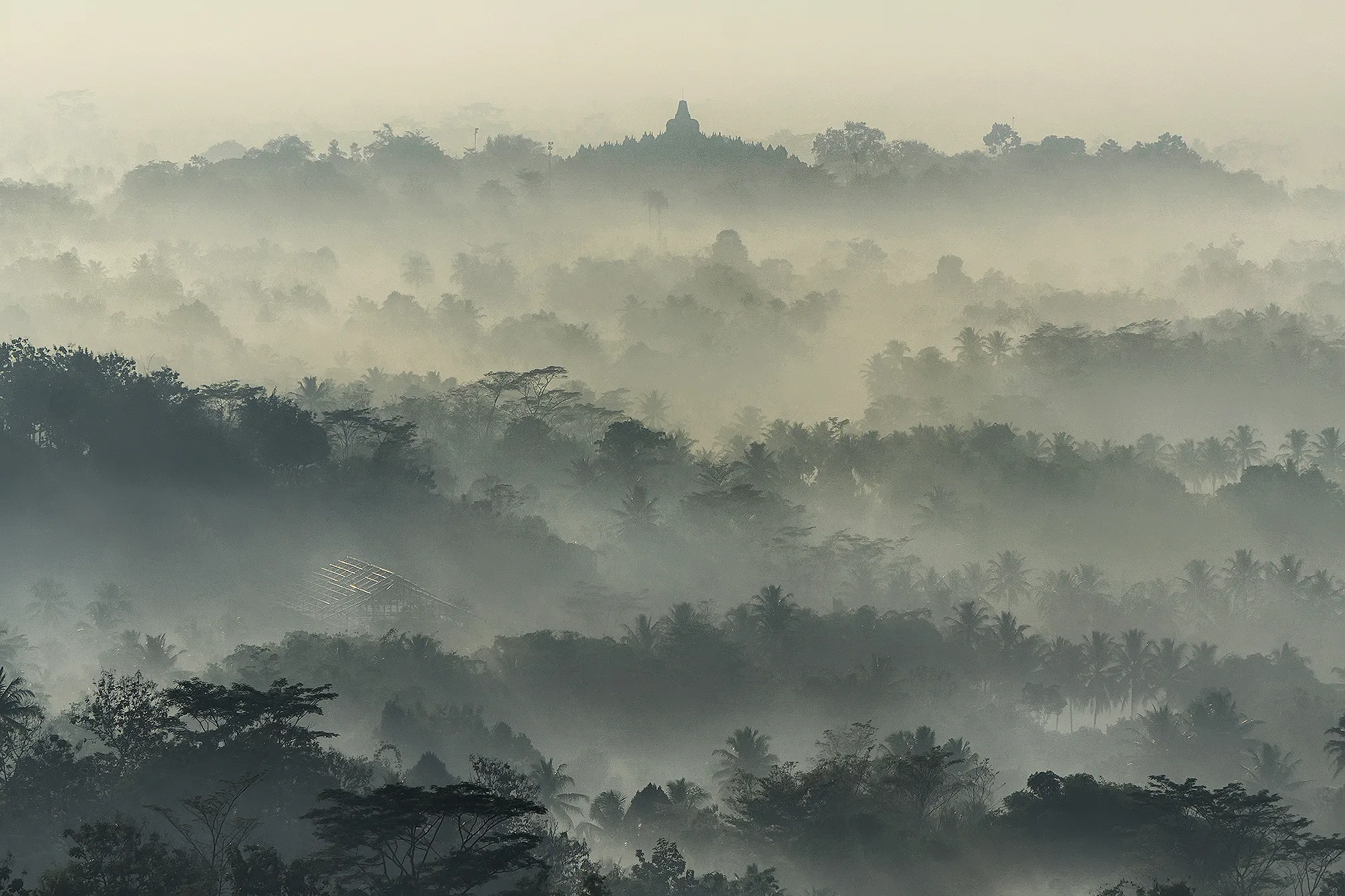
Punthuk Setumbu is the one most affected. The whole point of the viewpoint is a clear view of Borobudur rising above the cloud line, and in the wet season there is frequently nothing to see. The hill is above the cloud base most mornings, so sometimes you get a spectacular break — you simply cannot predict it.
Ketep Pass and the highland views depend on the same thing, and additionally on traffic and visibility on a winding road.
The honest approach, and it saves a lot of frustration:
- Go early, and go anyway. A clear break in the wet season is one of the best views you will ever get here. You cannot get that reward without accepting some mornings of cloud.
- Never build a day around a single viewpoint. If the viewpoint is the only item on the schedule, a cloudy morning costs you a whole day. Put a monument or a food stop behind it.
- Set a time limit. Give the viewpoint 45 minutes to 90 minutes. If the cloud is shut, leave. Sitting on a wet hillside waiting for a gap that may not come is not a good use of a day.
- Bring a rain layer regardless. Even in the dry season this is worth carrying.
For how each viewpoint actually works, the Punthuk Setumbu sunrise guide and the Ketep Pass guide both set out what to expect in any season. The seasonal framework is in the best time to visit guide.
Waterfalls: spectacular and slippery
Rain makes waterfalls better and access worse. Both are true at once, and the second one is what matters for your safety.
Trails to places like Kayang Waterfall can involve uneven, wet, and slick ground, and heavy rain raises the risk of landslides on the approach. Access conditions change fast with weather.
- Check conditions on the day, not the night before.
- Do not go past barriers, closures, or local instructions. They are there because conditions changed.
- Wear footwear with real grip, not smooth-soled shoes.
- Keep the visit short and do not linger under the falls in runoff.
- Go with a local driver or guide who knows the current state of the track rather than following a route description.
Roads and the highlands
The roads toward Ketep Pass and the highland villages are busy, winding, and vulnerable to rain. Heavy rain produces slippery surfaces, poor visibility, and occasional landslides.
- Check BMKG warnings before you set out. Not the national forecast — the local one for the regency you are driving through.
- Avoid highland and back-road driving at night, particularly in heavy rain.
- Ask your driver about current conditions. A local driver’s read of the road this morning is worth more than any guide written in another season.
- Keep a buffer. A wet road in the highlands turns a 45-minute journey into 90 minutes, which is how a packed itinerary falls apart.
For the volcano and highland picture, including how local advisories interact with tourism, see the Ketep Pass guide and the sustainable travel guide.
A wet-season strategy that actually works
Front-load heritage, back-load the landscape. Put Borobudur and the smaller candi early in the trip when you are fresh and when you have the most slack to reschedule. Leave the viewpoints for later in the trip, so that if conditions turn you have already secured the essentials.
Take the 09:00 slot. Across every scenario, an early ticket is better in the wet season: better odds of rain passing, cooler temperatures, less crowd pressure, and a session that fits comfortably before an afternoon downpour.
Reduce outdoor stops per day to one. The instinct in wet weather is to keep moving so you catch something. The opposite is better. One outdoor stop plus one sheltered activity is a successful day; three outdoor stops is three chances for all three to fail.
Use the rain for the things rain does not affect. Mendut and Pawon sit within walking distance of each other and are ideal wet-morning fills. Candi Ngawen is a small, tree-shaded compound in a village setting east of Mendut. The Wanurejo craft village is indoors and produces something you can take home. Food is always available.
Build a food-and-market afternoon. Magelang’s markets and warungs are unaffected by weather, and the culinary guides are a genuinely good use of a wet afternoon.
Check BMKG on the morning of, not the week before. Forecasts at the day level are useful; forecasts a week out for a monsoon-adjacent climate are close to noise. Use BMKG for weather and warnings, and MAGMA for volcano advisories if you are anywhere near Merapi or Merbabu.
What to pack in the wet season
Short list, and the second half matters more than the first:
- A proper waterproof jacket, not a poncho you will fight in the wind.
- Waterproof footwear with grip, and a second pair that can get wet without ruining your day.
- A small pack cover or dry bag for your phone, documents, and power bank.
- Refillable water bottle — you will drink more, and buying bottles repeatedly is both wasteful and expensive.
- A warm layer. High-altitude places like Punthuk Setumbu and Ketep Pass get genuinely cold when the rain clears, and a wet visitor is a cold visitor.
- Quick-dry towel if your accommodation does not supply one.
- Mosquito repellent. Stagnant water collects after rain, and it is more noticeable than when it is dry.
That list is the short version. The rain gear guide for the Magelang highlands explains why waterproof overtrousers are the most commonly forgotten item, what a shell actually has to do to earn its weight in convective rain, and why haze and rain are different problems that get confused.
When to change your dates instead
Rain is manageable. Some things are not, and it is worth being honest about the trade-off:
- If a Borobudur Structure Climb is the single purpose of your trip, travel from roughly April to October. The climb is your main event, and you want a real chance of completing it.
- If the photographs are the point, dry season is not optional. The wet-season coverage you will get is fog and grey.
- If you are travelling with small children or anyone with limited mobility, dry season reduces a lot of friction: better paths, less slippery stone, fewer cancelled segments.
- If you have flexibility, the shoulder months — around March to April, and October to November — often give a reasonable compromise between rain and crowds.
You do not need perfect weather. You need to stop treating a viewpoint as a guaranteed outcome, put your money on monuments instead, and leave yourself enough slack to lose a morning. That single change in expectation is most of what it takes to have a good trip between November and March.
Gear this page assumes you already have
If you have not assembled this yet, the specs matter more than the brand. Follow a link for an example, or compare the category.
Rain gear
-

Packable waterproof rain shell with taped seams
The one piece of gear that most reliably saves a trip in the November-to-March wet season.
What to check
- Taped or sealed seams, which is the difference between a rain jacket and a wet jacket
- Packs into its own pocket, so it lives in the bag rather than at home
- A hood that is actually attached, not a neck gaiter pretending to be one
Wet-season rain here is convective: it can be usable in the morning and then pour. A shell that fits in a pocket is worth more than a heavier jacket that does not.
-

Lightweight packable windbreaker with taped seams
A cheaper, lighter layer that handles drizzle and wind but not sustained heavy rain.
What to check
- A stated waterproof rating, so you know which jobs it can do
- Fully taped seams, not only a coated fabric
- Elastic cuffs and a drawcord hem, which stop the rain running down your arms
Useful as a packable top layer for highland wind at Ketep Pass and Andong, where drizzle is more common than downpour.
Bags
-
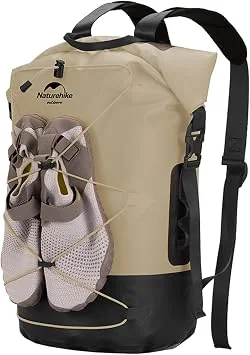
20L roll-top dry bag with welded seams
For the wet season, where a normal fabric bag slowly fills with rain.
What to check
- Roll-top closure with a buckle, not just a zip
- Welded or taped seams, because stitched seams leak
- A drop-in liner so the whole bag can be rolled shut wet
Wet-season rain in Central Java is convective and often heavy for short windows. Dry bags are the cheapest way to stop a camera bag from becoming a camera casualty.
Footwear
-

Waterproof trail running shoe with a lugged outsole
The wet-weather alternative, and the better choice for the Ketep Pass upper slopes in the wet season.
What to check
- A sealed or membrane upper rather than a coating, since coatings wear off within a season
- Drainage ports in the forefoot, because a waterproof boot that cannot drain becomes a problem on a long wet descent
- A lug pattern deep enough to still bite when the top layer of soil is saturated
For a normal dry-season Andong walk, the lighter non-waterproof shoe is the better buy. Waterproofing earns its place in the November-to-March window.
Hiking gear
-
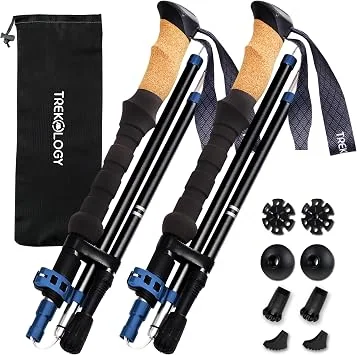
Collapsible trekking poles with cork grips
For saving knees on the descent from Mount Andong, and for saving your balance on wet stone.
What to check
- Cork or foam grips, not bare plastic, because plastic is unusable in sustained rain
- External or internal locks that are serviceable, and a lock that will not jam open in a bag
- A flick lock that locks in place with one motion
Descending is what injures people, not ascending. On the Andong descent the surface changes from trail to loose gravel without warning.
Links open Amazon. We are not the seller and we do not handle the order. A purchase changes nothing about what this site recommends. How this works.
Frequently asked questions
Does Borobudur close during the rainy season?
No. The site stays open and admission is unaffected. What changes is the climb: heavy rain drives visitors off the exposed volcanic-stone structure, so a guided session can be shortened or cancelled on the day. The lower park and the perimeter reliefs remain visitable in most weather, which is the practical reason grounds-only access can be the better choice in wet months.
Is a sunrise visit worth it in the rainy season?
Only if you accept it may not happen. Cloud cover at dawn does not reliably clear at sunrise, and unlike a dry-season viewpoint visit you cannot count on the view. Borobudur itself is unaffected by fog because it is a solid monument, so an early temple visit is more dependable than an early viewpoint visit. Either way, build a Plan B into the same morning.
What is the best month to visit Magelang?
The driest and clearest window is generally the dry season from roughly April to October, with July to September the most dependable for clear viewpoint conditions. If you are travelling in the wet months, prioritise heritage sites, accept that viewpoints may show nothing, and reduce the number of outdoor stops per day rather than moving everything around the clock.
Are roads in the Magelang highlands dangerous in the rain?
They can be. Roads toward Ketep Pass and the highland villages are busy, winding, and can become slippery or affected by landslides during heavy rain. Check BMKG warnings before setting out, avoid driving at night in heavy rain, and do not attempt a road you are not confident about. This is a case where a local driver's judgement of current conditions is worth the cost.
Can I still do the Borobudur Structure Climb in the rain?
Possibly, but expect it to be cut short. Drinking is not allowed on the structure, there is no shade anywhere on it, and the stone stairs become slick. If rain is forecast during your session, ask staff at booking whether the climb runs in current conditions and what the cancellation arrangement is before you buy.
Is the Borobudur site slippery when wet?
The stairs are worn volcanic stone polished by centuries of feet, and they become genuinely slippery when wet. Wear footwear with grip, take the steps slowly, and use whatever handholds are available. If you have balance or knee concerns, this is a strong reason to take grounds-only access instead.
Will rain put off the waterfalls?
It usually makes them more spectacular but harder to reach. Trails to places like Kayang Waterfall can be slick and carry a higher landslide risk in heavy rain, and access conditions change quickly. Check local conditions on the day and do not push past barriers or closures.
Should I cancel my trip if rain is forecast?
No. Rain in Magelang is usually intermittent rather than continuous, and the heritage sites are largely unaffected. The better approach is to reduce the number of outdoor stops, book Borobudur early, and keep an indoor or sheltered alternative in reserve. Forecasts are most useful at the day level; check BMKG the morning of rather than the week before.
Tourism information — including opening hours, entrance fees, and transport routes — may change. Please verify with official local sources before planning your visit.
Sources and further checks
Use these primary or specialist sources to confirm current access rules, safety notices, and travel arrangements.

About the Author
Larasati Wulandari
Independent travel writer · Central Java, Indonesia
Larasati Wulandari is an independent travel writer who has lived in Central Java for eight years. She writes first-hand, practical guides to Magelang's temples, viewpoints, and local food, and reviews them regularly as conditions change.