 Save
Save Key facts at a glance
- Distance
- A few minutes from the Borobudur temple entrance
- Known for
- Batik workshops, rengginang production, cycling routes
- Signature art space
- Eloprogo Art House
- Best time
- Weekday mornings for a quiet village
- Weather-proof
- Workshops run indoors — the reliable wet-day plan
- Booking
- Cycling tours and workshops can fill up; reserve ahead
- Souvenirs
- Batik cloth and rengginang crackers made on site
- Payment
- Cash preferred at small workshops
Figures change without notice — treat this as a planning summary and confirm against the sources listed below.
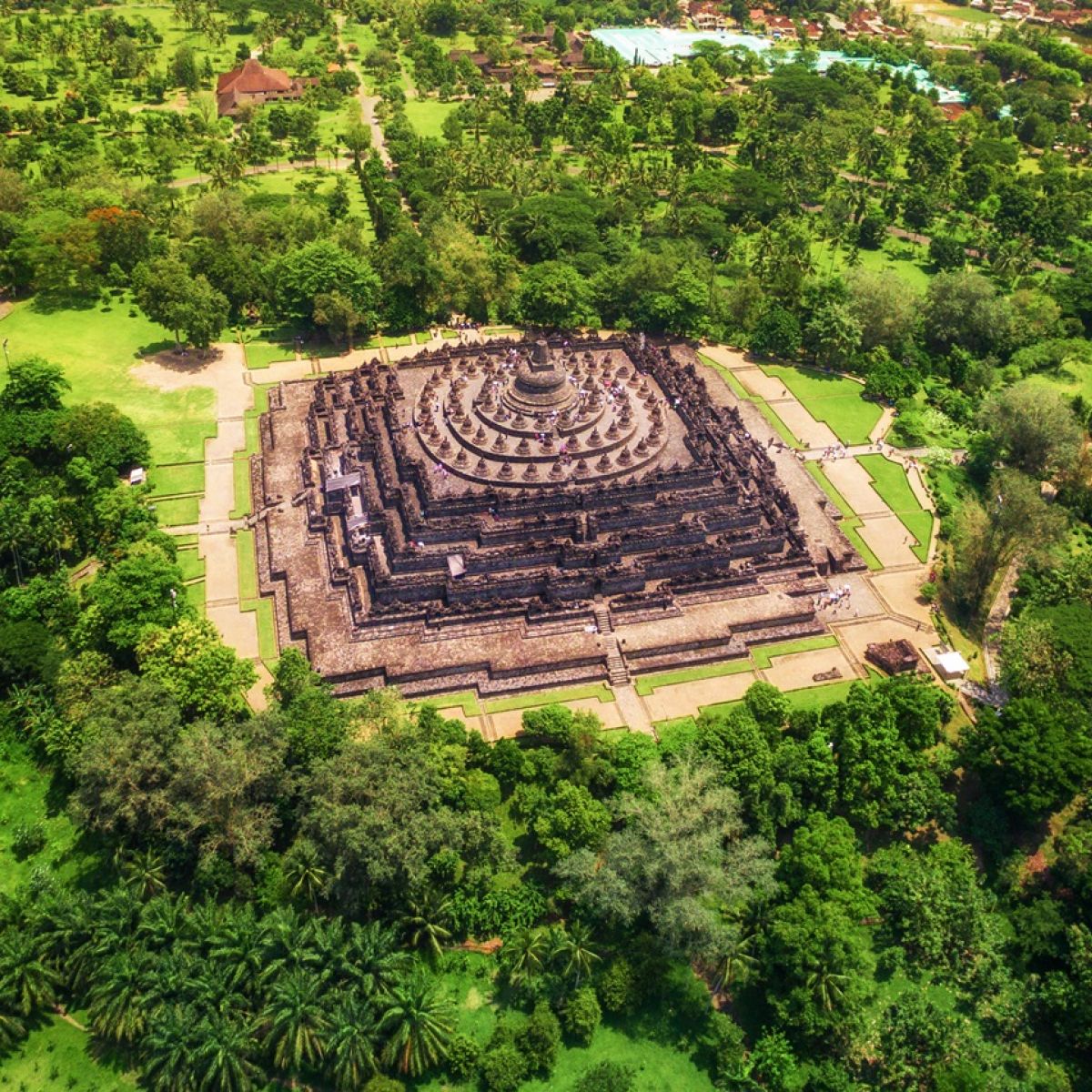
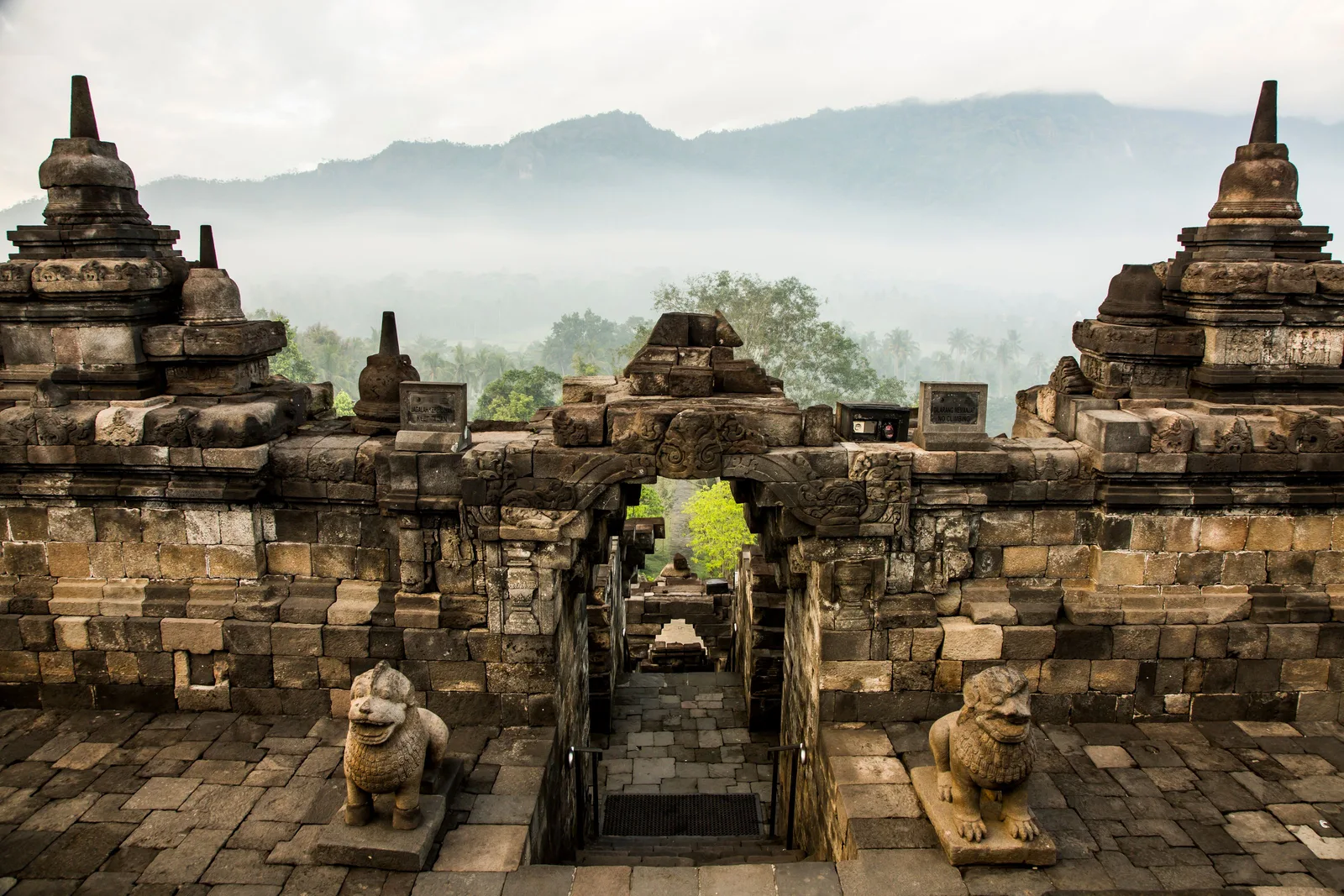
Most people visit Borobudur and leave the area without knowing that the village next door has anything to offer. Wanurejo does.
Wanurejo sits in the Borobudur sub-district, a few minutes from the temple entrance, and it is where the region’s craft traditions are actually visible: batik wax-resist dyeing, rengginang cracker production, and cycling routes out into the surrounding paddy landscape. The Eloprogo Art House is the best-known art space.
It is also, quietly, the most reliable wet-day activity near Borobudur — because the workshops are indoors. If rain kills the climb or the viewpoint plans, this is where the day goes instead. The rainy season guide treats it as the anchor of a wet itinerary for that reason.
Cycling
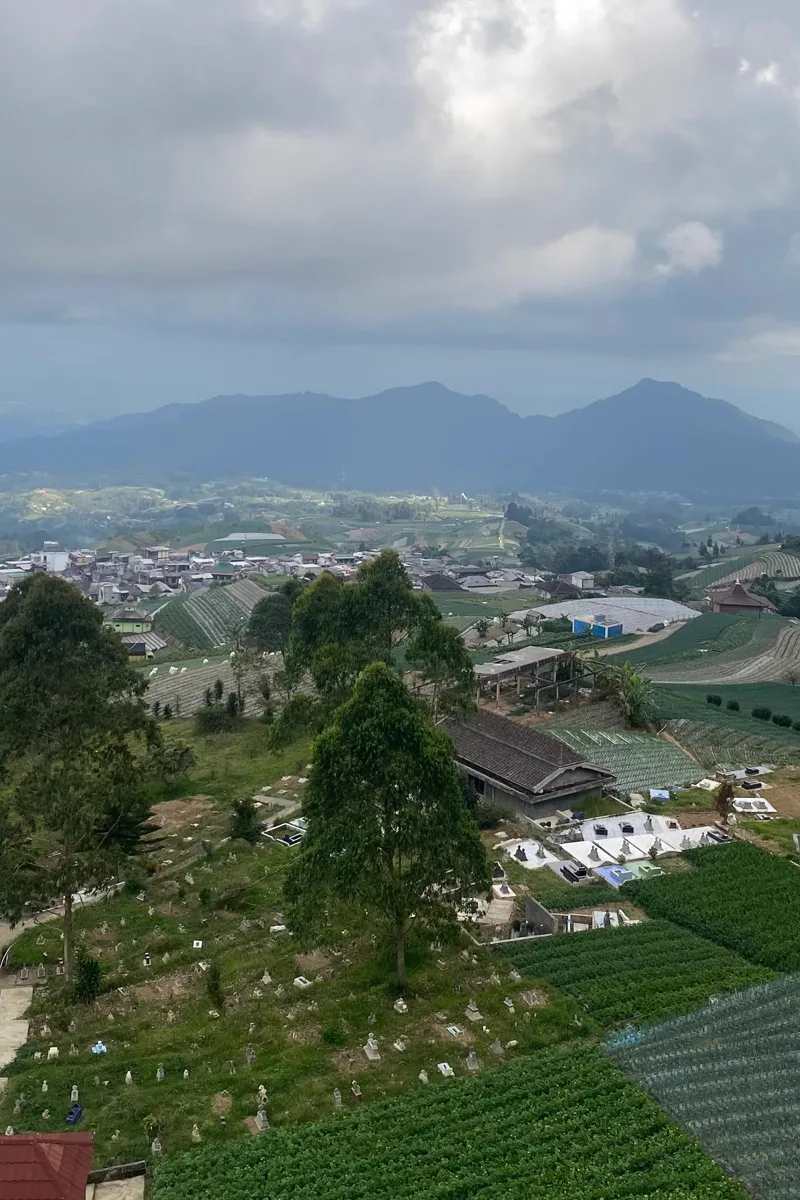
Cycling is the headline activity, and it is the one that most directly answers the question “what does the land around Borobudur actually look like?” Routes run through the villages and fields around the temple on relatively flat ground, which means you see the Kedu Plain at human pace rather than through a windscreen at 40 km/h. The Kedu Plain is the basin between the Sumbing and Merbabu massifs, and it is the setting for almost everything in this guide — seeing it at bicycle speed, among the fields rather than above them, is a different experience from viewing it from a temple gallery.
Two practical points. First, cycling tours fill up, particularly in the dry season when visitor numbers peak, so book rather than turning up. Second, weekday mornings are when Wanurejo is quietest; by mid-morning it is taking coach-group traffic that has spilled over from the temple itself.
If you are bringing children, cycling here is genuinely the right age activity. The terrain is kind, there is something to look at the whole way, and unlike the Structure Climb it does not require anyone to be quiet and still on a steep exposed staircase. There is a further family argument for the village specifically: the Borobudur rules guide explains why you cannot take a backpack over about three litres up the monument. That is a good reason to leave your larger bag at the village before the temple rather than after.
Batik: What You Are Actually Looking At
The batik work is wax-resist dyeing, and it is worth understanding the process rather than just being shown a finished cloth, because the process is the reason the technique is difficult.
The principle is inversion. Instead of adding colour to a plain cloth, the artisan reserves the areas that should stay undyed by applying hot wax to them. The cloth is then dipped in dye. Where the wax sits, the dye cannot reach. The piece is dipped repeatedly — sometimes a dozen or more times, each layer darker than the last — and finally the wax is scraped or boiled off to reveal the pattern that was protected underneath.
That is why batik takes days rather than hours, and why a genuine piece costs what it does. It is also why the workshops are worth visiting: you are watching a process with a large labour component, which is exactly the part that a shop display removes.
Two varieties are worth being able to distinguish. Batik tulis is drawn by hand with a fine canting, each line of wax applied individually — slow, and where the fine internal detail comes from. Batik cap or batik cetak uses a carved metal or wooden stamp to apply the wax, which is faster and used for repeating patterns. If a guide offers you a workshop, the interesting question is which one you are watching.
Magelang sits in genuine batik country. The wider region has a serious textile tradition and this is where you can watch it being done rather than sold, which is a materially different experience from a shop.
Rengginang
The rengginang production is the other thing worth seeing, and it is the better stop for anyone who has no interest in textiles. These traditional crackers are made on site, and the process is visual enough that it works as a short visit for a whole group — including small children and anyone who finds a dye house tedious.
The crackers are made from rice flour dough that is pressed and shaped, then fried or baked to dry out. Because the process is essentially agricultural, it is seasonal in practice: expect production to be tied to the rice cycle rather than running identically year-round. That is normal and not a sign that you have turned up on a bad day.
They are also the most edible souvenir in the region, because unlike most craft products they do not need special care and are meant to be eaten within weeks. If you have space in your bag, this is the thing to buy. For the other local sweet and the question of which forms travel, the Getuk Magelang guide explains why lindri is the opposite — meant to be eaten immediately, on the spot.
Eloprogo Art House
The Eloprogo Art House is the village’s best-known art space. Student and contemporary work is on display, and it is the sort of place that gives a more accurate picture of contemporary Central Javanese art than a gift shop would — most places selling you art in a heritage town are selling you the tradition rather than what is being made now.
It pairs well with a batik workshop visit. Craft tradition and current practice, a few minutes apart, is a pairing that says more about this region in an hour than a museum gift shop does in ten. Older children in particular tend to find this the most engaging stop of the day.
When to Go and How to Fit It
Weekday mornings, if you have the choice. That is when the workshops are working rather than staged, and when you can actually watch someone dye cloth rather than be handed a finished piece.
Plan it around the temple rather than instead of it. A reasonable shape: climb Borobudur early in the cool, take the middle of the day out of the heat, and come to Wanurejo in the late afternoon, when the light is better and the village has cooled down.
Book through the village or your accommodation rather than an outside reseller. This is not an ethics abstraction — it is the difference between the money reaching the people doing the dyeing and the money reaching an intermediary, and it also determines whether you get a workshop visit rather than a sales pitch. Cash is what gets accepted at the smaller operations.
For the wider trip shape, the 3-day itinerary builds a day around the heritage axis and leaves room for exactly this kind of flexible afternoon, and the Magelang budget guide has realistic current figures for workshop fees and what a day of activities adds up to.
Sustainable Tip
This is a working village, not a theme park. Book through community-run workshops rather than outside resellers so the money stays local, and ask before photographing artisans at work.
Family Tip
Rengginang production is a good family stop — the process is visual and the finished product is edible. The Eloprogo Art House often has student work on display that older children find genuinely interesting.
Frequently asked questions
Is Wanurejo worth visiting if I have already done Borobudur?
If you did the climb early and have the rest of the day, yes. It is a genuinely different texture from the monument — you are in someone's village rather than at a World Heritage site, and the activities are hands-on. If you are short on time and have not done Mendut and Pawon, those are the better use of an hour.
What can I actually do at Wanurejo?
Cycling routes through the surrounding villages, dropping into batik workshops to see wax-resist dyeing, and visiting rengginang production where the traditional crackers are made. The Eloprogo Art House is the main art space. Exact offerings depend on who is running that day, so book rather than assume.
Can I take a batik workshop class?
Batik workshops in the village can usually be arranged, but they are small-scale community operations rather than a tourist factory, so they are not always available on a walk-in basis. Contact in advance through your accommodation or a local operator.
Is Wanurejo open in the rainy season?
The workshops run indoors, which is precisely why Wanurejo is the most reliable wet-day activity around Borobudur. The cycling routes are the part that depends on weather. See the rainy season guide for how to structure a wet day.
How crowded does it get?
Weekday mornings are the quietest. It picks up with day-trip coach groups in the middle of the day, particularly when Borobudur's own visitor flow is high. Early start if you want to actually see the workshops working rather than talking to a salesperson.
How do I get there from Borobudur?
Wanurejo is a village in the Borobudur sub-district, minutes from the temple entrance, so it is usually a short walk, cycle, or cheap local ride. Ask your accommodation — most Borobudur-area places can arrange it.
Tourism information — including opening hours, entrance fees, and transport routes — may change. Please verify with official local sources before planning your visit.
Sources and further checks
Use these primary or specialist sources to confirm current access rules, safety notices, and travel arrangements.

About the Author
Larasati Wulandari
Independent travel writer · Central Java, Indonesia
Larasati Wulandari is an independent travel writer who has lived in Central Java for eight years. She writes first-hand, practical guides to Magelang's temples, viewpoints, and local food, and reviews them regularly as conditions change.