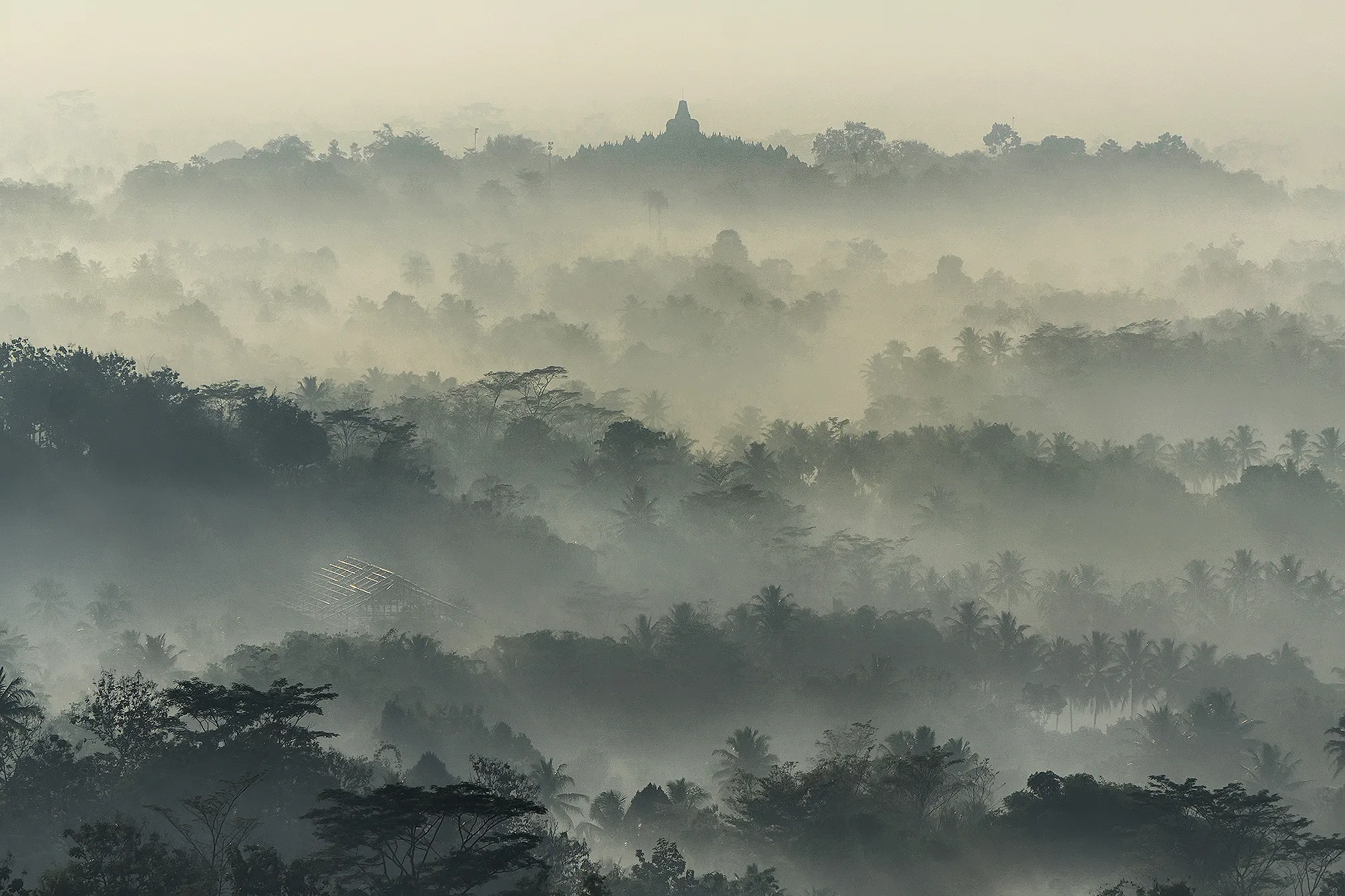
Key facts at a glance
- Real name
- Bukit Rhema
- Nickname
- Gereja Ayam, the Chicken Church
- Distance from Borobudur
- About 3 km; Borobudur is visible 4.7 km away from the top
- Built by
- Daniel Alamsjah, a Christian businessman from Jakarta
- Construction began
- Around 1990; stopped in 2000 and was never finished
- Intended use
- A prayer house open to people of any religion
- Status today
- Open to visitors for a nominal fee, and partly restored
- Best light
- Sunrise from the crown, though mid-morning suits most visitors
Figures change without notice — treat this as a planning summary and confirm against the sources listed below.
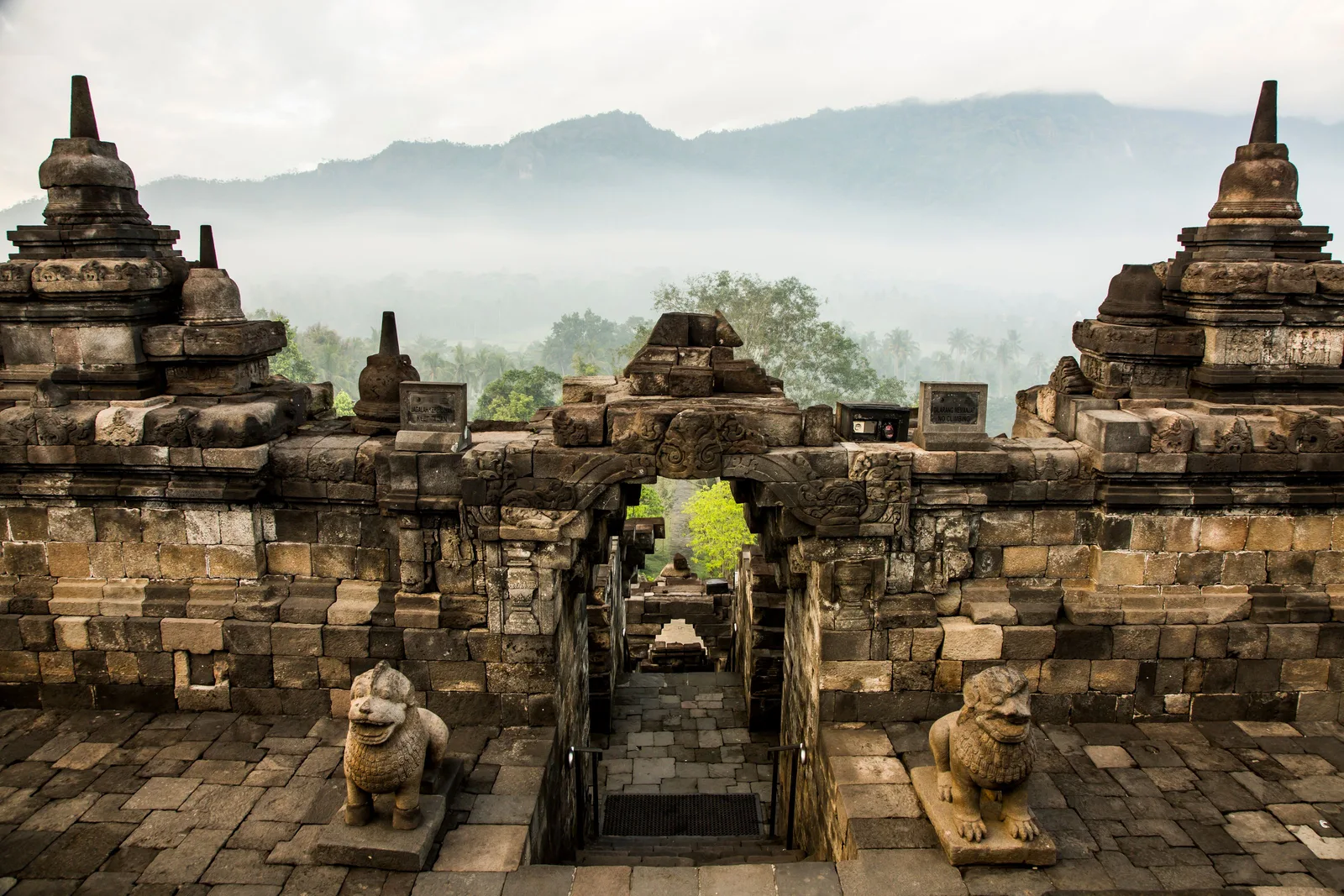
Somewhere on the hills about three kilometres east of Borobudur there is a building shaped like a bird, with its beak open and its tail cocked. From most angles it reads as a chicken. A few read it as a dove. Almost nobody calls it by its real name, which is Bukit Rhema, and which translates roughly as the hill of the first.
It is one of the strangest buildings in Central Java and one of the easiest to fit into a day, which is a strange combination for something so unusual.
Who built it, and why
The man responsible is Daniel Alamsjah, a Christian businessman from Jakarta. According to the account in The Guardian’s piece on the site, he had a vision late in the 1980s of a bird-shaped building on a hilltop, and was told in the vision that it should be a place of worship for all faiths. Some sources date the dream to 1988, others to 1989, so it is safer to say the late 1980s.
Some time later, walking in the jungle around Magelang, he recognised Bukit Rhema as the hill from the vision. Within a week he had bought an acre of land on top of it.
What he built was not a chicken. His stated design was a giant crowned dove, a bird of peace, intended as a prayer house that would welcome people without distinction of ethnicity, religion or group. He was explicit about that. The nickname Gereja Ayam, or Chicken Church, exists because a crowned dove with its beak open happens to look, to most people, like a hen that has just been startled.
Ten years of weekends, then fifteen years of neglect
Construction began around 1990. Alamsjah was working full-time as a project manager in Jakarta, and for nearly a decade he spent every weekend travelling to Magelang to supervise it. Permission was hard won. The local resistance was real. But according to the Guardian, the structure eventually went up.
Then the money ran out. Work stopped in 2000. The building was left unfinished and began to decay, and for years it was described as graffitied and abandoned.
Here is the genuinely strange part of the story. Over the following fifteen years, visitors to Borobudur started hearing about this abandoned building a few kilometres away and going to look at it, because they could not believe the photographs. Word travelled. Visitor numbers climbed. Alamsjah eventually came back, started charging a small entrance fee, and resumed work on the place. Decay turned into a revival. The building now has painted cloud ceilings, decorated floors, murals of scenes from Indonesian mythology, twelve small prayer rooms in what are called the catacombs, a souvenir shop, and a cafe in what the descriptions delicately call the chicken’s rear. You can climb to the top and watch the sunrise from the crown.
The most recent addition to the building’s long filmography is the 2016 Indonesian film Ada Apa dengan Cinta? 2, which used it as a location. Werner Herzog also gave it a segment in his 2016 documentary Into the Inferno.
The question this site cannot answer for you
There is a reason to be uneasy about all of this, and it is worth stating plainly.
The builder’s stated intention was interfaith. The place was conceived as open to anyone, and it still contains prayer rooms that people use. But it is also unfinished, financially precarious, and now ticketed — a visitor attraction built out of the decay of someone’s personal religious project. Charging admission to an abandoned prayer house is not obviously the same thing as what the man who started it set out to do.
There is no simple answer here. Alamsjah appears to have made his own decision to reopen it, and he is the one running it. But if the idea of paying to enter someone’s unfinished chapel troubles you, that is a reasonable reaction and you are entitled to act on it. You can see the building from the road on the approach, which is free, and that is genuinely most of the experience: the shape is the point, and the shape is visible from outside.
If you do go in, treat it as what it is, which is both a tourist site and a place of prayer. Dress modestly. Keep your voice down in the prayer rooms. Ask before photographing people or anything that looks like an actual ceremony. Do not climb on the structure or touch it to get a better picture.
Practical notes
The site is in the villages of Karangrejo and Kembanglimus, Borobudur sub-district. It is close enough to Borobudur to combine with the temple in a single morning, and it sits on the same high ground as Punthuk Setumbu, which makes it easy to pair with a dawn start on the hill.
Figures for the entrance fee vary online and none that we have found are current enough to trust. Carry small cash and expect to pay something modest at the gate.
The climb to the top is steep but short. Most of the effort is in the heat and in stairs rather than in distance.
If you are combining it with a heritage day, the Borobudur temple guide covers the main site properly, and the Borobudur tickets and Structure Climb guide covers what to book and what it costs. This is a twenty-minute detour from the road, not a replacement for either.
One warning about expectations: the building is far more striking in photographs than in person. In life it is a partly finished concrete shell with a good view. People who come expecting a polished attraction are sometimes disappointed. People who come expecting something strange and slightly melancholy tend to like it.
Where to pair it
The natural pairing is Punthuk Setumbu — climb the hill for dawn, then come down and pay your respects to the chicken. Borobudur itself is a short walk or ride away, and if you have a longer day, the Wanurejo craft village nearby is a good use of an afternoon.
For a broader look at how tourism and conservation money relate in this region, see the sustainable travel guide.
Frequently asked questions
Is Gereja Ayam really a church?
It was intended as one, and still functions as a small prayer house. The builder, Daniel Alamsjah, always described the shape as a dove rather than a hen. Most people looking at the building see a chicken, which is where the nickname comes from. It has never been affiliated with any Christian denomination.
How do I get to Gereja Ayam?
It is on the Bukit Rhema hills about 3 km from Borobudur, across the Karangrejo and Kembanglimus villages in Borobudur sub-district. Take a car or motorbike to the base and climb the last stretch on foot. Expect a short, steep uphill walk of a few minutes to reach the building.
How much is the entrance fee?
A nominal fee is charged, and figures we have seen online are old enough to be unreliable. Carry small cash and check on arrival. Be aware that the fee buys entry to what is effectively a private, unfinished religious building run by the man who built it.
Can you go inside?
Yes. Visitors climb through the structure, and there are twelve small prayer rooms in the lower levels. The interior is the opposite of what the outside suggests: painted cloud ceilings, decorated tile, and murals drawn from Indonesian mythology.
Why is it unfinished?
Construction stopped in 2000 because Alamsjah ran out of money and faced local resistance. The building stood unfinished and deteriorated for roughly fifteen years. Visitors kept arriving anyway, and he eventually returned, started charging a small entrance fee, and resumed work.
Is it worth the detour from Borobudur?
It is short, inexpensive, and genuinely unlike anything else in the region, so it fits easily into a half-day around Borobudur. Go on the way to or from Punthuk Setumbu, which sits on the same stretch of hills.
Why do couples come here?
The shape is unusual enough to function as a backdrop, and it has become a popular wedding photography location. Some couples have actually been married in the building. Expect other parties photographing, particularly in the late afternoon.
Is there anything I should be careful about?
It is someone's place of worship that also charges admission, so treat it as both. Dress modestly, keep your voice down in the prayer rooms, ask before photographing people or ceremonies, and do not climb on or touch the structure to get a better picture.
Tourism information — including opening hours, entrance fees, and transport routes — may change. Please verify with official local sources before planning your visit.
Sources and further checks
Use these primary or specialist sources to confirm current access rules, safety notices, and travel arrangements.

About the Author
Larasati Wulandari
Independent travel writer · Central Java, Indonesia
Larasati Wulandari is an independent travel writer who has lived in Central Java for eight years. She writes first-hand, practical guides to Magelang's temples, viewpoints, and local food, and reviews them regularly as conditions change.