Key facts at a glance
- Ideal length
- 2 days, 1 night
- Day 1 focus
- Borobudur, Mendut, Pawon
- Day 2 focus
- Viewpoint or highland, weather-led
- Best ticket slot
- 09:00 on day 1
- Base
- near Borobudur or Magelang city
- Wet season impact
- swap day 2, never day 1
- Official weather
- BMKG
- Booking
- ticket.injourneydestination.id
Figures change without notice — treat this as a planning summary and confirm against the sources listed below.
Two days is the sweet spot for most people visiting Magelang, and for one specific reason: it lets you separate the thing that cannot fail from the thing that often does. Borobudur is a solid stone monument that operates regardless of weather. A viewpoint is a bet on visibility. Put them on separate days, put the sure thing first, and a bad morning costs you an afternoon rather than the trip.
This plan assumes 2 days and 1 night, with a base in or near Borobudur or in Magelang city. Base selection is covered in the where to stay near Borobudur guide, and it matters more for two days than for three, because you pay for the same night either way but a poor base costs you two mornings of travel.
Everything here is a framework, not a fixed schedule. Confirm current visitor rules, ticket availability, transport, and weather with the operator or your accommodation before you travel.
What to settle before you arrive
Three things, and none of them can be fixed on the ground.
Book the Borobudur ticket ahead. Climb sessions are guided and allocated by slot, so a walk-up purchase takes whatever is left. Book through the operator’s own channel at ticket.injourneydestination.id and take the 09:00 slot on day one. Early is better in every season and critical between November and March. The full mechanics are in the Borobudur tickets and Structure Climb guide.
Decide climb or grounds-only now. The climb is roughly a 90-minute guided session across the nine platforms, the relief galleries, and the central stupa dome. It has no shade and steep stone stairs. The price difference over grounds-only is small, so the question is physical, not financial. Anyone with knee problems, a fear of heights, or a small child should take grounds-only and spend the saved effort elsewhere. The strict rules are in the Borobudur rules and etiquette guide.
Plan the weather variable. Check BMKG the morning of day two, not before you fly. If day two looks poor, have a replacement ready — the list at the end of this page is deliberately unglamorous.
Day 1: the heritage axis, done properly
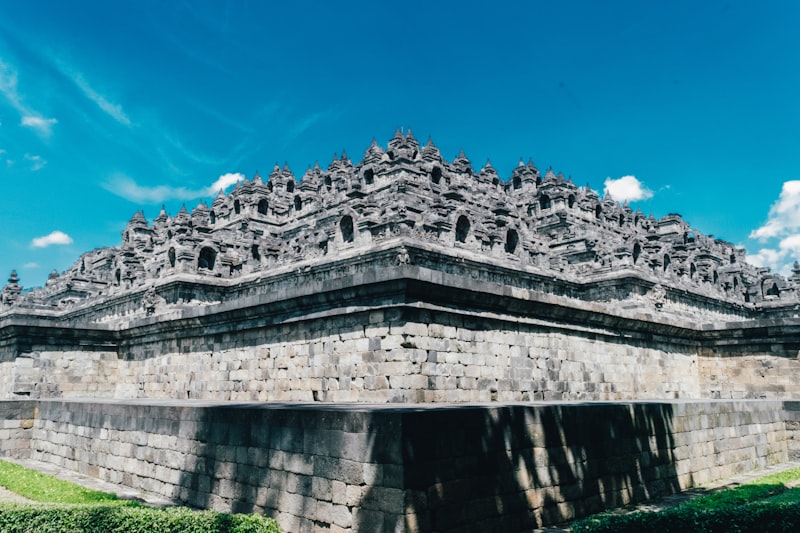
Day one is fixed, and it is a single geographical cluster. Borobudur, Mendut, and Pawon sit within about two kilometres of each other. You are not making a tour; you are walking a single sacred landscape on foot at a civilised pace.
Early: Borobudur, first slot. Arrive early enough to clear the ticket process before your session starts, because that process involves a bag check, a wristband, and collecting your Upanat sandals. Bring a small bag — anything over roughly 3 litres goes in a base locker.
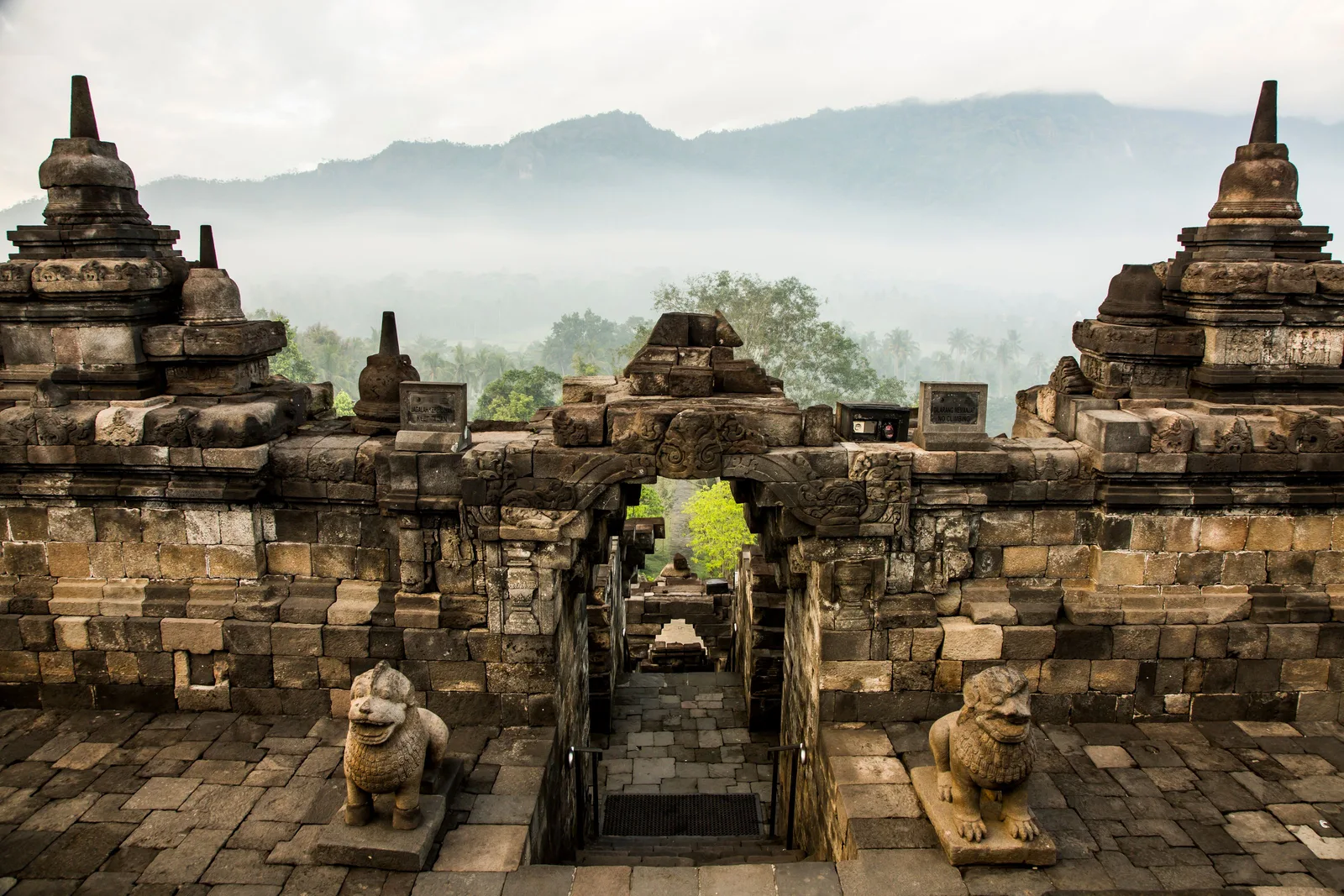
Once up there, the thing to understand is that Borobudur is read as a narrative. You walk a route: the base terraces, then the gallery of 504 Buddha statues, then the relief bands on each successive platform, ending at the central stupa. The reliefs are chronological and continuous — the base carries the earliest material. Guided sessions move at a pace that does not allow much stopping, so if you want time with a particular panel, the grounds-only route at your own speed is genuinely better for that. The Borobudur temple guide walks the platforms in order and tells you which ones to slow down at.
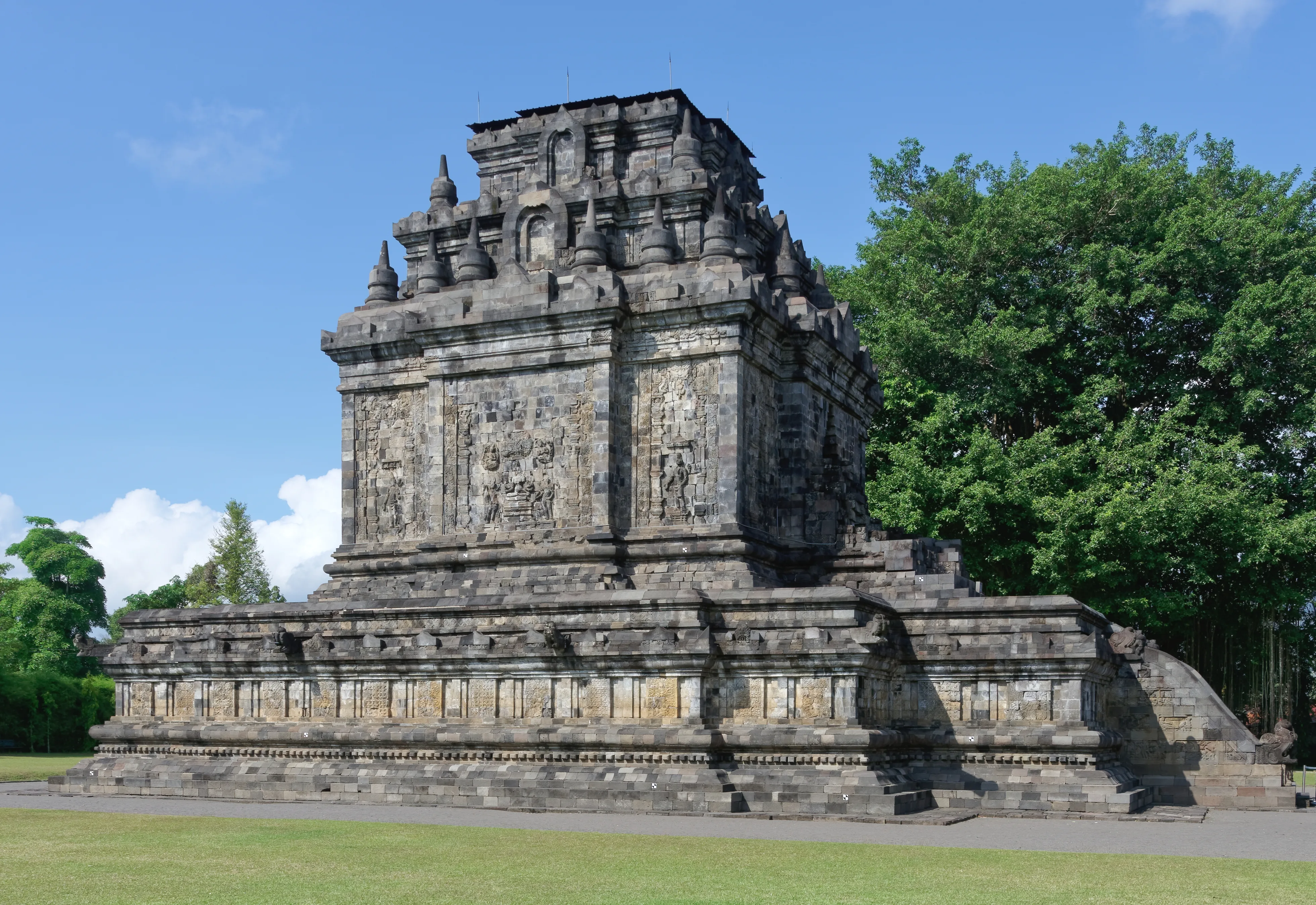
Mid-morning: Mendut. Roughly 3 km from Borobudur. This is the older temple, smaller and far more intimate, and it is the one most visitors skip because they are focused on the famous site. The carved stela inside is worth the walk on its own.
Late morning: Pawon. A short walk from Mendut, and the most immediately impressive of the three in proportion to its size. The triple-mountain profile of the roof, reflected in the pond, is the single most photogenic thing on this axis.
Early afternoon: eat, then stop. This is where a two-day trip is meaningfully better than one. A sit-down lunch at a local restaurant rather than a roadside snack, then deliberately do nothing scheduled. You will be tired and it is fine. Soto Magelang with nasi lesah is a good choice for something warm and filling; kupat tahu is the local warung staple and cheap.
Late afternoon: back off the monument. Leave Borobudur while the light is still good but before the afternoon heat peaks. Optional third temple if you have energy and the gates are open — but do not treat it as required.
Day 2: the landscape day, led by conditions
Day two is deliberately flexible. Its content depends on what the sky is doing, and the choice is between three kinds of landscape.
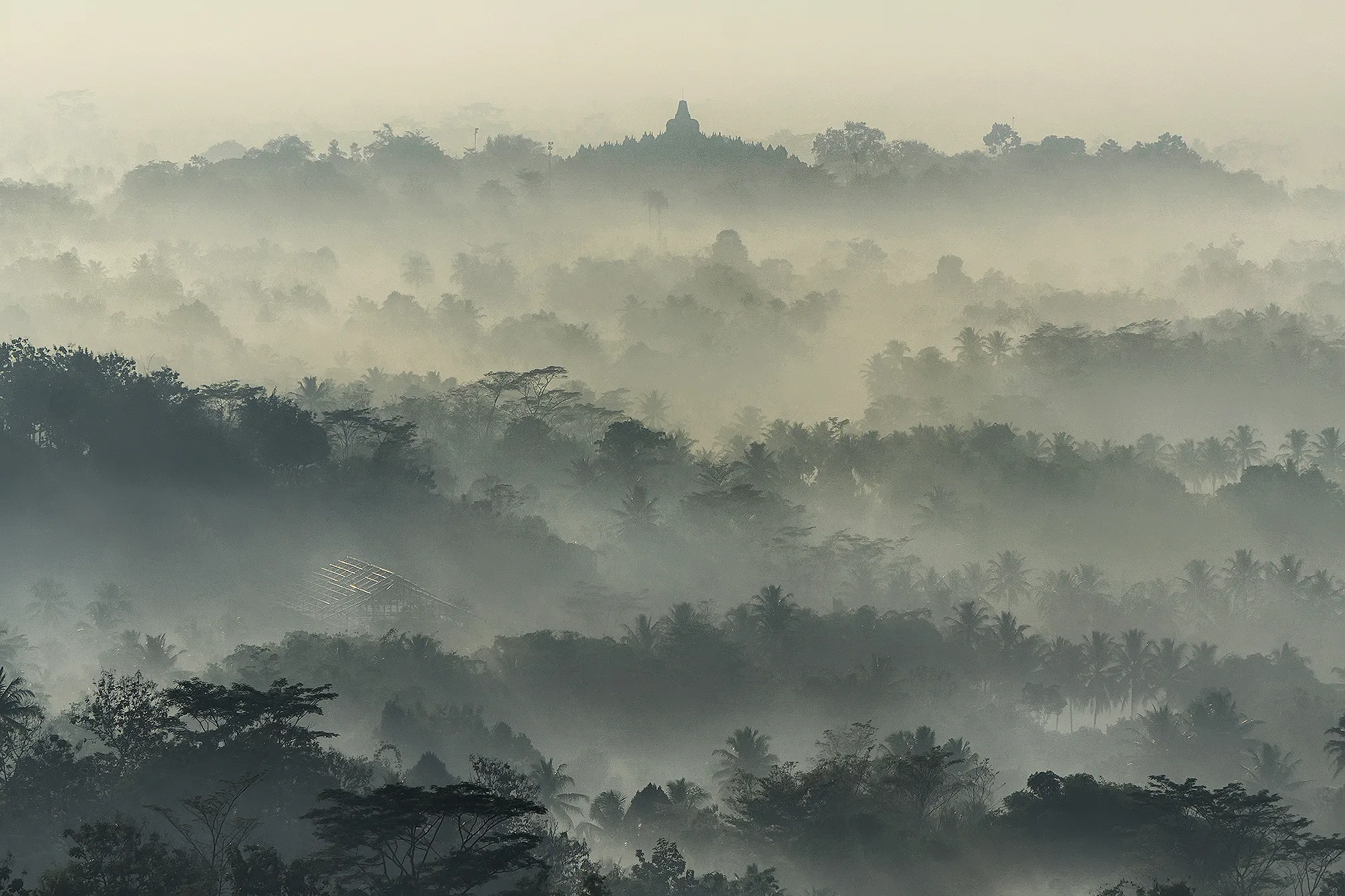
If the morning is clear — a viewpoint day. Go to Punthuk Setumbu in the early morning, when the cloud base sits below the hill and Borobudur appears above it. This is the best cheap alternative to the expensive on-monument sunrise, and at dawn it costs very little. From there, depending on your remaining energy and the light, you can add Ketep Pass — but not both at once in a single morning, because they are different journeys and rushing both defeats the point of either.
If the morning is wet but not severe — a quiet temple day. Candi Ngawen sits in a village and paddy setting roughly 6 km east of Mendut. It is small, quiet, and shaded by trees, which makes it a much better wet-morning answer than an exposed stone structure. Combined with a slower return to Mendut and Pawon, it fills a day well. Check local advisories if you are near Merapi or Merbabu.
If you want mountains and villages rather than a view — the highland road. Nepal Van Java and Dusun Butuh is a highland village experience well away from the temple axis, and it works in poor weather because the appeal is the place rather than a vista. Pair it with a long food afternoon.
If you want to earn the view — a dawn walk on Mount Andong. Mount Andong is a beginner hill walk north of the regency with a four-summit ridgeline and a panorama of Merapi, Merbabu, Sindoro and Sumbing. It needs a 1 to 3 am start, which is the whole cost of it. Because Andong is a hill and not a volcano, it involves none of the hazard framing that governs Merapi and is the natural counterpart to a Ketep Pass visit. If you also want the village, the short detour to Gereja Ayam on the same hills as Punthuk Setumbu fills a gap between the two.
If your interest is history rather than views — the northern heritage loop. Candi Gunung Wukir near Salam is where the 732 AD Prasasti Canggal was found, making it the earliest temple in Indonesia tied to a dated inscription. Candi Selogriyo climbs the lower slopes of Mount Sumbing with terraced paddies on the approach and four named Hindu guardians. Candi Asu adds a quieter counterpoint between Merapi and Merbabu, and pairs naturally with the Ketep Pass volcano museum if the clouds are out. All three sit north of Magelang city, all are small, and pairing them with Candi Ngawen makes a genuinely varied day. Budget more driving than the heritage axis needs — this is a full day in a car.
If it is genuinely bad — go indoors. The Wanurejo craft village runs batik workshops you can drop into, which is exactly the right kind of activity for heavy rain: warm, indoor, and you leave with something. Add a longer food day — the getuk guide, the sop senerek guide, or the mangut beong guide give you three distinct meals that are unaffected by weather.
Transport for two days
Day one needs almost no transport. Borobudur, Mendut, and Pawon are close enough to walk or to connect with a short local ride. Spending money on a vehicle here is the most common waste in a two-day plan.
Day two depends on destination. Local transport or an ojek can reach a viewpoint. A driver is worth paying for if you are heading to the highlands or a waterfall, because those are not places to navigate on public transport in low light or in rain. A private driver for half a day is commonly quoted in the range discussed in the Magelang budget guide — and for two people it often works out cheaper than two fares.
Evening transport is the practical trap. Day one finishes in the afternoon so day two can start early. If you are returning to a base that requires an evening ride, build in time for it. The how to get to Magelang guide covers arrival and departure logistics including the evening options.
What to pack for exactly this plan
You need less than you think, because both days are within reach of a road:
- Refillable water bottle. Drinking is not permitted on the Borobudur structure, so fill it at the entrance stations.
- Small bag. Over roughly 3 litres goes in a base locker.
- Hat and light long sleeves. Borobudur is about 35 metres high with no shade, and stone amplifies heat. Essential even in the dry season.
- Comfortable shoes with grip. Worn stone stairs are steep and become slippery when wet.
- Rain layer. Cheap insurance against losing day two.
- Warm layer for the viewpoint or highland. It is genuinely cold up there when the wind picks up, particularly if you have just come out of rain.
- Cash. Many warungs, small shops, and rural transport are cash-only.
Honest limitations of a two-day plan
This itinerary gets you the essentials. It does not get you:
- A Structure Climb on a clear sunrise morning. The on-monument sunrise premium is a 04:00 start and a separate product. Possible, but it changes the shape of both days.
- Ketep Pass and Punthuk Setumbu. Both in one day means rushing both. Pick one.
- Prambanan. It is around 40 km away and takes most of a day. Trying to add it to a two-day Magelang plan means three hours in a vehicle.
- The deep highland villages as anything more than a stop. They reward a longer trip.
If you have a third day, the three-day Magelang itinerary adds the landscape properly. If you have only one, the one-day itinerary is the compressed version worth doing. And if you are visiting between November and March, read the Magelang rainy season guide first — it changes which day you put Borobudur on.
Frequently asked questions
Is two days enough for Magelang?
Two days is enough for the core experience: Borobudur with Mendut and Pawon on the same heritage axis, one landscape or highland day, and excellent food in between. It is not enough for Borobudur plus Punthuk Setumbu plus Ketep Pass plus the highland villages plus a day trip to Prambanan. If you have three days, use it; if you have two, this plan is the right shape.
Which day should I do Borobudur on?
Day one, always. Borobudur is the one part of the trip that is unaffected by weather, so you secure it first and keep your flexible landscape day as the one you are willing to sacrifice. Booking the first slot of day one also gets you the coolest, least crowded hours on a monument with no shade.
What if day two's weather is bad?
That is what the flexible day is for. Swap in a heritage or indoor alternative: Candi Ngawen in a quiet village setting, the Wanurejo craft village for batik, a longer food day, or a slower pass through Mendut and Pawon. Do not try to force a viewpoint you cannot see, and do not drive the highlands in heavy rain.
Should I buy the Borobudur climb ticket for a two-day trip?
If you only have one day at Borobudur, the climb is usually worth it, because the guided session covers the galleries and terraces in about 90 minutes and the price difference over grounds-only access is small. But if climbing does not appeal — knee problems, a fear of heights, a small child — the grounds-only ticket still leaves you the most extensive relief carving in Java.
Do I need a driver for two days?
For Borobudur, Mendut, and Pawon, no. They sit within a couple of kilometres of each other and local transport or a short walk connects them. For the second day, a driver is worth it if you are going to the highlands or to a waterfall, because those are not places you want to navigate on public transport in bad light.
Can I do Borobudur sunrise and a second day of sightseeing?
You can, but check which sunrise you mean. An on-monument sunrise costs around IDR 1,000,000 for international visitors and needs a 04:00 start. The Punthuk Setumbu sunrise is a cheap dawn viewpoint about 3 km away and is a normal morning activity. Either is compatible with a second sightseeing day, provided you are actually a morning person.
Is a two-day Magelang trip worth it compared to one day?
It is a different trip rather than a better one. One day gets you Borobudur and little else. Two days add a landscape or highland experience and, more importantly, stop you from compressing everything into a single stressful route. The extra day usually costs one night's accommodation and some transport, and buys a much better pace.
Tourism information — including opening hours, entrance fees, and transport routes — may change. Please verify with official local sources before planning your visit.
Sources and further checks
Use these primary or specialist sources to confirm current access rules, safety notices, and travel arrangements.

About the Author
Larasati Wulandari
Independent travel writer · Central Java, Indonesia
Larasati Wulandari is an independent travel writer who has lived in Central Java for eight years. She writes first-hand, practical guides to Magelang's temples, viewpoints, and local food, and reviews them regularly as conditions change.