 Save
Key facts at a glance
- The rule
- One main focus, one nearby optional stop, and stop there
- Heritage-first day
- Mendut, then Pawon, then Borobudur last in the late morning
- Structure climb window
- 09:00 to 17:00 daily, so a climb forces an early start
- Time budget
- Allow 1.5 to 2 hours for Borobudur and 45 to 60 minutes for Mendut
- The food clock
- Soto is breakfast and sop senerek is a morning dish; both close early
- Do not attempt
- Borobudur plus a mountain viewpoint plus a waterfall in one day
- Base matters
- Staying near Borobudur makes this workable; the city adds an hour of driving
- Fallback rule
- Agree the alternative before you leave, not at 5am in the rain
Figures change without notice — treat this as a planning summary and confirm against the sources listed below.
A good one-day Magelang itinerary is selective. Trying to combine Borobudur, a mountain viewpoint, a waterfall, and a distant highland village in one day produces more driving than meaningful time on site — and that is the single most common mistake visitors make here.
The geography works against you. Borobudur sits south of Magelang city, Ketep Pass is roughly 30 km north in the highlands, Kayang Waterfall is east, and the highland villages are further still. A day spent connecting all four is a day spent in a car.
So: pick one main theme, keep one nearby optional stop, and check conditions before you leave. Below are two structures that work. Neither includes fixed travel times, ticket prices, or guaranteed weather. Confirm current access, transport, bookings, and safety guidance with the relevant operator or your accommodation before the day begins.
How long each stop actually takes
The single most useful thing you can do before planning a one-day route is decide what a stop costs in time, because a one-day plan fails on arithmetic long before it fails on enthusiasm.
| Stop | Realistic time | The catch |
|---|---|---|
| Borobudur grounds | 1.5 to 2 hours | The exit walk through the souvenir stalls runs about 1 km |
| Borobudur Structure Climb | Around 90 minutes | Guided, time-limited, no shade, and steep |
| Mendut | 45 to 60 minutes | The one temple here you can walk inside |
| Pawon | 15 to 30 minutes | Small, and the empty chamber is the whole point |
| Candi Ngawen | 30 to 45 minutes | 6 km east of Mendut, so it adds real driving |
| Punthuk Setumbu | 1 to 1.5 hours | Plus a narrow unlit road before dawn |
| Ketep Pass | 1.5 to 2 hours | 30 km north; the museum is the reliable part |
| Wanurejo workshops | 1.5 to 2 hours | Indoors, so it is the best wet-day option |
| Gereja Ayam | 1 to 1.5 hours | On the same hills as Punthuk Setumbu |
| A food stop | 45 to 75 minutes | Shorter if you are not going in for a second sitting |
Read that table before adding anything. Borobudur plus Mendut plus Pawon is already about three hours on site, and the climbs between them add up. Two more stops almost guarantees you spend the late afternoon in a car instead of anywhere worth being.
The food clock is tighter than you think
This is the constraint most one-day plans miss. Magelang’s food is not spread evenly across the day — it has a three-part rhythm that will close under you if you plan it wrong.
Breakfast belongs to soto. Soto Magelang is a morning dish. The specialist stalls in Magelang city start early and typically finish by mid-afternoon, and many run out of a particular cut before then. See the soto Magelang and nasi lesah guide.
Mid-morning and early afternoon belong to sop senerek. It is a clear-broth beef soup, it is a morning-through-afternoon dish, and the long-established specialist on Jalan Jenderal Sudirman in Magersari has historically kept roughly 06:00 to 16:00 hours — a figure that is a decade out of date, so treat the window as indicative rather than fixed. See the sop senerek guide.
Afternoon into evening belongs to nasi lesah, whose coconut-milk broth makes it a later, heavier meal.
So the practical version is: if you want soto or sop senerek, they have to be near the start of your day, and getting to them means going into Magelang city rather than staying out at the temples. That is a real trade-off, not a detail. A visitor based near Borobudur who decides at 2pm that they want soup will find the good stalls closed.
The same reasoning applies to the two opposite-risk days. Getuk lindri is meant to be eaten immediately, not carried around until later — see the Getuk guide — which makes it a natural mid-morning stop on the way to a temple rather than an afternoon one.
Option One: Heritage-First Day (the safer default)
This is the day to choose unless you have a specific reason not to.
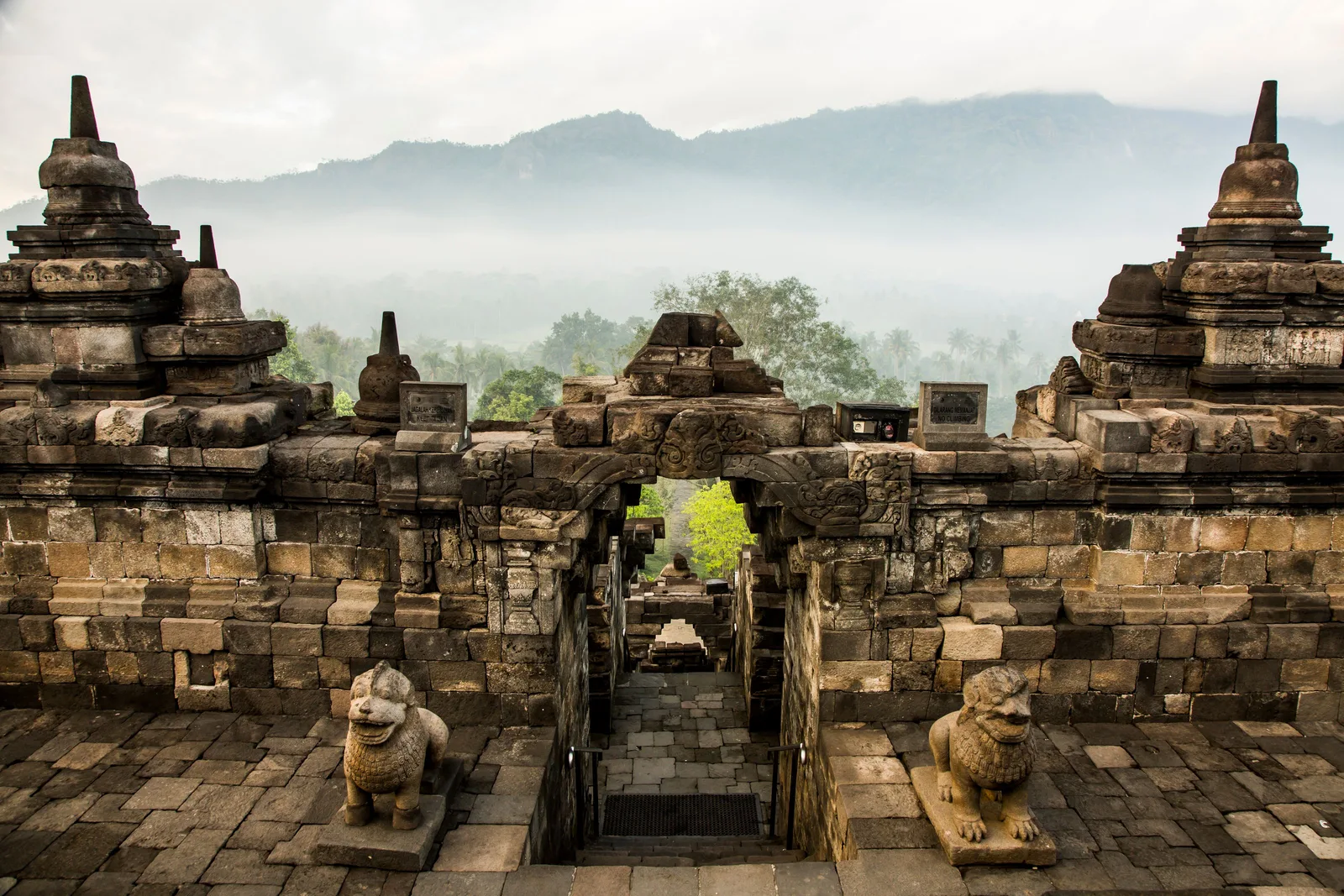
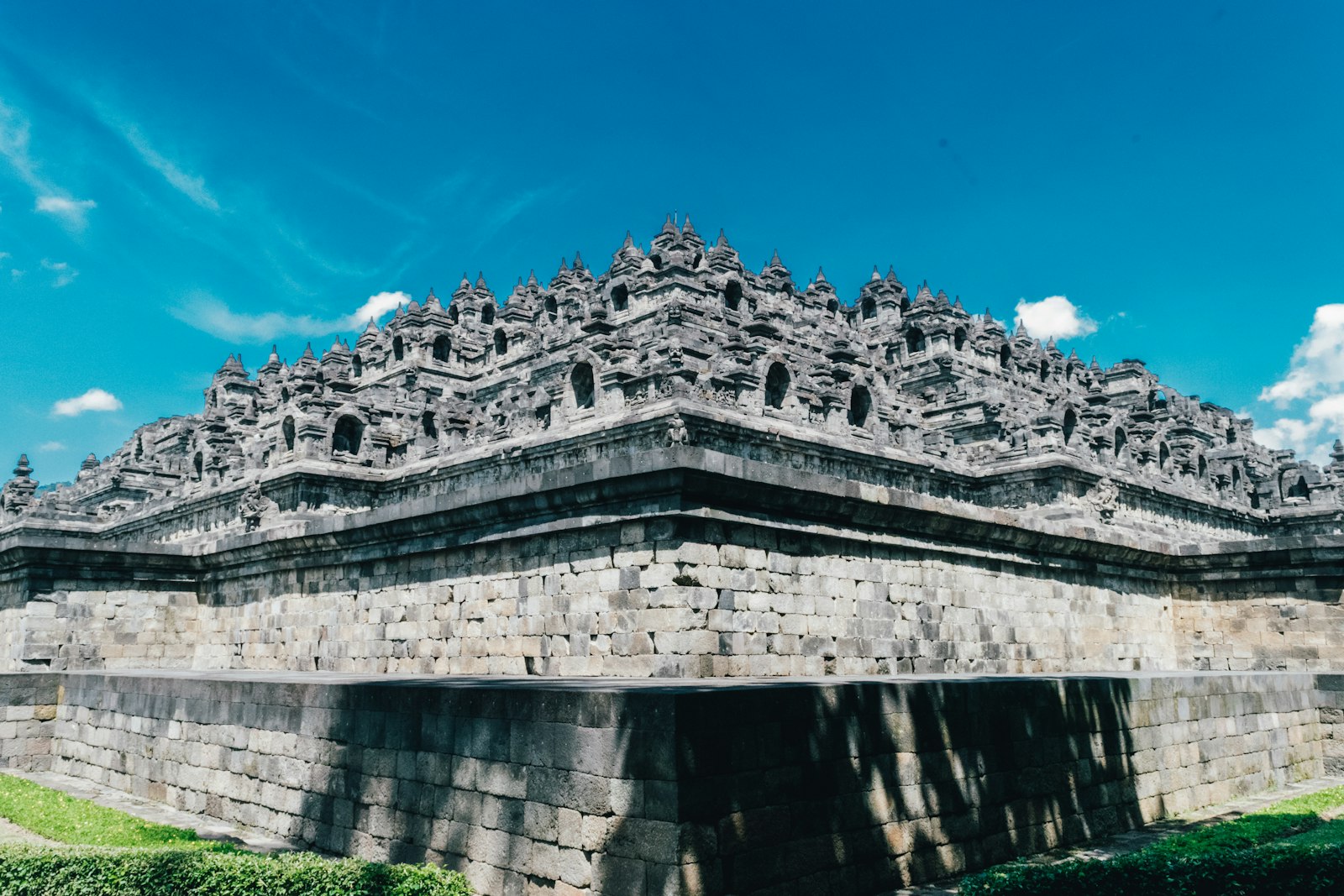
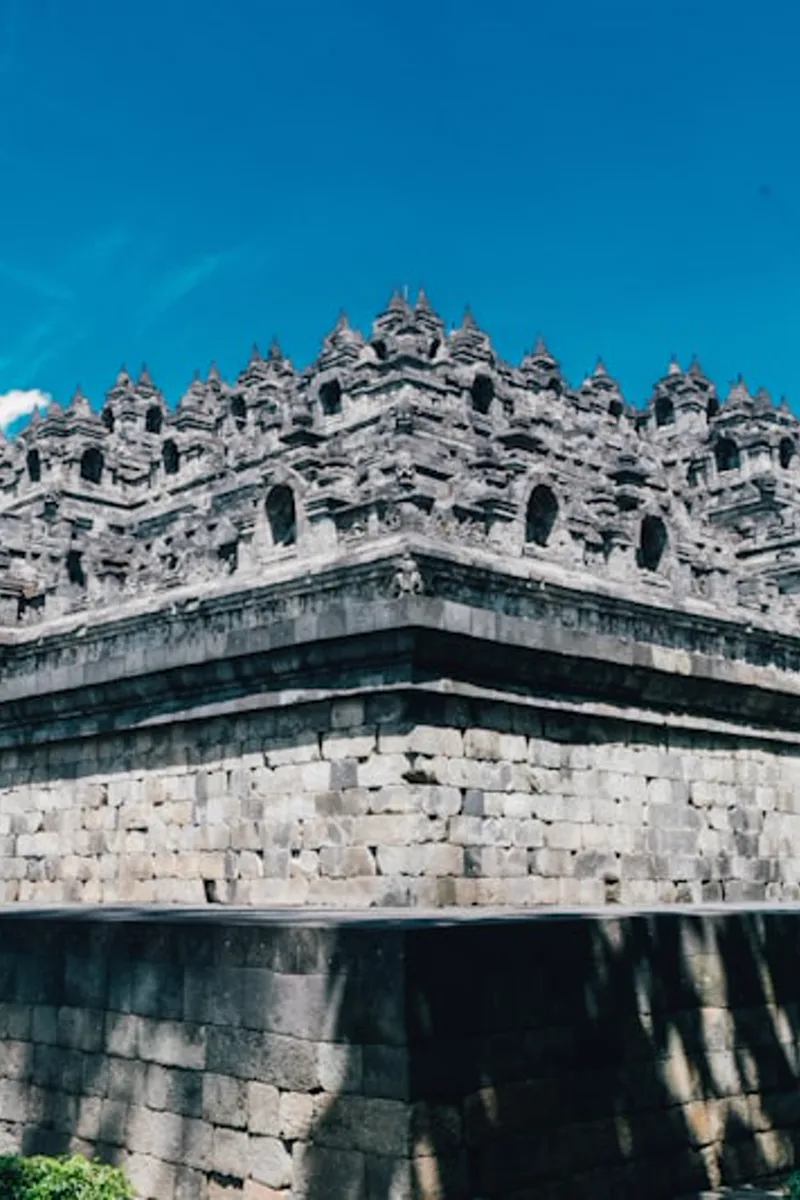
UNESCO places Borobudur, Mendut Temple, and Pawon Temple within one listing, the Borobudur Temple Compounds, and the three sit on a single straight east-west axis about 3 km apart. That makes them a coherent cultural thread rather than three unrelated stops — and it means they can be done without a long drive.
The order matters: Mendut, then Pawon, then Borobudur.
Do the small temples first. They are quieter, cooler in the morning, and they take less time than you expect. Mendut is enterable and has three large seated Buddhas in the sanctum, so it rewards the visit; Pawon takes fifteen to thirty minutes and gives you the axis. Borobudur then gets the late-morning slot, when the light on the stone is at its best.
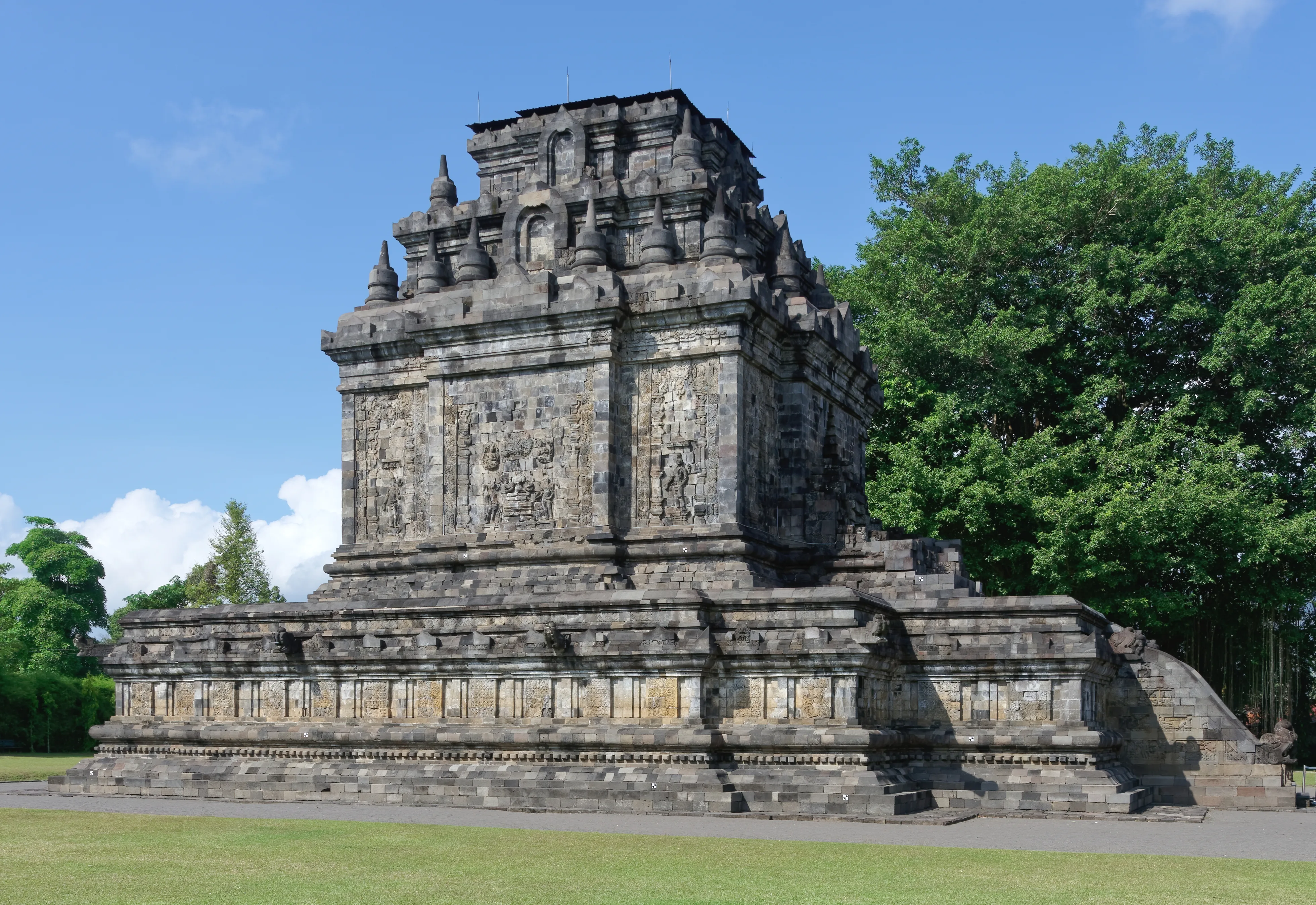
Then decide whether the structure climb is right for your group. It is exposed, steep, and has no shade at all, which makes it genuinely difficult in the middle of the day. The grounds alone, with Mendut and Pawon done properly, is a complete and satisfying day. See the Borobudur temple guide and the Borobudur rules and etiquette guide before deciding.
If you do want the climb, the clock decides the day. The Structure Climb runs 09:00 to 17:00 daily and each session is guided and time-limited, so this is a morning commitment rather than an afternoon one. A late start that puts you at the ticket hall at two in the afternoon may not leave you a usable session. Book ahead and treat the 09:00 window as the anchor your day is built around, then fill the rest of it. Ticket prices and booking routes are in the Borobudur tickets and Structure Climb guide.
If the small temples were not enough, add Candi Ngawen — and only Ngawen. It sits about 6 km east of Mendut, which means it is the one genuinely nearby addition that does not blow the budget. It is small, quiet, shaded by trees, and the rampant lion statues at the corners of its main temple are unique among Central Java candi. It is also unstructured and lightly visited, which means nobody will rush you. See the Candi Ngawen guide.
Finish with food rather than another transfer. A local sweet stop using the Getuk Magelang guide is a better end to the day than a fourth temple. See the two-day itinerary if you want more than one day.
Option Two: Landscape-First Day
Choose one outdoor focus, and choose it the night before based on the forecast rather than in the morning.
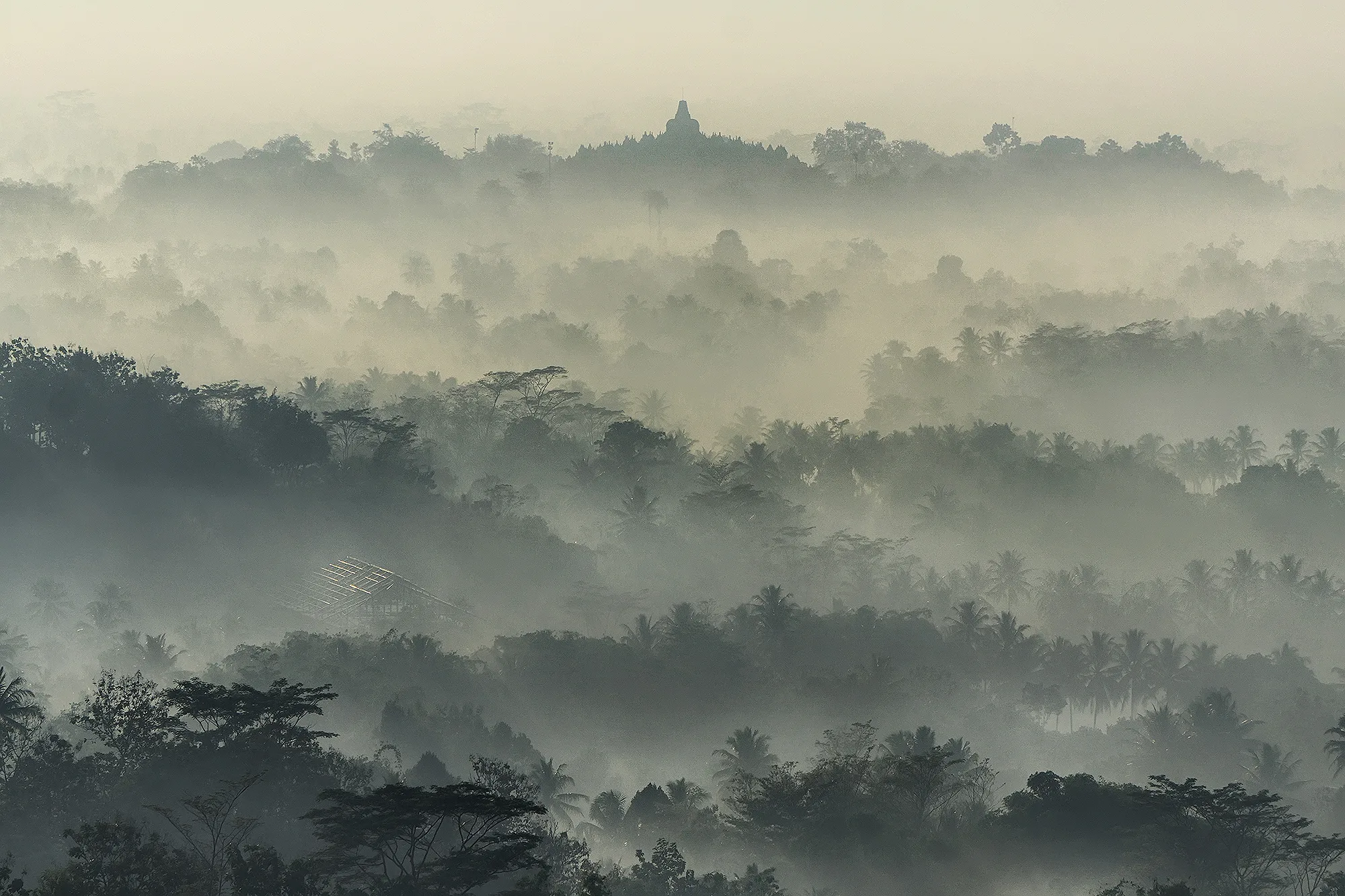
Punthuk Setumbu is the closer option — about 3 km east of Borobudur, no ticket required, and the sunrise view is genuinely good when conditions allow. The tradeoffs are a narrow unlit road before dawn and a genuine chance of cloud.
Ketep Pass is the bigger landscape: Merapi and Merbabu either side of a valley, roughly 30 km north. It also has a volcano museum that works as a plan B when the mountains are invisible, which happens more often than visitors expect.
Do not try both in one morning. They pull in opposite directions, and combining them means spending the day in a car and seeing neither properly.

If the forecast is poor, take the landscape-first day to Propang Ranch instead — an easy, low-effort open-air farm that does not depend on seeing anything at a distance.
Do not assume an early start guarantees a sunrise. Travel safely in low light, bring layers and water, and decide in advance what you will do if fog, rain, or road conditions make the plan unsuitable. A food-focused replacement, such as soto Magelang and nasi lesah, can keep the day enjoyable without taking unnecessary risks.
Agree your fallback before you leave
This is the practical heart of a one-day plan, and it takes two minutes.
Before anyone leaves the hotel, everyone agrees: if the weather is bad, we do what instead? Write it down.
Good one-day fallbacks:
- Mendut, which is enterable and works in poor weather.
- Wanurejo craft village — the batik and rengginang workshops are indoors, so light rain does not stop them. See Wanurejo village.
- A food day. Magelang has more to eat than any itinerary on this site uses. See serabi and lumpur and nasi langi.
- Rest. An unplanned afternoon in a pool or a café is a legitimate one-day plan.
Your base changes the shape of the day
This is where most one-day plans quietly fail.
If you are staying near Borobudur, all of this works. If you are staying in Magelang city, you are adding roughly an hour of driving in total. And if you arrived that morning from another city, add three to five hours of travel before any of this begins — which means the heritage-first day is the only realistic version of this plan, and even then it should be shortened.
Read where to stay near Borobudur and how to get to Magelang before assuming an attraction is close to your arrival point.
One-day checklist
- Pick heritage or landscape as the main focus — not both.
- Check you have not landed on Waisak Day or an Indonesian public holiday by accident. Waisak centres on Borobudur and the crowds are extreme; see best time to visit Magelang for recent dates.
- Plan your food around the meal clock, not around your appetite. Breakfast is soto, mid-morning is sop senerek, afternoon is nasi lesah.
- Confirm current access, weather, and transport close to departure.
- Agree the fallback before leaving, not when the sky turns grey.
- Carry water, weather protection, and footwear suited to the plan.
- Keep cash; smaller sites are more likely to be cash-only than the main monument.
- End the day early enough to make the return journey safely.
If you have more time, do not stretch this plan. Use the two-day itinerary or the three-day Magelang itinerary to separate heritage, landscape, and food into comfortable days. If you are travelling with children, the Magelang with kids guide sets out a plan built around their pace rather than yours.
The best one-day itinerary is not the one with the most stops. It is the one that leaves enough time to understand a place, eat well, and change course when conditions require it.
Sustainable Tip
Choose one main destination and a nearby food or heritage stop rather than using a car to race between distant attractions. Four hours of driving is the fastest way to see very little.
Family Tip
A one-day trip works best for families when it includes one main activity, a predictable meal stop, and explicit permission to skip the second stop if energy drops.
Food Note
Mendut first, Borobudur last. Doing the small temples before the big one means you finish the day at the monument when the light is best and the crowds are moving on, instead of queueing at dawn.
Frequently asked questions
Can I do Borobudur and Ketep Pass in one day?
You can, and you should not. Ketep Pass is roughly 30 km north of Borobudur, so the round trip is a substantial part of the day in a car, and you are gambling it on one mountain view. A one-day plan works when you commit to heritage or to landscape, not both. If you want both, use the two-day itinerary.
How early do I need to start for Borobudur?
If you want the structure climb, be at the ticket hall in the morning. The climb runs 09:00 to 17:00 daily, and each session is guided and time-limited, so a late arrival may not fit. If you are staying for the grounds and Mendut only, a later start is fine and the light is arguably better for Mendut anyway.
What time should I eat soto Magelang?
Earlier than most people expect. Soto is a breakfast dish, and the specialist stalls in Magelang city typically finish in the morning or early afternoon. A ten o'clock breakfast plan will find the best stalls closing or already closed. The same applies to sop senerek. Nasi lesah runs later, into the afternoon and early evening.
Is one day enough for Borobudur?
Yes, if you are content with the grounds plus Mendut and Pawon, which is a complete and coherent day. It is only tight if you also want the structure climb, a viewpoint, and a food tour in the same eight hours.
Should I visit Borobudur or Mendut first?
Mendut first. It is the one temple you can walk inside, it takes under an hour, and doing it before Borobudur means you reach the monument in the late morning when the light is best and the queue has thinned. Doing Borobudur at dawn instead means queuing in the dark for a worse photograph.
What can I add to the heritage day without adding hours?
Candi Ngawen. It sits about 6 km east of Mendut, so it fits naturally on the same axis, and it is small, quiet and shaded by trees. It is a genuine addition rather than a detour, and it suits a group who finds Borobudur overwhelming.
What if it rains on my one day?
Your day is not lost, it just changes shape. Mendut has an interior and works in poor weather, and the batik and rengginang workshops at Wanurejo are indoors. Agree which of those you will do before you leave, so the decision does not have to be made at 5am in the rain.
Can I arrive in the morning from another city and still do this?
Not comfortably. Three to five hours of travel before the day begins leaves only the heritage-first version, and it should be shortened to Mendut and the grounds. Plan a night in the region first, then use the second day for the full plan.
Tourism information — including opening hours, entrance fees, and transport routes — may change. Please verify with official local sources before planning your visit.
Sources and further checks
Use these primary or specialist sources to confirm current access rules, safety notices, and travel arrangements.

About the Author
Larasati Wulandari
Independent travel writer · Central Java, Indonesia
Larasati Wulandari is an independent travel writer who has lived in Central Java for eight years. She writes first-hand, practical guides to Magelang's temples, viewpoints, and local food, and reviews them regularly as conditions change.